Heat Swings Wear Springs Unevenly
Valley Ranch and stretches of Las Colinas have long open driveways with young landscaping that gives little shade, which is the exposure that pushes surface temperature highest on a black door through an Irving afternoon.
Valley Ranch, Hackberry Creek and Cottonwood Valley are established planned areas where a black door may need the owner's own association approval before it's ordered, and that review adds lead time most homeowners don't build into their plans.
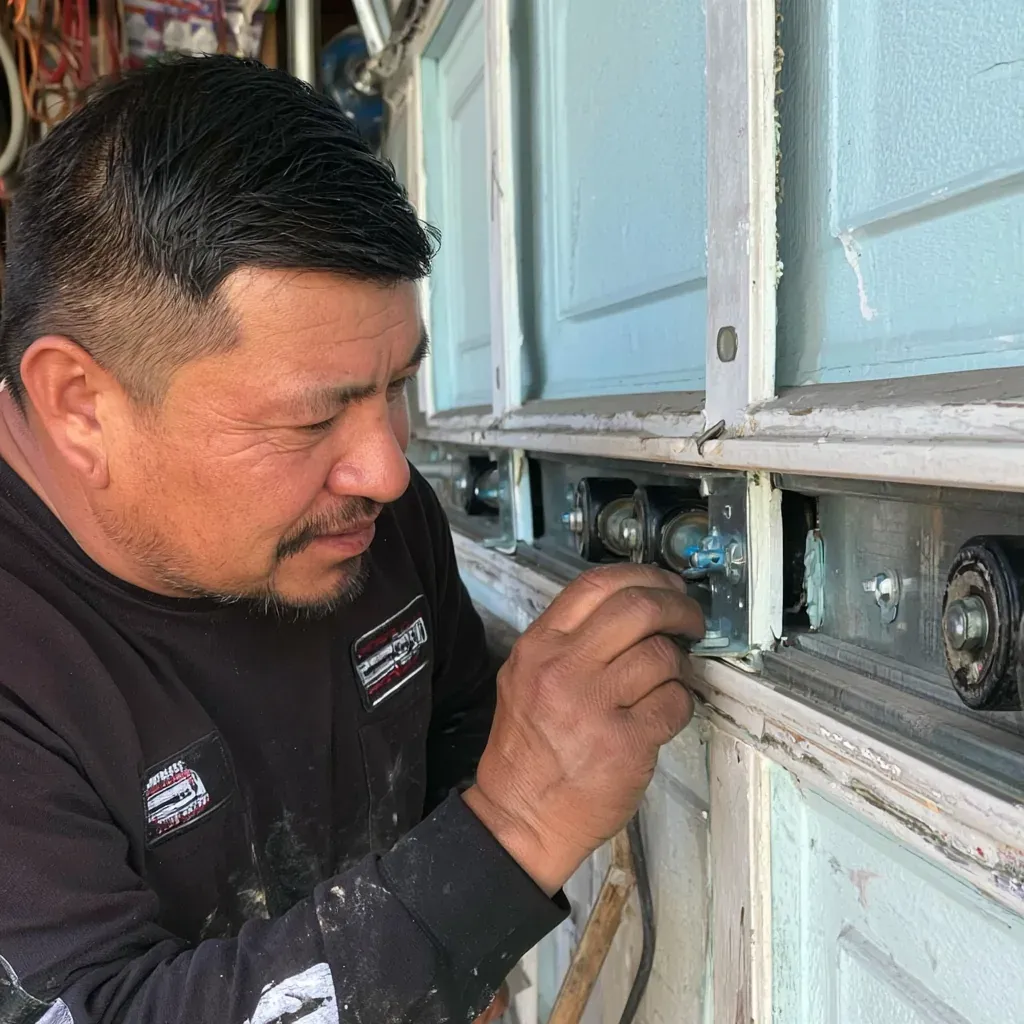
Cables fray at the drum end long before they look dangerous, and a door that jerks or drops unevenly on one side usually means one cable is stretched further than the other. Left alone, the remaining strands give out under tension rather than wearing gradually to a warning sign.
Why One Symptom Has Several Causes
- Heat Gain
- A black door on Belt Line Road or MacArthur Boulevard reaches a higher surface temperature than a tan door on the same exposure.
- Best Finish
- Factory powder coat baked on before install resists chalking through summer far longer than black paint applied on site.
- Weak Point
- Steel expands slightly as it heats, and a door already binding in its track strains an aging opener harder on peak afternoons.
- Fade Pattern
- A site-applied coat fades unevenly, usually chalking first on whichever panel takes the longest direct sun each day.
- Insulation
- A dark finish fades unevenly under years of direct sun, while a lighter powder coat on the same door usually keeps its color longer.
- Not A Quick Fix
- Irving's long stretch of summer heat, plus the occasional severe freeze, means a black door on a west wall carries more thermal swing than most owners expect, which is worth weighing before ordering that finish on an attached garage.
- Parts Needed
- an estimated $129–$489
Where Insurance Matters More Than a License
Black gets confused with a deep charcoal or dark bronze finish, since both look black from the street on a home in University Hills or Plymouth Park. The mix-up matters because charcoal reflects slightly more light than true black. Black gets read as deep charcoal or dark bronze from the street in University Hills or Plymouth Park, since all three look nearly the same at a glance. The difference matters because true black pulls more heat gain off the same afternoon sun than either alternative.
What Clay Ground Does to a Track
Factory powder coat baked onto insulated steel holds a black finish longer than any coating applied after the door is hung. It resists the chalking that comes from repeated summer sun near Las Colinas and the Heritage District, where garages face open streets with little shade cover.
A black steel door on a west-facing garage along MacArthur Boulevard or Story Road runs hotter than a lighter finish, plain fact. Dark powder coat absorbs more than it reflects, and surface temperature on a summer afternoon can climb well past the door beside it. That heat pushes into an attached garage in Las Colinas or Valley Ranch, working seals and opener parts harder. Steel holds the color without fading; wood or vinyl trim nearby won't age as evenly.
A door rarely fails all at once. Usually one part gives out first, and everything else keeps working until the strain shifts somewhere new. Catching that first sign early is cheaper than waiting for a second part to follow it.
HOW LONG EACH GARAGE DOOR COMPONENT USUALLY LASTS
| Likely Cause |
Typical Fix |
|---|
| Openers strain harder before a spring fully lets go. If the motor labors longer than it used to, or the door hesitates partway up, that extra effort is usually the spring compensating, not the opener wearing out on its own. | Rollers, cables, and hinges do not wear evenly, and a door that scrapes or leans slightly off-track has usually been drifting that way for a while. Left alone, small hardware wear tends to shift load onto the opener and the springs, turning a cheap adjustment into a costlier repair later. |
| Hail and wind-driven debris dent panels and knock a section loose without touching the opener at all, so a door can look fine yet bind exactly where the impact was. Checking panel square and track alignment first avoids replacing a motor that was never the problem. | A garage door usually gives some notice before it stops working. It hesitates partway up, hangs unevenly on one side, or the opener strains and reverses before the door seats. Each pattern points somewhere specific, toward alignment, spring tension, cable wear or the opener itself, and treating one as the other wastes a service call. |
| A garage door that feels heavier at one specific point in its swing, rather than uniformly heavy, is often flagging a single worn hinge or a section starting to separate from its panel, which changes the balance only across that one stretch of travel. | Heat swings do to a track what they do to a door frame: the metal expands, the bolts holding it to the jamb work loose a fraction at a time, and the rollers start hunting for a straight line that keeps drifting. The opener does not cause that drift; it just follows it. |
What To Ask FirstStyle and color changes on doors in Valley Ranch, Hackberry Creek or Cottonwood Valley typically go through that community's own architectural review under its association rules, separate from any city permit in Irving.
When A Rental Or HOA Approval Applies
Dark powder coat pulls in more heat than a tan or gray finish, so hinges and rollers on that door run through more expansion and contraction each day near Cottonwood Valley or Irving Heights, and rubber seals along the bottom edge give out sooner from the cycling.
When It's Time To Call Instead Of Climb
Keeping a black door looking even in Irving mostly means rinsing dust and pollen off the lower panels after a windy spring stretch, before grit settles into the finish and dulls it faster than the sun alone would.
When Hail Season Bends a Panel or Track
A dark garage door is not a medical concern, but a closed garage along Rochelle Road or in Plymouth Park that bakes all afternoon pushes warm air into the house each time someone opens the connecting door, which matters more if the space doubles as a workshop.
A written scope makes the next step clear.
For a door that still moves, note where in the cycle it hesitates and whether heat or sunlight changes the symptom. That pattern can separate alignment from opener trouble.This range covers the mechanical work: springs, cables, rollers, tracks and the opener. Damage of a different kind, such as a chewed bottom seal or a nest built into the header on a door backing onto Campion Trail or Bear Creek, is priced once the panel or seal has actually been seen rather than folded into a spring-and-cable figure. Confirm the visit charge and the written scope directly with the licensed pros we connect you with. Full bands and what moves them are on the pricing guide, and the service that handles this is General Garage Door Repair.