Maintenance
Garage Door Balance Test in Irving, TX
An unbalanced door strains the opener and wears cable and rollers faster. Here is how to run the balance test on an Irving garage door and what the result means.
Read article
Quiet nylon or steel rollers back on the track for good.
A door in Plymouth Park or University Hills that used to slide up quiet now sounds like a shopping cart on gravel, and it is the rollers, not the opener, doing the complaining. Each nylon roller carries a steel stem into a sealed bearing, and once that bearing dries out or the nylon wears thin, every trip up the track adds another rumble. Heat around Irving thins the old grease faster than the rollers wear down on their own.
Replacement starts with pulling a few rollers to check whether the nylon is chipped or the steel stem is bent, since a mixed set often means only half need swapping. Sealed bearings cost more than open ones but shrug off the grit that summer storms push toward a driveway apron off Story Road or Rochelle Road. Labor runs faster on a single door than a two-car opening near Las Colinas, and delaying it just lets a worn roller chew a groove into the track.
Across Dallas County, whether you're in Grapevine, Hackberry Creek, Heritage District, or elsewhere around Irving, garage door roller replacement is worth arranging with somebody who works on this housing stock rather than a generic plan. Foundation type, soil and building age all change what has to happen first.
This repair can apply to a home or a business. The linked Irving guides separate household safety checks from facility records.
A squeak along the track that has turned into a rumble over a few weeks means the roller has worn past what fresh lubrication can quiet. Nylon rollers wear a groove into the wheel face; steel rollers announce it as a duller, metallic grind. In Irving garages this often shows up on the roller closest to the opener arm, since that stem carries the most repeated load on a sectional steel door lifted several times a day.
Grip the roller stem where it sits in the bracket and rock it side to side. Movement there means the sealed bearing has broken down and the roller no longer tracks straight, so it drags against one wall of the channel instead of rolling cleanly through it. Homes near Cottonwood Valley and Hackberry Creek with steel doors show this quickly since the added weight finds the loose stem fast.
A knock that lands once per full turn of the wheel and gets faster as the door nears the top means a roller has worn a flat spot on one side of the stem. It is the roller wheel itself, not the track, and it will keep accelerating as more of the flat edge makes contact each cycle. Rollers on Irving doors near Las Colinas Urban Center often show this first on a heavier insulated panel.
In Irving, diagnosis starts with the stems: each one gets pulled and turned by hand to feel for a flat spot or a bearing that no longer spins free. A steady rumble along the track separate from a squeak usually points to worn nylon or dried lubricant on the roller itself, not the opener.
With the Irving door controlled, the pro checks roller play, wheel wear, hinge condition, and rail contact before choosing which parts need replacement.
The connected pro removes worn rollers with the section controlled, fits the specified stem and wheel type, and checks nearby hinges before testing rail travel.
A final powered cycle checks each new roller through the vertical rail and upper curve. Any repeat click is traced to a hinge or track joint before the scope is closed.
Irving's slab construction keeps most doors hanging plumb and cycling the same way trip after trip, so wear concentrates on whichever roller carries the heaviest section of the door rather than spreading evenly across all of them. Long hot summers add to that by thinning the lubricant inside the stem faster than a milder climate would, which is why one or two rollers usually fail well before the rest.
Long stretches of Irving heat bake unvented garages, especially on west-facing doors along MacArthur Boulevard and Belt Line Road, and that heat thins out grease inside the roller stem faster than it would in a shaded garage. Once the lubricant runs thin, grit that blows in during a heavy storm burst has less to hold it back, and a nylon roller starts grinding well before its wheel looks visibly worn.
Homes with torsion springs, common on doors upgraded for the added weight of insulation in Cottonwood Valley and Hackberry Creek, pull the door up in one steady motion rather than a chain-driven tug, and that steady pull puts more sustained load on a roller stem that has already started to drag. A roller under a torsion setup tends to fail with a rumble rather than a sudden jolt.
Cable repair should include the drums, bottom brackets, track position, and the cable on the opposite side, not only the strand that failed.
| Where It Shows Up Most | What The Door Stock Looks Like | Worth Asking About |
|---|---|---|
| An automatic opener drawing extra current before it lifts usually means the spring is quietly under-tensioned, not that the motor is wearing out. Testing spring balance first, then checking the gears, keeps a good opener from being blamed for a mechanical shortfall it never caused. | Track alignment, roller lubrication, tension check, hardware tightened | an estimated $100–$365 |
| Ordering a replacement door without confirming the buyer's own community rules first can add weeks nobody planned for, since panel design and finish sometimes need sign-off before a supplier will even schedule production. | Matched spring pair swap, center bearing check, balance restored | an estimated $120–$525 |
| Uneven closing on one side, even by a small amount, usually traces back to a track bracket that shifted rather than a warped panel, and tightening the wrong fastener can mask the problem instead of solving it. | Cracked panel section swapped, matching hinge and hardware reset | an estimated $180–$840 |
| Panels built from layered wood expand and contract with humidity in ways a steel or aluminum door does not, so hardware set to run true in one season can bind or rattle loose in another without any part failing. | New door, smart opener install, upgraded seals and rollers | an estimated $285–$1395 |
Warranty terms on parts and labor vary by who does the work, not by what broke. Asking the licensed pros we connect you with for those terms in writing before work starts matters more to the final cost than the repair itself usually does.
It means the sealed bearing inside the roller wheel has worn out, usually from years of use or from grit that worked past the stem seal over a hot Irving summer. Once the bearing goes, the roller stops turning smoothly and starts dragging or grinding against the track wall on every pass, which is the rumble owners hear.
Nylon rollers cost more but run quiet, a plus for Irving homes with a bedroom over the garage or a west-facing bay near Cottonwood Valley that already traps summer heat. Steel rollers carry heavier sectional doors, common on Valley Ranch and Las Colinas properties, though they transmit more noise through the frame. The licensed pros we connect you with match roller type to door weight and household preference rather than swapping one for the other by default.
Yes, for most Irving doors. A sealed bearing keeps the stem's lubricant from thinning out as fast under long summer heat and keeps blown-in grit out of the races, so the roller holds its quiet roll longer between services. The added cost is small next to a standard open-bearing roller and pays back in fewer callbacks.
Usually, yes, just the rollers, if the stem itself is not bent. Rollers ride in the hinge bracket, and a technician checks that bracket and the stem for wear before ordering parts. On an older Irving door with steel rollers, the pros may suggest nylon replacements to cut noise. If the stem has scored into the bracket, that bracket gets replaced too.
No. A bent section of track is a separate problem, and pushing new rollers through a bend just flattens the fresh nylon or scores new steel within weeks. If the door leans or drags along one side of the channel, that bend needs straightening or replacing before new rollers are worth installing.
Lower rollers encounter more floor dust and follow the sharpest part of the door's turn near the bottom of travel. On older Irving doors around Rochelle Road or Main Street, those conditions can wear unsealed lower wheels sooner than rollers higher on the sections.
The estimated guide range for garage door roller replacement around Irving is $119–$349 for this work. The actual figure depends on what the inspection finds, so request the scope and charges in writing from the licensed pros we connect you with.
Panels dented by hail or years of sun can throw a door out of square even when the track still measures true. The opener strains against the bent metal, wears its gears faster, and gets blamed for a problem the panel caused.
An unbalanced door strains the opener and wears cable and rollers faster. Here is how to run the balance test on an Irving garage door and what the result means.
Read article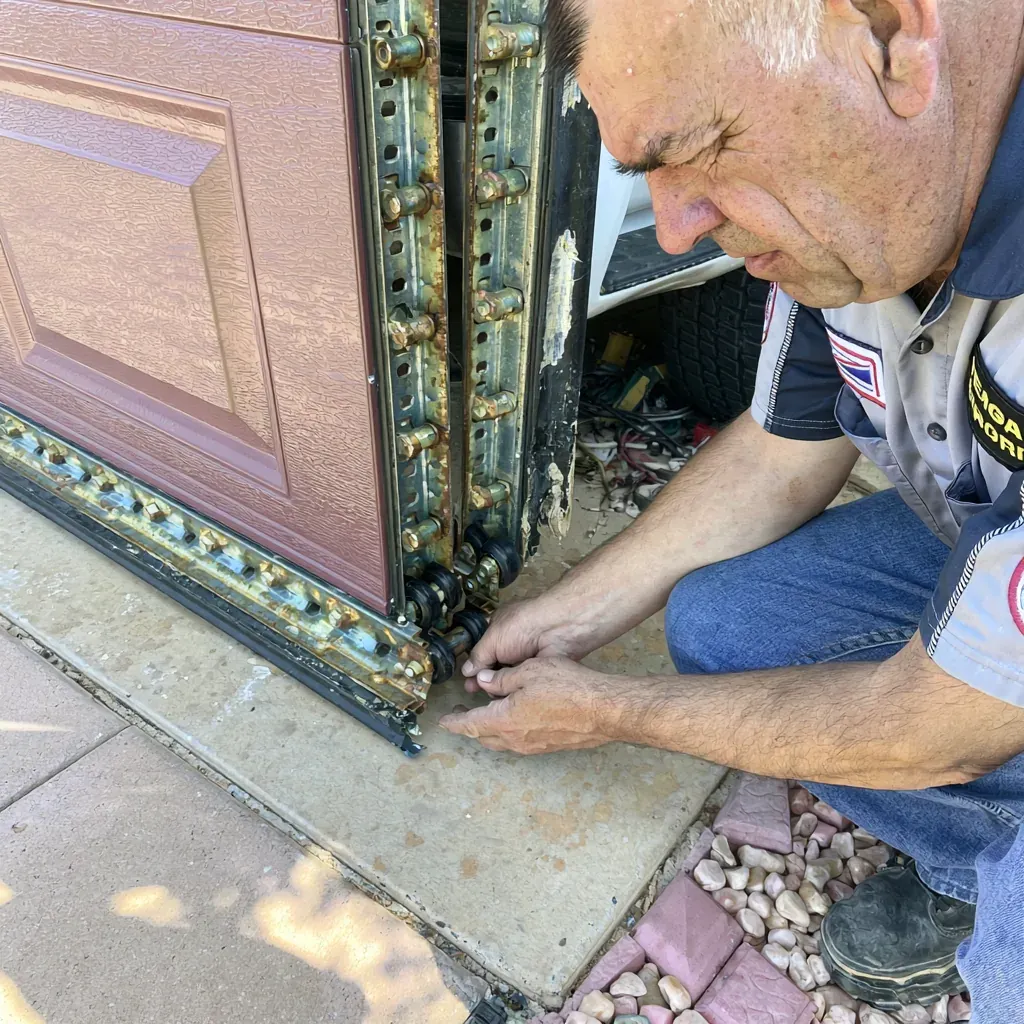
A garage door off its track in Irving usually means bent track, a snapped cable, or a roller that jumped the rail, not a dead motor.
Read article
A grinding garage door in Irving points to rollers, a hinge, a worn opener gear, or cable strain, and each one sounds slightly different once you know where to listen.
Read articleThis is one way an Irving garage door tends to fail, common enough near older sections of Downtown Irving and newer construction around Valley Ranch alike to describe on its own rather than fold into a general list. The cause usually traces to alignment, a spring under too much strain, or a cable starting to fray. Naming it here means less guessing on the phone with the licensed pros we connect you with.
Call (972) 961-2237