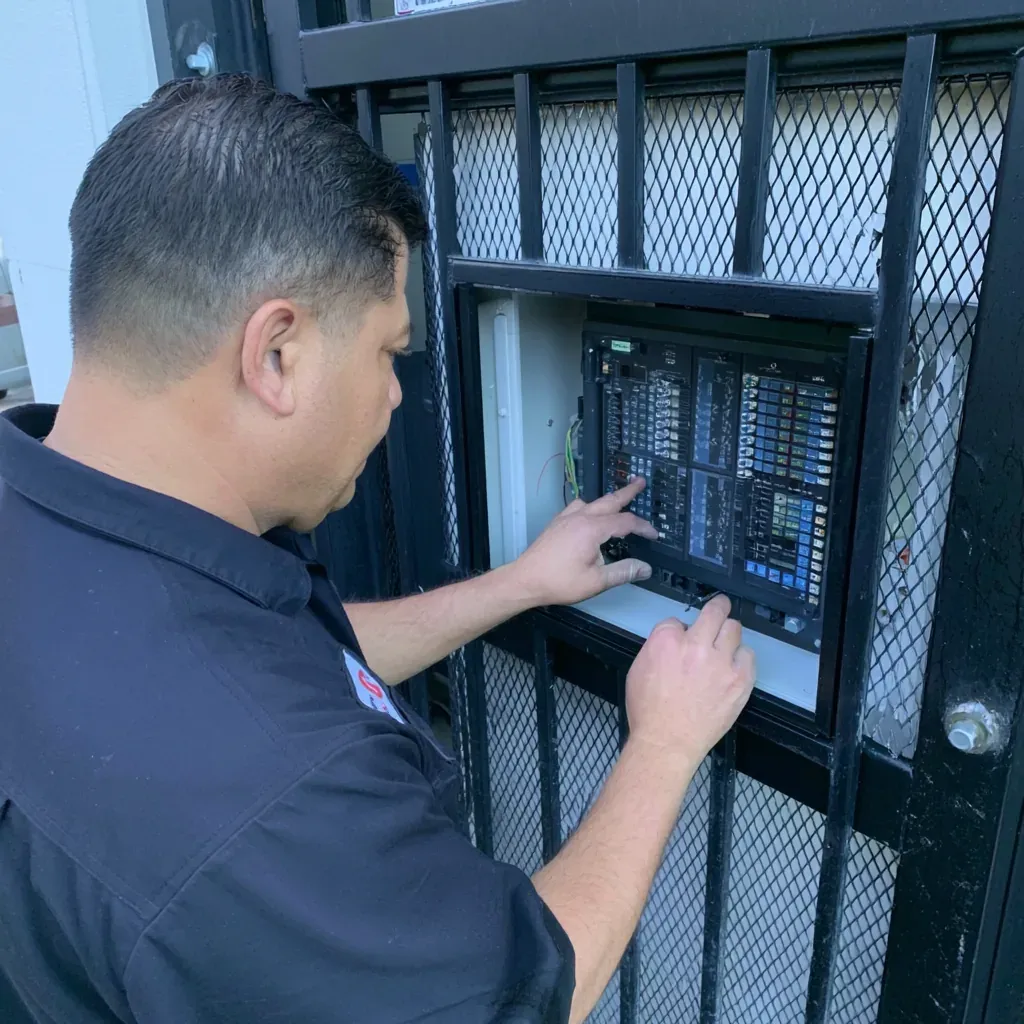
Openers
Belt vs Chain Openers in Irving, TX
Belt drive and chain drive move an Irving garage door the same distance with the same force, but they get there differently. One is quiet enough for a bedroom on the other side of the wall.
Read article
Opener diagnosis and repair for Grapevine garage doors near Lake Grapevine. Call (972) 961-2237 to be connected with a local licensed pro.
Garage door opener repair Grapevine TX calls often start with a door that sticks halfway, jerks the last foot, then cuts out. The owner blames the motor, but the clay-rich soil in this stretch of Dallas County can shift the slab and pull the frame out of square.
A local licensed pro checks the travel limits and force settings before touching the logic board. A unit fighting a misaligned opening trips its own safety reversal long before any inside part wears out.
Don't wait on a door that strains or reverses. Call now and get the cause found before parts get replaced.
If the wall button works but the remote does not, the remote's battery or signal is the likely problem, not the motor. The pros we connect you with check battery contacts, programming and antenna position before anyone suggests a new opener.
A door that starts down and then reverses is usually the safety reversal doing its job. A dirty or bumped photo-eye, or a close-force setting that is too sensitive, is the common trigger.
A door that sticks midway and jerks before the opener cuts out often points to a frame out of square. Clay soil movement can cause that, and the opener ends up straining against binding hardware.
An opener that works in the morning but acts up by late afternoon shows a heat pattern. An unvented garage near Lake Grapevine can bake the lubricant, plastic parts and photo-eye wiring.
The pro confirms the opener type and condition, such as an older chain-drive unit or a newer belt-drive model, before testing anything.
Photo-eyes are checked for alignment and a clean lens, and the drive gear is inspected for stripped teeth or worn plastic. Either one alone can explain an early reversal or an opener that strains without lifting.
The licensed pros we connect you with recheck travel distance and reversal force. The opener should stop and reverse correctly instead of straining against a door that has shifted with the season.
The door is cycled from the remote and the wall button to confirm the reversal system, sensors and force settings hold steady before the visit is called finished.
The same symptom, a dead remote or an early reversal, can come from different causes depending on the opener's age and the door's condition. That is why diagnosis starts with what is actually installed, not a guess.
North Texas clay shrinks in dry weather and swells after rain. That movement can pull an opening out of square and make an opener strain even when the hardware is not broken, so square, level and track alignment come first.
Opener age varies from older central neighborhoods like Plymouth Park and Irving Heights to newer construction in Las Colinas and Valley Ranch. Gear tolerances and force settings differ between them, so diagnosis starts with confirming what is installed.
Homes near DFW International Airport feel the same long, hot summers, and an unvented garage can run well above outdoor temperature by afternoon. That heat hardens vinyl seals, thins lubricant and shortens the life of plastic opener parts and circuit boards.
Panel or door replacement varies with material, insulation, opening size, hardware, and whether an owner's association must review visible changes.
| Where It Shows Up Most | What The Door Stock Looks Like | Worth Asking About |
|---|---|---|
| Tracks get bolted plumb once, then the framing around them keeps shifting for years after. Slabs settle unevenly, brackets loosen, and a door that rolled true at installation starts rubbing one side of the track. That drag looks like a motor problem long before it is one. | Track alignment, roller lubrication, tension check, hardware tightened | an estimated $110–$575 |
| Hail striking a garage door panel can leave dents that look cosmetic but actually throw off the door's balance point, forcing the opener to compensate on every cycle until the imbalance is corrected rather than ignored. | Matched spring pair swap, center bearing check, balance restored | an estimated $130–$825 |
| Vibration from a nearby major roadway or flight path can work fasteners loose over time in ways a quieter side street never would, so hardware that was properly torqued once may still need a periodic recheck. | Cracked panel section swapped, matching hinge and hardware reset | an estimated $195–$1320 |
| An occasional severe freeze can reveal a spring or opener part already worn by ordinary cycles and summer heat. The cold is not proof of the cause. Check balance, track alignment, and lubricant condition before deciding which part needs attention. | New door, smart opener install, upgraded seals and rollers | an estimated $310–$2195 |
Getting a number over the phone before anyone looks at the door only works for the simplest jobs. Anything involving alignment, a bent panel or an opener that's cycling oddly needs eyes on it first, since guessing wrong either way isn't useful to anyone.
Most early reversal comes from the photo-eye sensors near the base of the track, which stop the door when the beam is blocked, dirty or misaligned. Storm grit, a stored bike or a nudged bracket can trigger it, and the close-force setting may be wound tighter than the door needs. The pros we connect you with test sensors and settings before blaming the motor.
Yes. Heat in an unvented attached garage hardens plastic gears, thins old lubricant and stresses circuit boards over repeated hot cycles. An opener that works in the morning and acts up by late afternoon is worth checking before any part gets replaced.
It can be either, and telling them apart matters before you spend money. North Texas clay soil shifts with rain and dry spells and can pull an opening out of square, so the motor fights binding. If the door drags or rubs at one point, square and track alignment get checked first, since a new opener will not fix a frame problem.
Yes, sustained summer heat in an unvented attached garage can stress opener boards, backup batteries and plastic drive parts. A west-facing bay near Lake Grapevine, Cottonwood Valley or Hackberry Creek can hold afternoon heat, but the installed unit still needs testing before heat is named as the cause.
It depends on what actually failed. A stripped drive gear is a contained fix on an otherwise sound opener, while a failing logic board, a motor that hums without turning, or an opener that predates current UL 325 safety-reversal standards points toward replacement. The pros we connect you with find the failed part before recommending either path.
The estimated guide range for opener repair in grapevine around Irving is $129–$549 for this work. The actual figure depends on what the inspection finds, so request the scope and charges in writing from the licensed pros we connect you with.
Panels dented by hail or years of sun can throw a door out of square even when the track still measures true. The opener strains against the bent metal, wears its gears faster, and gets blamed for a problem the panel caused.
Belt drive and chain drive move an Irving garage door the same distance with the same force, but they get there differently. One is quiet enough for a bedroom on the other side of the wall.
Read article
A black garage door in Irving absorbs more summer heat than a lighter panel, and that heat can warp thin steel, soften weatherstripping and push an aging opener past what it was built for.
Read article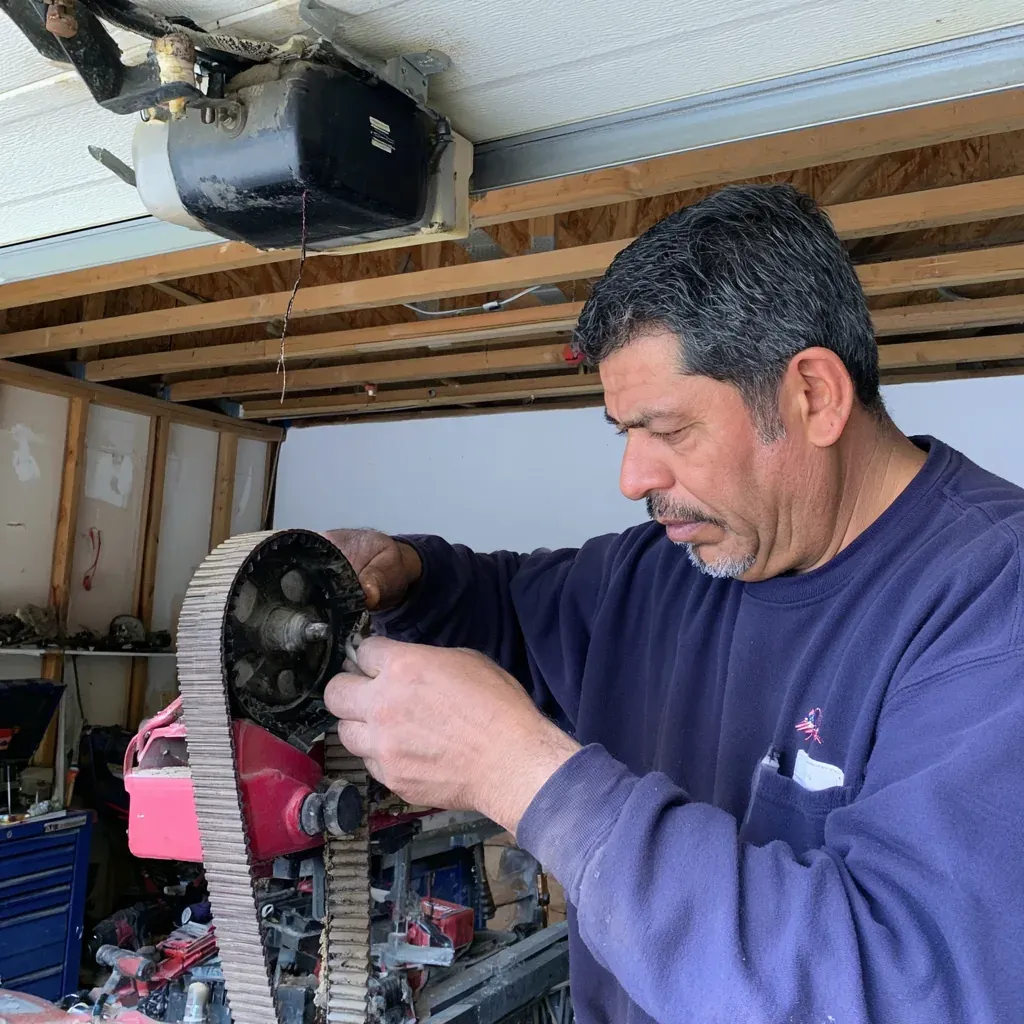
A carriage house door and a raised panel door look different and often weigh differently too, and that weight has to match the spring and opener before either one goes up in Irving.
Read articleThis is one way an Irving garage door tends to fail, common enough near older sections of Downtown Irving and newer construction around Valley Ranch alike to describe on its own rather than fold into a general list. The cause usually traces to alignment, a spring under too much strain, or a cable starting to fray. Naming it here means less guessing on the phone with the licensed pros we connect you with.
Call (972) 961-2237