Openers
Garage Door Sensor Not Working in Irving, TX
The safety sensors on an Irving garage door blink, disagree, or ignore the door entirely. Here's how to read the lights before calling anyone.
Read article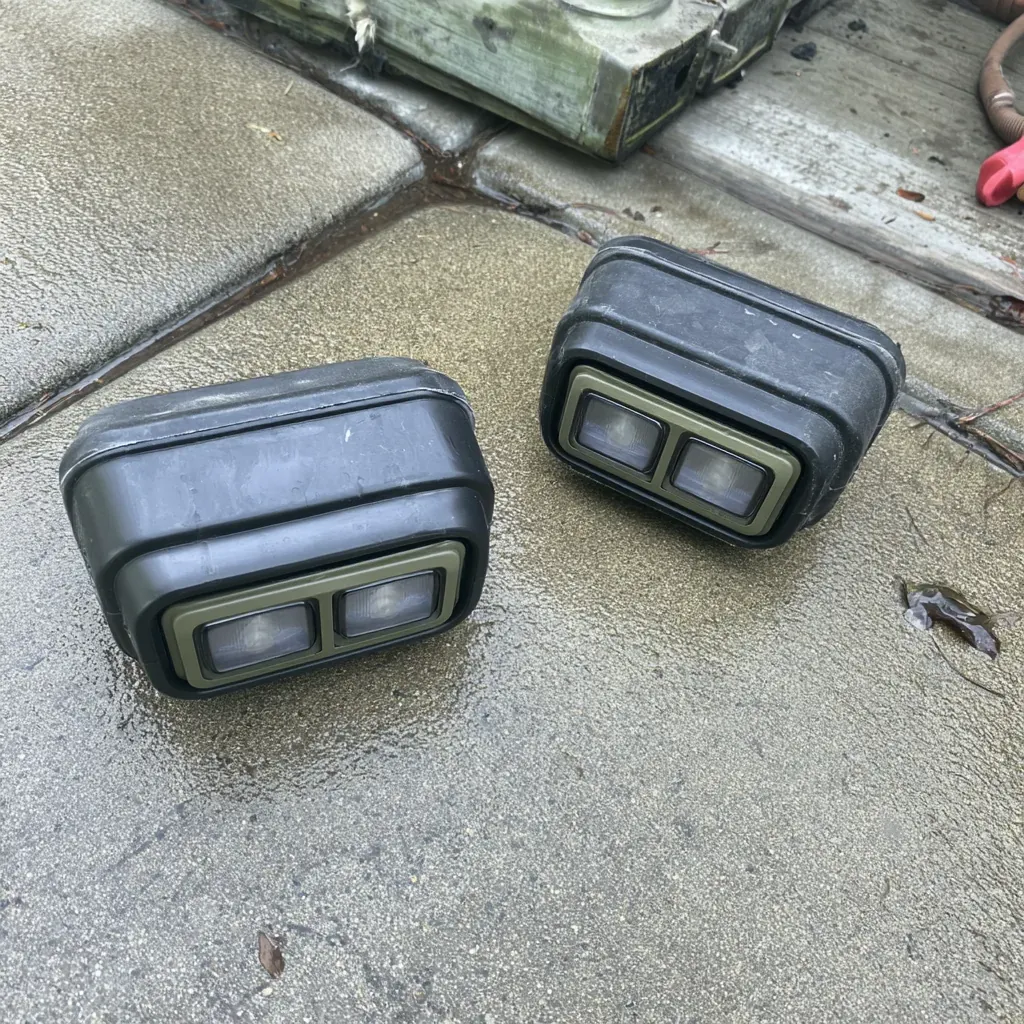
Both photo eye LEDs steady before the door trusts the beam.
A door that travels halfway down and comes straight back up is almost never the door. Two photo eyes sitting a few inches off the slab have to see each other before the opener will trust a closing, and a bump from a bike, a bag of soil leaned against the bracket, or a bracket that has slowly worked loose is enough to break that line. The Irving version of this has a season: low winter sun coming straight up a west-facing driveway off Story Road can wash out the receiver in the middle of the day, so the door closes fine at night and refuses at noon.
Alignment itself takes two minutes; working out what moved takes the rest of the visit. The LEDs get read first, since one steady and one dark points at the sending side while both blinking points at the wiring, then the brackets get squared and the wire run traced back along the jamb, because a staple driven through it years ago will short intermittently and look exactly like a misaligned eye. Anything mounted higher than six inches above the floor comes down to six, which is the height the requirement exists for. Where sun is the cause, the answer is a shade on the receiver rather than realigning it again next month.
Across Dallas County, whether you're in Las Colinas, Northgate, Plymouth Park, or elsewhere around Irving, safety sensor alignment is worth arranging with somebody who works on this housing stock rather than a generic plan. Foundation type, soil and building age all change what has to happen first.
Choose the property guide before calling: residential for a private garage, commercial for a managed bay, shop, or rental opening.
An Irving garage door that reverses right at the slab, or stops short and hangs a few inches up, is pointing at the photo eye pair, not the opener motor. These two low-mounted sensors near the track base have to see each other in a clean, unbroken line. A misread there tells the opener resistance is present even when the door path is clear, so it backs off before finishing the cycle.
Each photo eye is a small lens set low on the track, one per side of the opening, and each carries its own LED. A steady glow on both means the beam between them is complete. If one goes dark or flutters while the other holds steady, the opener in an Irving garage will refuse to close, treating the broken beam as something standing in the doorway even when nothing is there.
Irving openers close without complaint once the sun drops but balk near midday, especially on driveways facing south toward Rochelle Road or catching reflected glare off a neighbor's white garage. That pause is the photo eye pair reading glare as an obstruction, not a mechanical fault. Wipe both lenses, then watch whether the LEDs settle into a steady glow instead of flicker. If the stall repeats only in bright hours, alignment or glare is the cause, not the motor.
The pros start at each bracket, checking whether it still sits square to the track or has worked loose from the jamb, then trace the low-voltage wire a short distance toward the opener looking for a pinch point or a cracked jacket before touching either lens.
Grime and cobweb film get wiped from both lenses first, since a dulled surface can mimic a bad alignment. Any bracket found loose gets its mounting screw snugged back to the jamb or slab before the angle itself is touched, so the fix holds instead of drifting again.
The licensed pros we connect you with square each bracket until the paired lights hold without flicker, wipe both lenses, then send the door through several closes to confirm the beam holds under Irving's midday sun.
The pro tests the beam from both sides of the opening, then confirms the door stops or reverses when the beam breaks. Contact reversal is checked separately because it is a different safeguard.
Irving's mix of older central homes near Plymouth Park and newer garages around Las Colinas and Valley Ranch means sensor brackets get mounted on everything from original 1960s track hardware to recent installs. Expansive clay under North Texas slabs shifts foundations slightly over time, and that movement can walk a track, and the bracket bolted to it, just enough to throw the beam off without anyone touching it.
Entrapment protection has covered residential openers since 1993, requiring a working photo eye pair near the floor on every door in Irving, from Las Colinas high-rises to older homes near Plymouth Park. Each sensor sends an LED beam to its mate; block or misalign one and the opener must refuse to close. A knocked bracket, sun glare off a west-facing driveway near MacArthur Boulevard, or a chafed wire can throw the pair out of alignment without touching the opener itself. Bypassing the sensors defeats the one part built to keep a closing door off a person or pet, so realignment, not removal, is the only acceptable fix.
Grit off Belt Line Road and MacArthur Boulevard settles on the low sensor brackets faster than most owners expect, and a lawn service or a bumped bike near a Cottonwood Valley or Bear Creek driveway can nudge the pair out of true without anyone noticing. Because the eyes sit close to the slab, they collect more dust than any other opener part, and a lens that looks clear can still carry a haze thick enough to scatter the beam.
Opener cost follows the fault. Sensor alignment, controls, gears, drive parts, and full unit replacement are different jobs with different scopes.
| When It Shows Up | Component Under Load | How The Damage Starts |
|---|---|---|
| Choosing a replacement door for a property inside a planned community often means checking an approved materials or color list before comparing manufacturers, since that list can eliminate options a homeowner assumed were open. | Cable tension check, pulley inspection, weatherstrip look-over included | an estimated $95–$305 |
| A garage that also serves as a workshop or storage overflow puts different strain on a door than a simple pass-through does, since added weight from stored items changes how hard the springs have to work. | Single torsion spring replaced, drum reset, opener force recheck | an estimated $110–$435 |
| A rental unit's garage door often gets reported late because nobody living there feels responsible for calling it in, and a hinge or cable that could have been an easy fix turns into a larger repair by the time anyone does. | Bottom bracket replaced, cable reattached, panel gap corrected | an estimated $165–$695 |
| A door that binds only in a hard freeze rarely means the opener is failing. More often a spring lost tension months earlier and the cold is the first thing forcing the extra work into view. Check spring tension and roller drag before replacing any motor. | Full track and hardware replacement, HOA color match confirmed | an estimated $260–$1155 |
How long the parts have been in service changes the estimate more than the symptom does. A cable or spring nearing the end of its expected life costs less to replace on a planned visit than after it fails and pulls the door off track on the way down.
Not usually the sensor itself. What shifts is the small bracket holding it against the track, tapped out of true by a garden hose reel, a stored bicycle, or a mower backed in too fast. The lens still lights, the wiring still reads fine, but the beam no longer lines up eye to eye, and the opener reads that gap as something blocking the door.
No. UL 325 has required entrapment protection, including this photo eye pair, on residential openers since 1993. There is no exception for garage size, door weight, or whether the opener is original to the house. An older opener in central Irving without a working pair is out of compliance with the standard the newer units around Las Colinas are already built to.
Yes, and it has applied to residential openers since 1993 under UL 325. The rule exists so a closing door reverses the instant something breaks the beam between the two sensors, rather than continuing down onto a pet, a foot, or a dropped toy. It is a manufacturing safety standard for the opener itself, not a rule Irving enforces separately, and bypassing it removes that protection entirely.
Yes. A driveway facing west toward SH 114 or an open carport near Valley Ranch with nothing blocking the afternoon sun can flood a lens with brightness that reads the same as an actual obstruction. The opener halts or reverses even with a clear path underneath. Shade from a parked car, an angled cardboard flap, or repositioning the sensor slightly downward usually settles which one is happening.
Wipe each lens with a dry cloth, since dust off a summer dry spell or grit from a heavy storm burst settles on low-mounted lenses quickly. Confirm neither bracket sits crooked from a stored ladder or a shifted trash bin along the track leg. Then run the door through a full cycle in daylight and again after dark, since a misread that only shows up under one light points straight at glare, not wiring.
Ask the licensed pros we connect you with whether they will check both brackets for a bent mount, not only the lens angle, and whether they test the door through several full closes before leaving. Ask if the visit covers the low-voltage run between the sensors and the opener head, since a chafed length of that wire causes the same stall as a dirty lens. Ask what the sensor pair costs to replace if either unit is cracked or corroded.
The estimated guide range for safety sensor alignment around Irving is $109–$289 for this work. The actual figure depends on what the inspection finds, so request the scope and charges in writing from the licensed pros we connect you with.
Expansive clay under Irving foundations shifts with rain and drought, and that movement reaches the garage before anyone notices a crack inside. A track pulls fractionally out of true, a roller starts riding an edge instead of a groove, and the door still opens, just louder and less square than before.
The safety sensors on an Irving garage door blink, disagree, or ignore the door entirely. Here's how to read the lights before calling anyone.
Read article
What actually changes the cost of a garage door repair in Irving, from track alignment to spring replacement, and why the address matters.
Read article
A broken spring in Irving rarely has one price. Here is what actually changes the cost, from spring type and count to door weight, plus the safety limits worth knowing first.
Read articleThis is one way an Irving garage door tends to fail, common enough near older sections of Downtown Irving and newer construction around Valley Ranch alike to describe on its own rather than fold into a general list. The cause usually traces to alignment, a spring under too much strain, or a cable starting to fray. Naming it here means less guessing on the phone with the licensed pros we connect you with.
Call (972) 961-2237