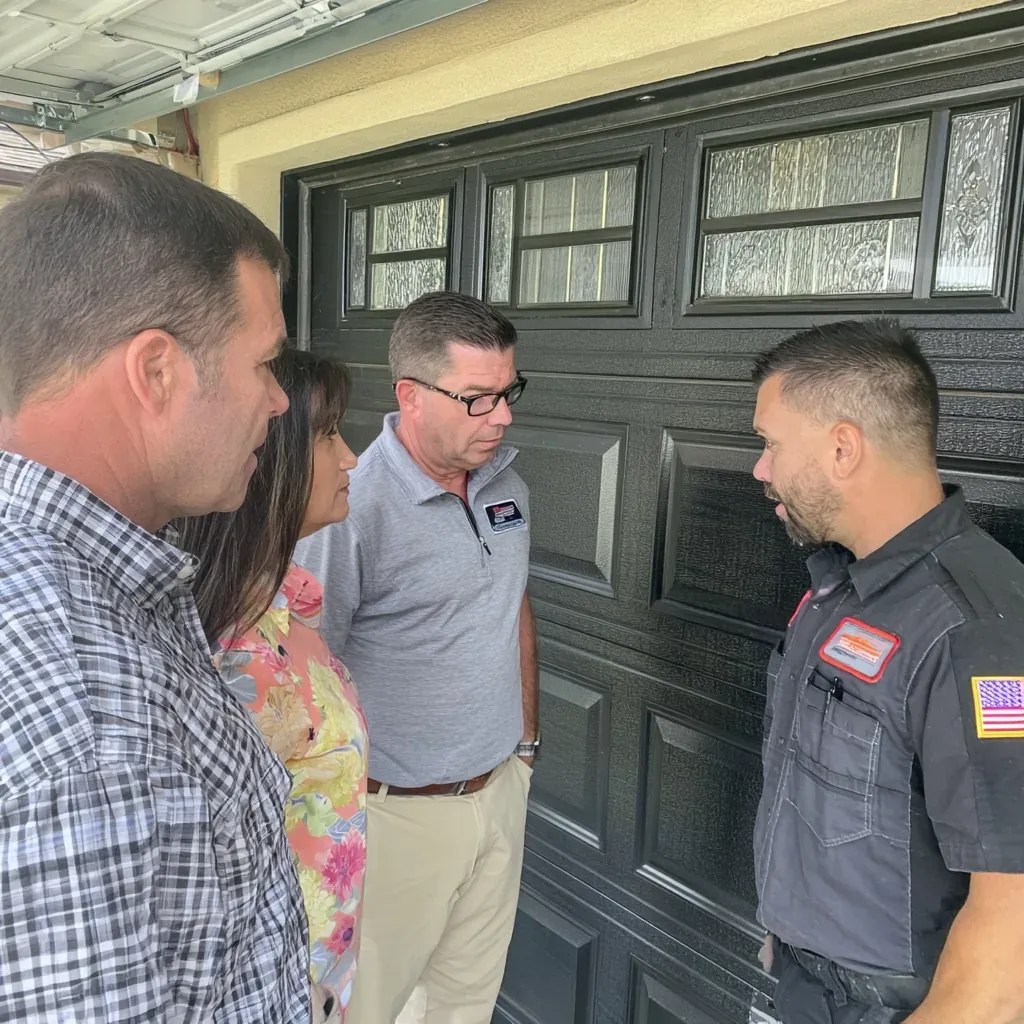
Newer Doors Sit Beside Much Older Ones
North Texas clay under Irving slabs shrinks in dry stretches and swells after rain, and that movement can pull a track bracket a fraction out of true near older sections of Plymouth Park and Irving Heights, enough to throw off the limit reading.
Irving's clay soil shifts an opening slightly through dry summers and wet spells, enough to knock a photo eye bracket out of true near the Heritage District or a Valley Ranch garage, so the sensors read blocked and hold the door open even when the path is clear.
A garage door that binds partway up often points to a bent track or a roller worn past its shape, not the opener straining to compensate. Older sections of Irving with decades-old doors see this more than newer construction, where tracks and rollers have simply not logged as many cycles yet.
Deciding Between a Patch and a Rebuild
- First check
- The door starts downward but stops, reverses, or remains above the floor instead of completing a level close.
- Common cause
- Photo-eye blockage, shifted alignment, track resistance, travel limits, or uneven cable pull can each interrupt closing.
- Left alone
- UL 325 sets the entrapment-protection standard requiring reversing sensors, and a blocked or misaligned eye holds the door open on purpose.
- Standard
- A worn roller or a gap in the torsion spring can make the down-limit setting misjudge the floor, mimicking an obstruction that is not there.
- Safety note
- A door stuck open near Lake Carolyn or the Irving Arts District leaves the garage exposed until whatever is holding the eyes or the limit gets found.
- Cause
- Irving heat through summer thickens grease on the rollers and shaft, adding resistance the opener can misread as an obstruction. The rare severe freeze can stiffen that same lubricant overnight, so this fault clusters at both weather extremes rather than one season alone.
- Time on Site
- an estimated $109–$289
What Summer Heat Does to Steel Doors
Garage door will not close is a different complaint from one where the door reverses before it closes on its own. This page covers a door that stalls, hums, or never leaves the top, not one that shuts and immediately climbs back up. This complaint is not the door that shuts on its own and jumps back up. Here the panel sticks at the top, sinks a few inches then quits, or the opener hums with no travel at all. Irving homeowners near Valley Ranch describe a stall, not a bounce.
Repair Now or Replace This Season
In Irving, the licensed pros we connect you with start low on the track frame, checking the small lenses that face each other. A lens knocked out of aim, coated with driveway dust, or unplugged after yard work near Cottonwood Valley will hold the door at the top every time.
An Irving garage door that will not close usually starts at the photo eyes near the bottom of the track, since a shifted bracket or a lens fogged by garage dust keeps the opener from finishing the cycle. Next comes the down-limit setting, then a check along the track for a dropped bolt or debris, then close-force sensitivity.
Some breakdowns show up often enough to earn their own explanation instead of a mention buried in a general list. Age, sun and weight strain, or a detail missed at installation each point to a different fix, and knowing which one applies matters more than guessing at a part.
WARNING SIGNS THAT MEAN A PART IS FAILING
| Common Warning Signs |
What It Means |
|---|
| Noise that changes pitch as the door travels usually traces to one roller or hinge, not the whole track. Isolating which section gets loud first tells the licensed pros we connect you with where wear has actually concentrated. | Most garage doors give warning before they fail outright. The opener runs longer than it used to, a roller starts ticking on its way past the track bend, or the door hangs level for a beat before dropping the last inch. Each pattern points to a different worn part, not automatically a dead motor. |
| Summer heat softens grease inside the rollers and bearing plates, thinning it until metal starts running against metal, and the noise usually shows up before anything actually breaks. Left alone, that friction shortens spring life and strains the opener. Regular lubrication is cheaper than either fix. | A once-a-year check catches wear before it becomes a stuck door at the worst time. Fasteners loosen, rollers wear unevenly, and cable tension drifts from normal use. Reviewing all of it together costs less than a return visit for a problem that a first look would have caught. |
| A door that only opens partway before reversing itself is usually the safety sensors or the travel limit losing agreement with each other, not a failing motor. Dust, a bumped bracket, or a track that has shifted slightly can all cause this same short cycle. | Cables fray from the inside, at the drum where they wind and unwind, long before the outer strands show it. A door that jerks partway up or hangs crooked on one side is usually telling you a cable is close to giving out, not that the opener has weakened. |
When It's Time To Call Instead Of Climb
Wipe both sensor lenses with a dry cloth and sight down each track for a dent or a stray tool, since summer heat swelling a wood jamb near Bear Creek can pinch a track just enough to make the opener hum but the door does not move.
Reading Rust and Sun Wear on Old Springs
A door that stalls before it closes almost never starts with a torn cable or a gap in the torsion spring. Two low sensor eyes get blamed last and checked first, since a dirty or knocked lens holds the whole door open on purpose, by design.
See what a real inspection turns up.
Ask for insurance, part details, warranty terms, and a written scope before work begins. Those checks matter more than a Texas garage door license number that does not exist.This range covers the mechanical work: springs, cables, rollers, tracks and the opener. Damage of a different kind, such as a chewed bottom seal or a nest built into the header on a door backing onto Campion Trail or Bear Creek, is priced once the panel or seal has actually been seen rather than folded into a spring-and-cable figure. Confirm the visit charge and the written scope directly with the licensed pros we connect you with. Full bands and what moves them are on the pricing guide, and the service that handles this is Safety Sensor Alignment.