Door stalls, shudders, same spot each cycle
Binding repeats at one location because the obstruction or alignment fault stays fixed. Mark the point visually, stop cycling, and report it without pressing on the rail.
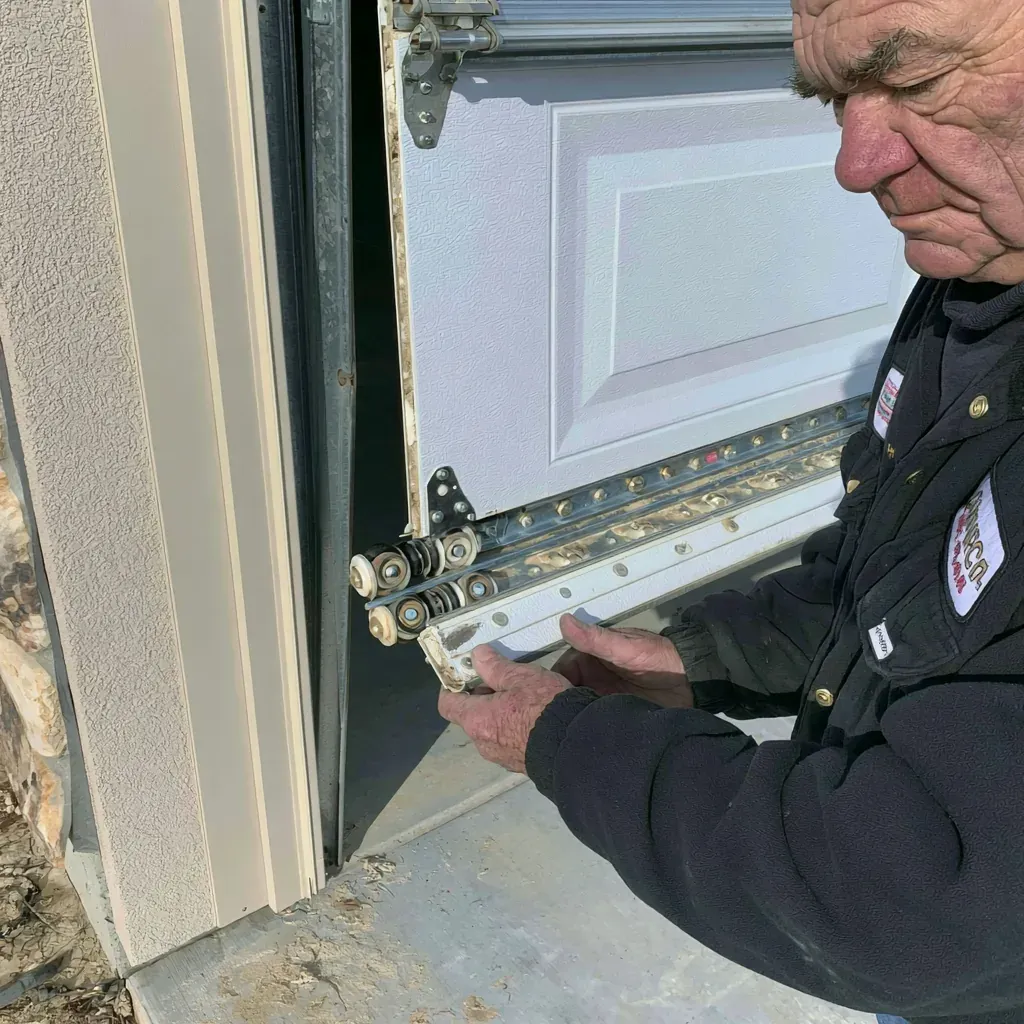
Dust buildup in Irving tracks is steady through dry stretches rather than tied to a season, since there is no salt or snow cycle driving it. A rare severe freeze can thicken lubricant on the rollers and make an existing bind announce itself sooner than it otherwise would.
The door hitches hard at one identical spot every cycle instead of straining along its whole path. In Irving that spot usually holds grit, a shifted bracket, a flange bent inward, or a jamb the slab has nudged out of line.
A door that reverses partway or hesitates before closing is usually telling you something about the travel limits or the sensors, not the motor itself. Left alone, the opener keeps straining against a fault it cannot see, and the strain eventually shows up somewhere more expensive.
Binding repeats at one location because the obstruction or alignment fault stays fixed. Mark the point visually, stop cycling, and report it without pressing on the rail.
A sharp scrape only where the door hangs up, not a steady sound through the whole travel, points to dust or debris packed into the rail at that one spot. Wipe the section clean and watch the next few cycles before assuming a part has failed.
If the bracket wiggles when you press near the hang-up point, its screws have backed out of the jamb rather than the rail itself failing. Left alone, the rail slowly twists away from true and the stall point gets worse each pass.
A roller flat-spotting and dragging at that one mark has worn unevenly from riding the same rough patch in the track, often where grit blown in off a driveway near Northgate or Bear Creek has packed into the rail. The roller keeps hitting that groove. It needs inspection and likely replacement, not just a wipe-down.
A door hanging crooked right at the bind point means that panel is being twisted against the track at the exact spot the drag occurs, not that the jamb itself has shifted. Check the section and rollers there before assuming the framing near the opening has moved out of square.
Irving's dust settles into the bottom track between uses, especially in garages near Valley Ranch and Hackberry Creek that see less frequent cycling. That fine grit packs into the rail groove at one low point and becomes the fixed spot where a roller starts to catch.
Dallas County's clay-rich soil shrinks and swells with rainfall, and that slab movement can work a track bracket loose from the jamb over the years. A bracket that has crept loose finally announces itself with a shudder at the exact point it no longer holds the rail square.
Panels bind against the frame when temperature swings pull a garage a few degrees out of true, and the opener strains to force it anyway. The fix is squaring the track before anyone touches the motor. Left alone, the same misalignment chews through rollers and cables well before either was due.
A weak spring or an opener limit issue slows travel gradually or reverses near the top or bottom, without one fixed catch point. Binding halts sharply at the identical spot each pass, then breaks free and keeps moving, since the obstruction sits in the track itself. Run the door through one complete cycle and watch where it slows. Binding stalls or shudders at the same exact spot every pass, then continues. A spring or cable fault instead drags evenly, drops the door partway, or leaves it hanging crooked in the opening.
The licensed pros we connect you with go to the exact spot the door hangs up: bracket screws against the jamb, buildup along that stretch of rail, and the roller riding through it, before they touch anything else on the door.
Near Irving Boulevard corridors and Las Colinas high-rise garages alike, the licensed pros we connect you with first press on the bracket at the stall point, checking for play against the jamb, then sight down the rail for a low ridge of dust or a burr before touching the spring or opener.
Uneven closing, where one corner touches down before the other, points to the door's balance rather than the opener's settings. A spring losing tension on one side, or a track drifting out of square, will show up this way well before anything stops working outright.
| Repair Approach | Likely Cause |
|---|---|
| A door that drifts off-square usually points to a bracket or hinge that has loosened rather than the track itself bending. Tightening hardware and rechecking alignment often costs less than replacing rollers that were never the real problem. | Torsion springs, cables and rollers each degrade at their own pace, so a door can feel fine while one part is close to failing. Heat swings and daily cycles wear hardware unevenly underneath a smooth appearance. Checking alignment and tension before touching the opener usually finds the real cause first. |
| Expansive clay under Irving and Las Colinas slabs shrinks and swells with rainfall, and even a small shift can pull a track out of plumb. The door still runs, but rollers bind on one side and a spring compensates until it can't. Alignment gets checked before any part is replaced. | Wear rarely announces itself. A track edging out of plumb, a spring losing tension, a hinge working loose — the door still opens, until one ordinary morning it doesn't. The gap between minor and stuck is smaller than it looks, which is why catching the mechanism early matters more than reacting once it fails. |
| Noise that changes character depending on how far the door has traveled, not just how loud it is, usually marks the exact spot where a roller, hinge, or track section has started to wear, which is diagnostic information worth describing to whoever comes to look at it. | A spring under tension does not fail on schedule. It stretches thousands of cycles past what the coating was rated for, then one cold start or one extra lift is the cycle it does not survive. By the time the door drops fast or stops halfway, the metal has been asking for a while. |
From a safe spot, note whether the bind repeats at one height and whether a roller, rail lip, or bracket looks shifted. Do not move the rail or keep cycling the opener.
A bind that returns at the same point during every Irving door cycle marks a local obstruction or alignment fault. Packed debris or a jamb bracket beginning to move can make the panel shake there, and forcing the opener through it adds wear at that spot.
Describe the first thing that changed, whether it was a bang, a lean, a reversal, or a new grinding sound. That detail helps the licensed pros we connect you with start in the right place.This range covers the mechanical work: springs, cables, rollers, tracks and the opener. Damage of a different kind, such as a chewed bottom seal or a nest built into the header on a door backing onto Campion Trail or Bear Creek, is priced once the panel or seal has actually been seen rather than folded into a spring-and-cable figure. Confirm the visit charge and the written scope directly with the licensed pros we connect you with. Full bands and what moves them are on the pricing guide, and the service that handles this is Off-Track Garage Door Repair.
Diagnosing A Stuck-Open Door. When an Irving garage door will not close, begin with…
Diagnosing The Bang. A loud bang from an Irving garage is almost always a torsion spring…
The Balance Check. A garage door that drops or sinks as soon as you let go has lost…
Not necessarily. A bent track flexes across its entire length, so an Irving door dragging that way rubs from top to bottom of the run. Binding in the tracks instead halts motion at one exact spot each cycle, often near a bracket bolted into a stud along the jamb. That repetition, not a bend, points to grit, a shifted bracket, or a jamb nudged by clay soil movement near Valley Ranch.
Stop as soon as the hitch repeats twice at the same spot. Continuing to run an opener into that point can walk a cable off its drum or leave uneven coils in the torsion spring. Homes off Story Road or MacArthur Boulevard with older extension-spring setups feel this fastest. Have the licensed pros we connect you with inspect the bracket and track before the next cycle.
Irving's clay soil shrinks and swells with rainfall, pulling the track's mounting jamb slightly out of true even on newer Las Colinas and Valley Ranch builds. That small shift, not dust alone, is why binding shows up here. Add dust off unfinished lots near Northgate and Bear Creek settling into the bottom track, and rollers start catching at the same spot every cycle.
There is no fixed timeline. Dust from nearby construction or airport-area traffic near SH 114 builds on a track edge slowly, and a bracket loosened by slab movement shifts a little with each rain cycle. Weeks of quiet operation can end with a sudden hard stop. Watch for the hesitation returning at the identical point twice before it becomes a full stall.
An opener that hums but never moves the door is usually a stripped gear or a belt losing tension, not a failed circuit board. Swapping the whole unit for that fixes nothing if the actual part wearing out was never replaced.
Call (972) 961-2237