Emergencies
Snapped Cable Repair in Irving, TX
What a snapped lift cable means for an Irving garage door, how to tell it from a spring or track problem, and what is safe to check before calling for help.
Read article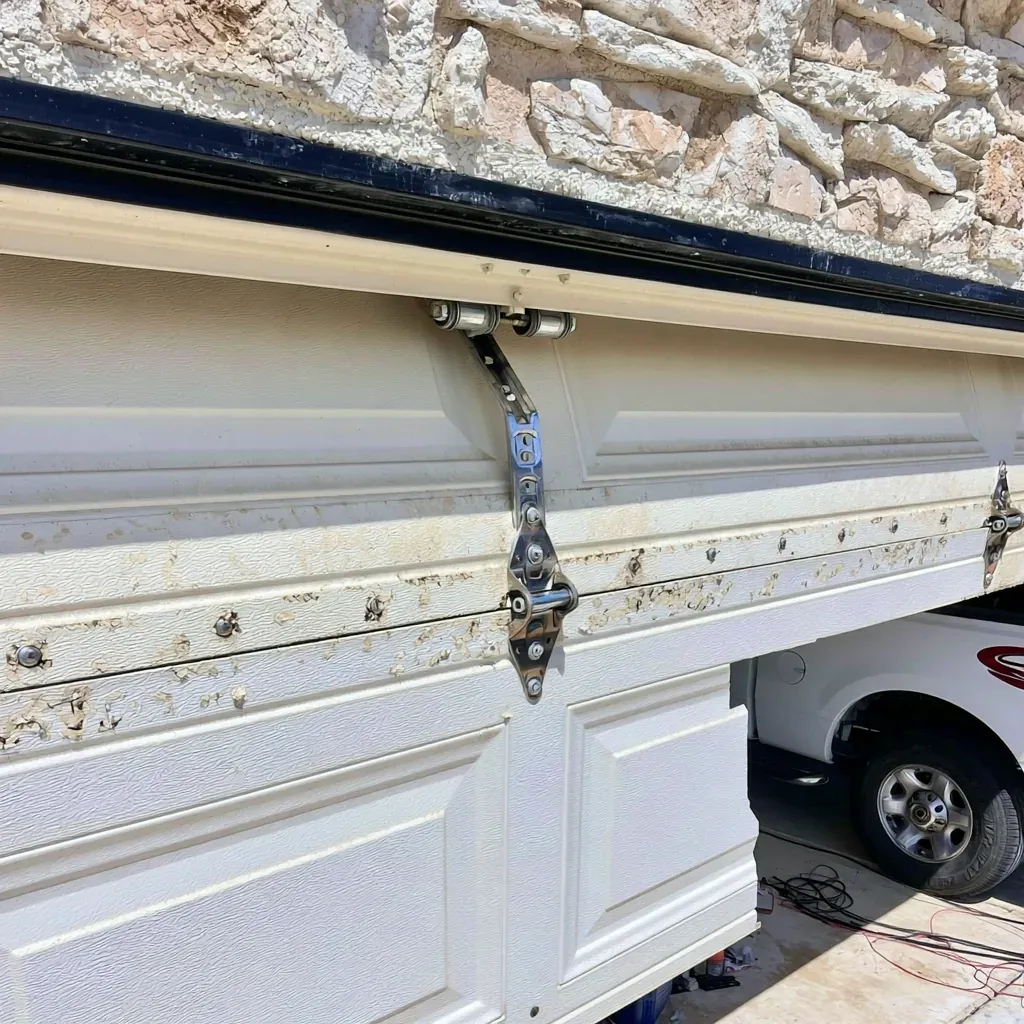
Local licensed pros diagnose first, then fix what's actually wrong, so your Irving garage door runs safely again.
Garage door repair Irving, TX homeowners rely on starts with a full check of balance, springs, cables, hinges, panels and opener before anything is replaced. The licensed pros we connect you with find the real fault first, so you pay for the right repair.
Call (972) 961-2237 now to book garage door repair services at your home. Don't wait on a door that sticks, groans or hangs crooked.
Most garage door problems in Irving come from one worn moving part, not a door that needs replacing. Springs, cables, rollers, hinges, panels and the opener are the parts that wear, and a local licensed pro checks them in order before swapping anything.
Parts and repair prices are listed in the pricing guide, so you know what to expect before you call.
Torsion spring repair means a licensed pro replaces the broken spring and rebalances the door so it lifts evenly again. A broken spring shows up as sudden heaviness or a loud pop above the door, often with the door stuck partway.
Don't try to lift the door yourself. Call now and ask about broken spring replacement.
Pay what a written scope says, with the parts, timing and charges spelled out before any work begins. Ask the pro for proof of insurance, part details and warranty terms in writing.
Current prices are in the pricing guide. Diagnosis time and the door itself set the final cost more than the fix does.
Good door repair means working through the door's moving parts in order, not swapping the first thing that looks worn. That covers hinges, panels, rollers, cables, tracks and the opener.
Before leaving, the pro cycles the door and checks its balance and safety reverse.
A grinding noise usually means friction from dry rollers, a binding track or a worn part, and a pro can find which one. Long Irving summers thin lubricant, and shifting clay under the slab can pull a track out of square.
Worn rollers are a common culprit, so ask about roller replacement. Call now, before a noise turns into a stuck door.
That usually points to a travel limit or force setting, not a dying opener. Dry rollers in summer heat can cause it too.
Often the carriage was never reconnected after someone pulled the emergency release. Less often, the arm or bracket has failed.
The safety reverse has decided the cycle isn't safe to finish. Photo-eye glare, grit at the threshold or an out-of-balance door can all trigger it.
That points to a broken spring above the door. Leave the door closed and call a pro.
Tell us what the door is doing and when it started. The licensed pro we connect you with plans the visit around that.
The door is run through several cycles while the pro watches balance, listens for grinding and checks opener force and travel limits.
You hear in plain words which part failed, why, and what the fix involves.
Parts, timing, charges and written scope are confirmed before work begins. Afterward, the door is cycled and its balance and safety reverse are checked.
Irving's homes range from older postwar streets to planned areas like Las Colinas, Valley Ranch and Hackberry Creek, and clay under the slab shifts with the seasons and can pull a track out of square. Long summer heat also hardens seals and thins lubricant on west-facing steel doors.
Automatic residential openers follow the UL 325 safety standard, which calls for contact reversal and a photo-eye pair. The licensed pros we connect you with test both before touching a spring or force setting.
Swapping a spring, cable, roller or opener on a door already in its frame is a routine repair. Widening the opening, altering the header or adding wiring for a new circuit is different, and wiring belongs with a licensed electrician under Texas rules. Confirm that scope with the City of Irving before work starts.
Panel or door replacement varies with material, insulation, opening size, hardware, and whether an owner's association must review visible changes.
| Track And Frame | Cycle Demand | First Part To Fail |
|---|---|---|
| Tracks get bolted plumb once, then the framing around them keeps shifting for years after. Slabs settle unevenly, brackets loosen, and a door that rolled true at installation starts rubbing one side of the track. That drag looks like a motor problem long before it is one. | Hinge and bolt tightening, panel bolt check, quiet-run pass | an estimated $110–$515 |
| Hail striking a garage door panel can leave dents that look cosmetic but actually throw off the door's balance point, forcing the opener to compensate on every cycle until the imbalance is corrected rather than ignored. | Extension spring pair replaced, safety cable added, drum inspection | an estimated $130–$735 |
| Vibration from a nearby major roadway or flight path can work fasteners loose over time in ways a quieter side street never would, so hardware that was properly torqued once may still need a periodic recheck. | Bent track section swapped, roller carriage realigned, run smoothed | an estimated $195–$1175 |
| An occasional severe freeze can reveal a spring or opener part already worn by ordinary cycles and summer heat. The cold is not proof of the cause. Check balance, track alignment, and lubricant condition before deciding which part needs attention. | Insulated door upgrade, new track set, opener rewired in | an estimated $310–$1955 |
Alignment matters more than most homeowners expect. A door that binds on one track before a spring or cable ever fails often just needs the track reset and the rollers freed, which costs far less than replacing parts that were never actually broken in the first place.
The pro checks balance first, then opener force and travel limit settings, then the safety reverse. That order shows whether alignment is the problem before anything gets replaced.
The emergency release was most likely pulled and the trolley never reconnected to the opener arm. The opener then runs without lifting anything, and reconnecting it is usually quick.
No. A stuck door may have a broken spring, loose cable or binding track, and pulling the release can drop unsupported weight without warning. Leave it closed if you can and tell the pro whether it is level, crooked or unusually heavy.
It depends on the scope, because Texas has no blanket garage door permit rule. Swapping a spring, cable, opener or roller on a door already in its opening is a straight repair. Work on the header, anchoring or new fixed wiring is different, so confirm that scope with the City of Irving first.
Yes. Long summers thin lubricant, harden vinyl seals and stress plastic opener parts in an unvented garage. If the door binds on hot afternoons, check square, level, track alignment and rollers before blaming the motor.
General garage door repair in this area has an estimated guide range of $129–$489 for this work. Confirm the written scope, visit charges, and warranty terms directly with the licensed pros we connect you with.
A door that reverses partway up often has a track knocked out of square, not a failing motor. Weight settles unevenly on the rollers, the opener reads resistance, and it retreats. Checking alignment first, before replacing parts, is usually cheaper and finds the real cause.
What a snapped lift cable means for an Irving garage door, how to tell it from a spring or track problem, and what is safe to check before calling for help.
Read article
What actually changes the cost of a garage door repair in Irving, from track alignment to spring replacement, and why the address matters.
Read article
A low quote on the phone and a much higher number once the tech is standing in the driveway is the most common Irving complaint. Here is how that switch works.
Read articleThis is one way an Irving garage door tends to fail, common enough near older sections of Downtown Irving and newer construction around Valley Ranch alike to describe on its own rather than fold into a general list. The cause usually traces to alignment, a spring under too much strain, or a cable starting to fray. Naming it here means less guessing on the phone with the licensed pros we connect you with.
Call (972) 961-2237