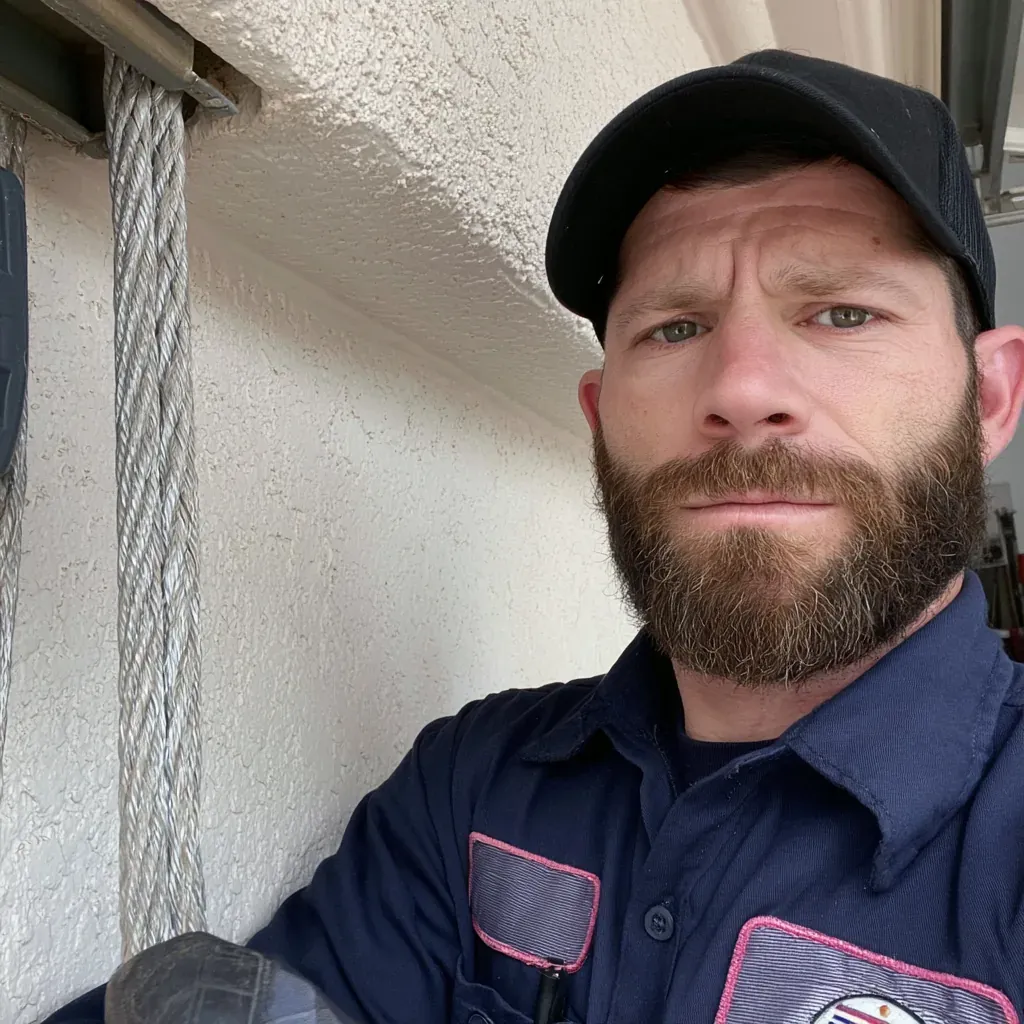
Emergencies
Snapped Cable Repair in Irving, TX
What a snapped lift cable means for an Irving garage door, how to tell it from a spring or track problem, and what is safe to check before calling for help.
Read article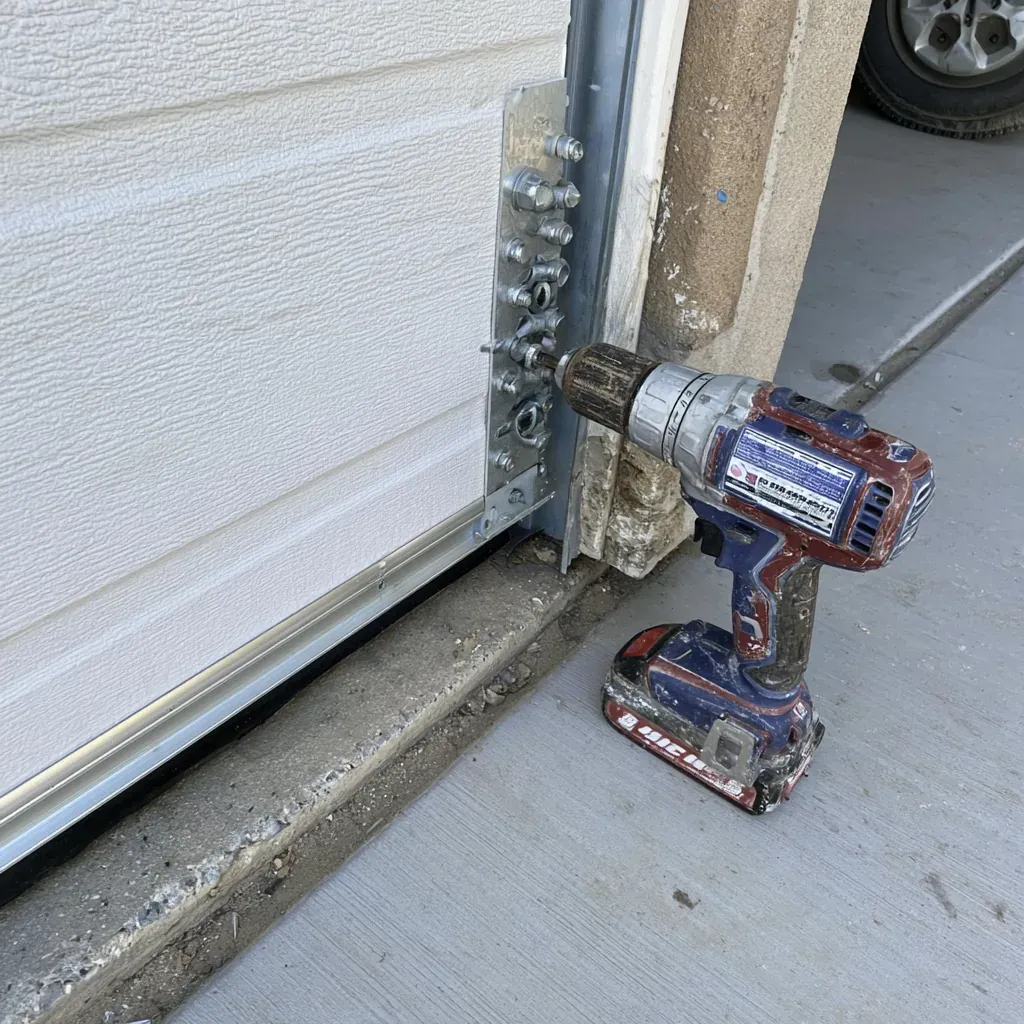
One corner low, cable slack near the drum.
In Irving, a lift cable rarely lets go without warning first. Someone in the Heritage District or off O'Connor Road pulls in and finds the door hanging with one corner low, the cable slack near the drum instead of wound tight against it. Heat cycles through summer and the odd hard freeze work on that steel over the years, and by the time strands fray at the bottom bracket, the door is already crooked.
A pro traces the slack cable back to the drum first, checking whether it jumped the groove or simply parted, since a cable rarely fails on its own — a worn bracket, a bent track near Belt Line Road driveways, or a spring already losing tension usually pushed it there. Access off a standard Irving driveway keeps the job straightforward, and price and time hinge on whether one drum needs re-seating or both cables and brackets need replacing. Left crooked, the opener strains against an uneven load. Spring failure is covered separately.
Across Dallas County, whether you're in Colleyville, Coppell, Cottonwood Valley, or elsewhere around Irving, garage door cable repair is worth arranging with somebody who works on this housing stock rather than a generic plan. Foundation type, soil and building age all change what has to happen first.
This repair can apply to a home or a business. The linked Irving guides separate household safety checks from facility records.
A garage door in Irving that suddenly droops on one corner, cable pooled loose on the slab under the track, is telling you a lift cable let go there. The opposite corner stays put because its cable and the spring above it are still doing the work. Rolling the door up and down on a bare drum bends the track and chews the bottom bracket, so leave it down until the cable side is looked at.
Before you touch the door, look up near the top corner where the drum sits. A cable that has jumped its groove often leaves loose coils hanging loose above the bracket instead of running taut into the drum. If it snapped outright, you may find the broken end curled near the bottom bracket or resting on the slab under the low corner, well short of the floor sweep.
Not every cable failure ends with the door dropping outright. A strand can fray where it wraps the cable drum, or the cable can ride loose enough that the drum turns without winding evenly. That shows up first as a faint scrape or a door that starts to lean before it ever fully lets go, which is worth catching in central Irving garages that see daily use.
Before pulling anything, a tech looks at both cable drums for uneven winding, checks both bottom brackets for wear, and confirms the spring on the sagging side is intact, since a slack cable can be a symptom of a bigger problem rather than the cause.
A door with one cable gone is holding itself up unevenly and can drop further or twist in the track without warning. It gets clamped or braced in place first, before any drum, bracket or spring hardware is loosened, so the panel cannot shift while the repair is underway.
The worn or snapped cable comes off the drum and bottom bracket, and a new one goes on in its place, wound to match the tension already set on the working side so the door travels level again instead of pulling toward one corner.
The pro watches both bottom corners through a controlled cycle, confirming equal cable wrap at the drums and no sideways pull at the Irving track.
Irving mixes older postwar homes in central and south Irving with newer construction around Valley Ranch and Las Colinas, so garage door hardware ages on very different schedules block to block. A cable that fails in a decades-old home near Irving Heights often points to general wear, while the same failure in a newer Valley Ranch garage points more toward a single bad part. Either way, the fix depends on checking the specific hardware, not the year the house was built.
Irving cable wear tracks the door's exposure more than its age. A west-facing garage on Cottonwood Valley or Hackberry Creek streets takes direct afternoon heat that dries factory lubricant faster, so the cable rides drier over the drum and frays sooner at the bottom bracket. Central Irving homes near the Heritage District often have the original cable and drum from construction, mismatched by whatever repair came before. Grit off Belt Line Road traffic works into the strands too. None of this is visible until one corner drops.
How far the door tilts tells you how long the cable has been failing, not just that it failed. A door hanging an inch or two off level often means the cable slipped its drum recently and can be rehung; a door racked hard to one side, jammed against a track, or with the opener straining against it usually means the cable parted outright and has been unsupported for a cycle or two, which is worth mentioning when you call around Irving for a repair.
Cable repair should include the drums, bottom brackets, track position, and the cable on the opposite side, not only the strand that failed.
| Where It Shows Up Most | What The Door Stock Looks Like | Worth Asking About |
|---|---|---|
| An automatic opener drawing extra current before it lifts usually means the spring is quietly under-tensioned, not that the motor is wearing out. Testing spring balance first, then checking the gears, keeps a good opener from being blamed for a mechanical shortfall it never caused. | Track alignment, roller lubrication, tension check, hardware tightened | an estimated $125–$450 |
| Ordering a replacement door without confirming the buyer's own community rules first can add weeks nobody planned for, since panel design and finish sometimes need sign-off before a supplier will even schedule production. | Matched spring pair swap, center bearing check, balance restored | an estimated $150–$645 |
| Uneven closing on one side, even by a small amount, usually traces back to a track bracket that shifted rather than a warped panel, and tightening the wrong fastener can mask the problem instead of solving it. | Cracked panel section swapped, matching hinge and hardware reset | an estimated $225–$1030 |
| Panels built from layered wood expand and contract with humidity in ways a steel or aluminum door does not, so hardware set to run true in one season can bind or rattle loose in another without any part failing. | New door, smart opener install, upgraded seals and rollers | an estimated $360–$1715 |
How long the parts have been in service changes the estimate more than the symptom does. A cable or spring nearing the end of its expected life costs less to replace on a planned visit than after it fails and pulls the door off track on the way down.
One lift cable has come loose from its drum or worn through at the bottom bracket. The other cable and its spring are still holding, so that corner stays where it was while the loose side drops. It is a hardware failure on one side of the door, not a sign the whole door or its opener is failing.
Leave it alone until a cable is replaced. The opener's drive gear is built to move a door that is evenly supported on both sides, and forcing it through a cycle with one cable gone can rack the panels against the track, bend the track rail, or strain the gear enough to need its own repair.
No. A snapped spring bangs hard and the door turns too heavy to budge. A cable failure in Irving usually stays quiet: the bottom bracket on one side drops, the door hangs crooked in the track, and slack cable piles near the drum. Still keep hands off the door and reach the licensed pros we connect you with, since a loose cable can whip loose under tension.
Irving's heat is harder on cable than any weather event. Summer temperatures dry out the lubricant on the drum and cable strands, and an occasional sharp freeze can make a cable that was already fraying finally give. It is wear building over seasons, not a single storm or cold snap, that usually gets the blame.
Cable-repair timing depends on the drum, bottom bracket, track, opposite cable, and parts needed. Ask the connected pro to explain the timing and charges after checking why the door became crooked.
A cable is a hidden working part, not a visible feature of the door, so swapping a worn one for a matching replacement does not change how the door looks from the street. Homes inside a planned community's own review process generally reserve approval for a different door style, panel design or color, not for parts that sit behind the face of the door doing the lifting.
The estimated guide range for garage door cable repair in Irving is $149–$429 for this work. The licensed pros we connect you with must confirm the actual scope and charges directly.
Panels dented by hail or years of sun can throw a door out of square even when the track still measures true. The opener strains against the bent metal, wears its gears faster, and gets blamed for a problem the panel caused.
What a snapped lift cable means for an Irving garage door, how to tell it from a spring or track problem, and what is safe to check before calling for help.
Read article
An unbalanced door strains the opener and wears cable and rollers faster. Here is how to run the balance test on an Irving garage door and what the result means.
Read article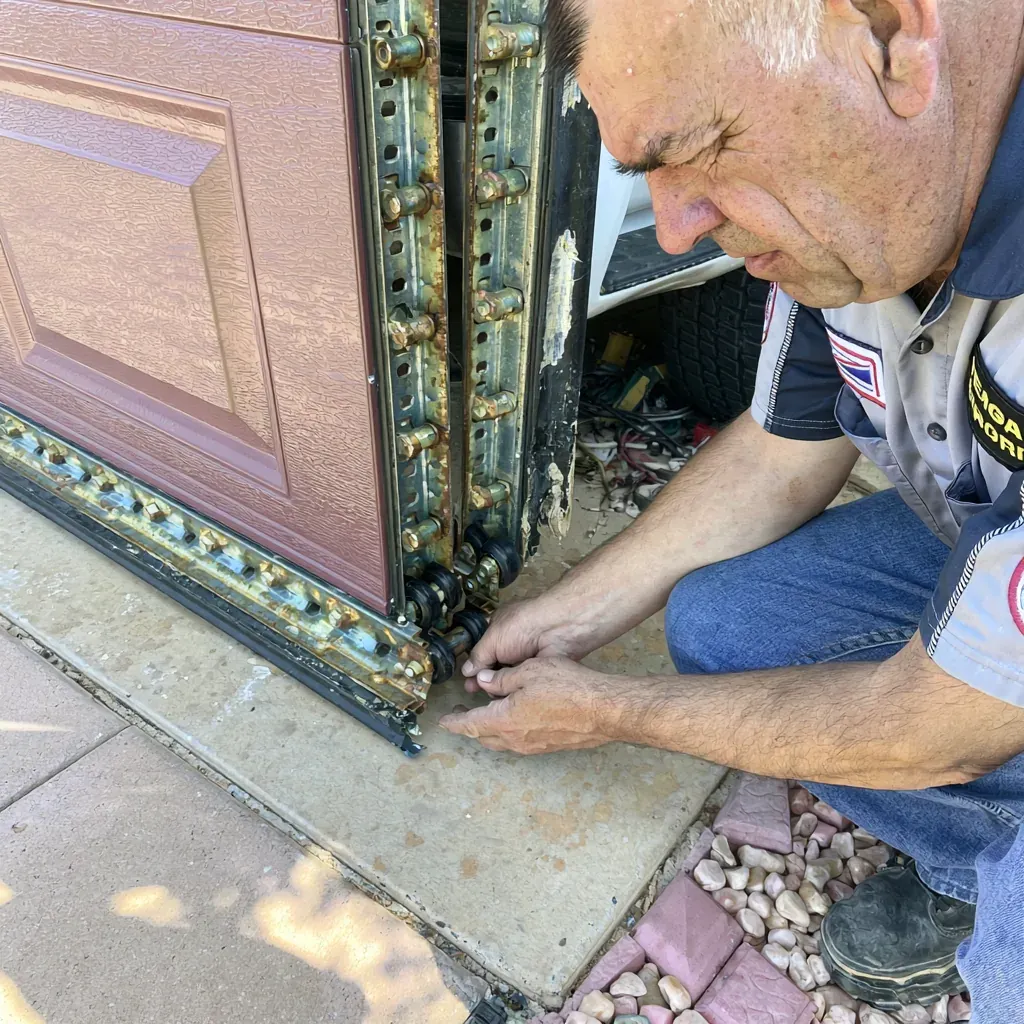
A garage door off its track in Irving usually means bent track, a snapped cable, or a roller that jumped the rail, not a dead motor.
Read articleThis is one way an Irving garage door tends to fail, common enough near older sections of Downtown Irving and newer construction around Valley Ranch alike to describe on its own rather than fold into a general list. The cause usually traces to alignment, a spring under too much strain, or a cable starting to fray. Naming it here means less guessing on the phone with the licensed pros we connect you with.
Call (972) 961-2237