Clay Soil Moves With Every Season
Homes near Cottonwood Valley and along MacArthur Boulevard often attach the garage to a bedroom or laundry wall. A hollow steel door does little to stop heat moving through that shared wall; foam-filled sandwich construction slows it, though it never blocks it completely.
Central Irving houses near Irving Heights sometimes still carry a single-skin door from original construction. Swapping it for a foam-core sectional door raises R-value and cuts panel flex, but the added weight usually calls for a torsion spring sized to match, not the old hardware.
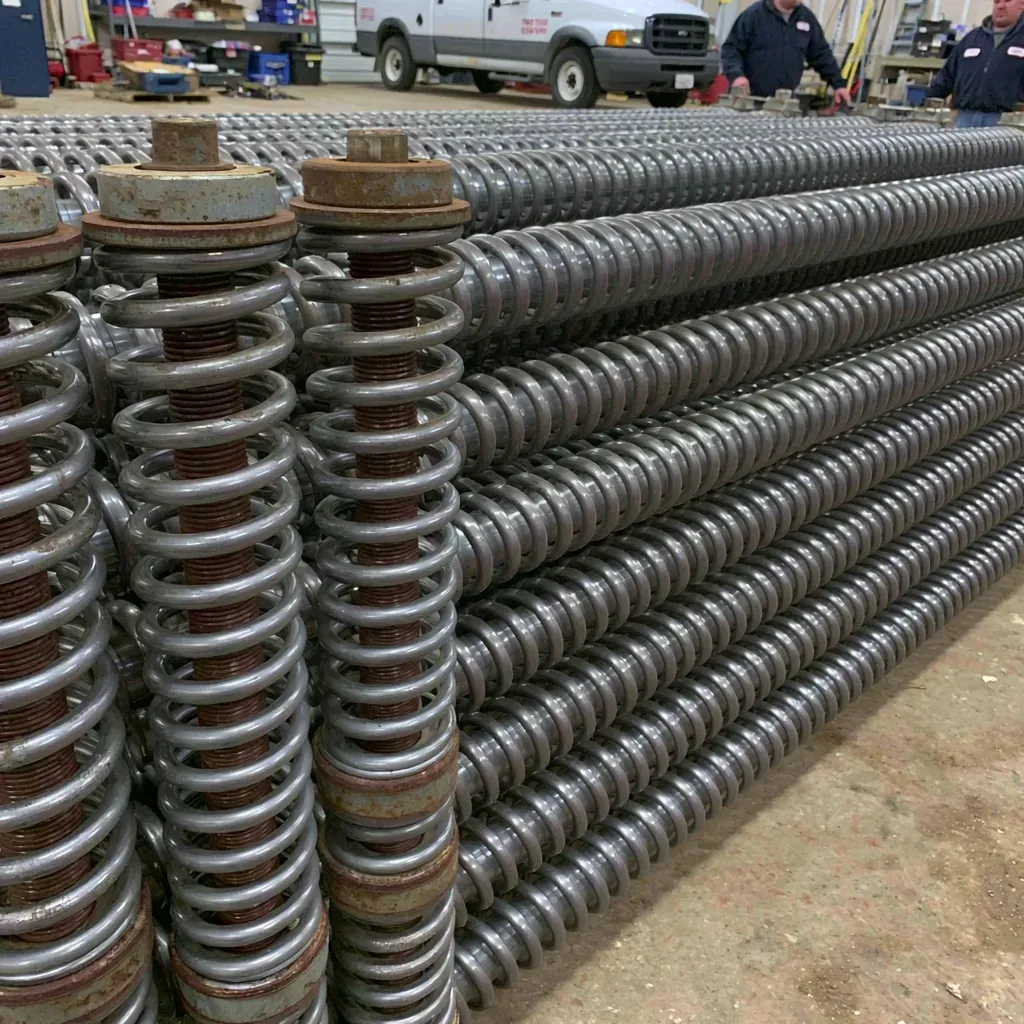
Cables fray at the drum end long before they look dangerous, and a door that jerks or drops unevenly on one side usually means one cable is stretched further than the other. Left alone, the remaining strands give out under tension rather than wearing gradually to a warning sign.
Why One Symptom Has Several Causes
- Core
- Polystyrene sits as a rigid board inside the skins; polyurethane foams and bonds directly to both, closing gaps a board leaves open.
- Weight
- Sandwich construction adds real door weight over bare steel, so the torsion spring needs new tension rather than the old setting.
- Opener
- Insulated panels add real weight, so a spring or opener sized for the old plain steel door often can't lift the new one safely without adjustment.
- Best fit
- A den along Story Road or a bedroom over the garage in Valley Ranch benefits most from the thermal break an insulated core provides.
- Trade-off
- A foam core adds weight the spring, cables and rollers carry for the door's whole service life, not a one-time installation cost.
- Not A Quick Fix
- Irving's long summer bakes a west-facing door for hours, and an unvented garage near Valley Ranch holds that heat well past sunset. Polyurethane resists that transfer better than polystyrene, but either core adds pounds a torsion spring and opener drive must be rated to lift.
- Parts Needed
- an estimated $1200–$4800
Where Insurance Matters More Than a License
An insulated door gets mixed up with one that just feels thick or solid when you knock on it. Panel thickness alone does not say what fills the space inside — a door can look substantial and still have almost nothing behind the outer skin. A thick-looking panel and an insulated one aren't the same thing. Weatherstripping around the edges stops drafts at the seams, but the panel itself can still be a hollow steel skin. Only foam filling the space between the two steel layers counts as real insulation.
Insurance and Scope Matter More Than a License Number
Before installing a foam-core door, weigh the complete door and match the spring to that load. The track, cables, rollers, and opener should also be checked, because insulation improves heat resistance while adding weight every moving part must carry.
Trading a plain steel panel for a foam-core one raises what the opener lifts on every cycle. If that unit has already been straining for years on an unbalanced door, adding sandwich construction on top is what finally burns out the motor.
A door rarely fails all at once. Usually one part gives out first, and everything else keeps working until the strain shifts somewhere new. Catching that first sign early is cheaper than waiting for a second part to follow it.
WHAT EACH GARAGE DOOR PART TYPICALLY COSTS TO REPAIR
| Repair Approach |
Likely Cause |
|---|
| A door that drifts off-square usually points to a bracket or hinge that has loosened rather than the track itself bending. Tightening hardware and rechecking alignment often costs less than replacing rollers that were never the real problem. | Torsion springs, cables and rollers each degrade at their own pace, so a door can feel fine while one part is close to failing. Heat swings and daily cycles wear hardware unevenly underneath a smooth appearance. Checking alignment and tension before touching the opener usually finds the real cause first. |
| Expansive clay under Irving and Las Colinas slabs shrinks and swells with rainfall, and even a small shift can pull a track out of plumb. The door still runs, but rollers bind on one side and a spring compensates until it can't. Alignment gets checked before any part is replaced. | Wear rarely announces itself. A track edging out of plumb, a spring losing tension, a hinge working loose — the door still opens, until one ordinary morning it doesn't. The gap between minor and stuck is smaller than it looks, which is why catching the mechanism early matters more than reacting once it fails. |
| Noise that changes character depending on how far the door has traveled, not just how loud it is, usually marks the exact spot where a roller, hinge, or track section has started to wear, which is diagnostic information worth describing to whoever comes to look at it. | A spring under tension does not fail on schedule. It stretches thousands of cycles past what the coating was rated for, then one cold start or one extra lift is the cycle it does not survive. By the time the door drops fast or stops halfway, the metal has been asking for a while. |
What To Ask FirstTexas sets no separate state license for garage door installers, so Irving homeowners weigh a pro on insurance and plain answers, not a certificate. Because insulated panels change door weight, ask directly whether spring tension and opener capacity were checked, not assumed.
When A Rental Or HOA Approval Applies
An insulated door adds a foam core between steel skins, sandwich construction that resists heat transfer better than bare steel. It costs more up front and adds door weight, which means checking whether the torsion spring and opener installed for the old panel can still handle it.
What A DIY Fix Actually Solves
Tightening hinges or replacing a bottom seal is a fair weekend job for most Irving owners. Sizing a torsion spring to a heavier insulated panel, or deciding if the existing opener can still handle that added door weight, is where the licensed pros we connect you with earn the call.
When Hail Season Bends a Panel or Track
The stronger argument for insulation here is the room the garage touches, not the garage itself. A den or bedroom sharing a wall in Las Colinas or University Hills stays steadier when the door has a thermal break instead of bare steel passing outdoor heat straight through.
A written scope makes the next step clear.
For a door that still moves, note where in the cycle it hesitates and whether heat or sunlight changes the symptom. That pattern can separate alignment from opener trouble.This range covers the mechanical work: springs, cables, rollers, tracks and the opener. Damage of a different kind, such as a chewed bottom seal or a nest built into the header on a door backing onto Campion Trail or Bear Creek, is priced once the panel or seal has actually been seen rather than folded into a spring-and-cable figure. Confirm the visit charge and the written scope directly with the licensed pros we connect you with. Full bands and what moves them are on the pricing guide, and the service that handles this is New Garage Door Installation.