A door off its track in Irving usually shows itself first: one side hangs lower, a roller has left the channel near the bottom bracket, or the panel sits crooked against the frame off Story Road or Rochelle Road homes alike. Before touching anything, check whether cables are still wound and springs still look intact under tension. A door with a bent track or a snapped cable can shift again without warning, so this is where a driveway inspection stops and the licensed pros we connect you with take over.
Why the Door Leans
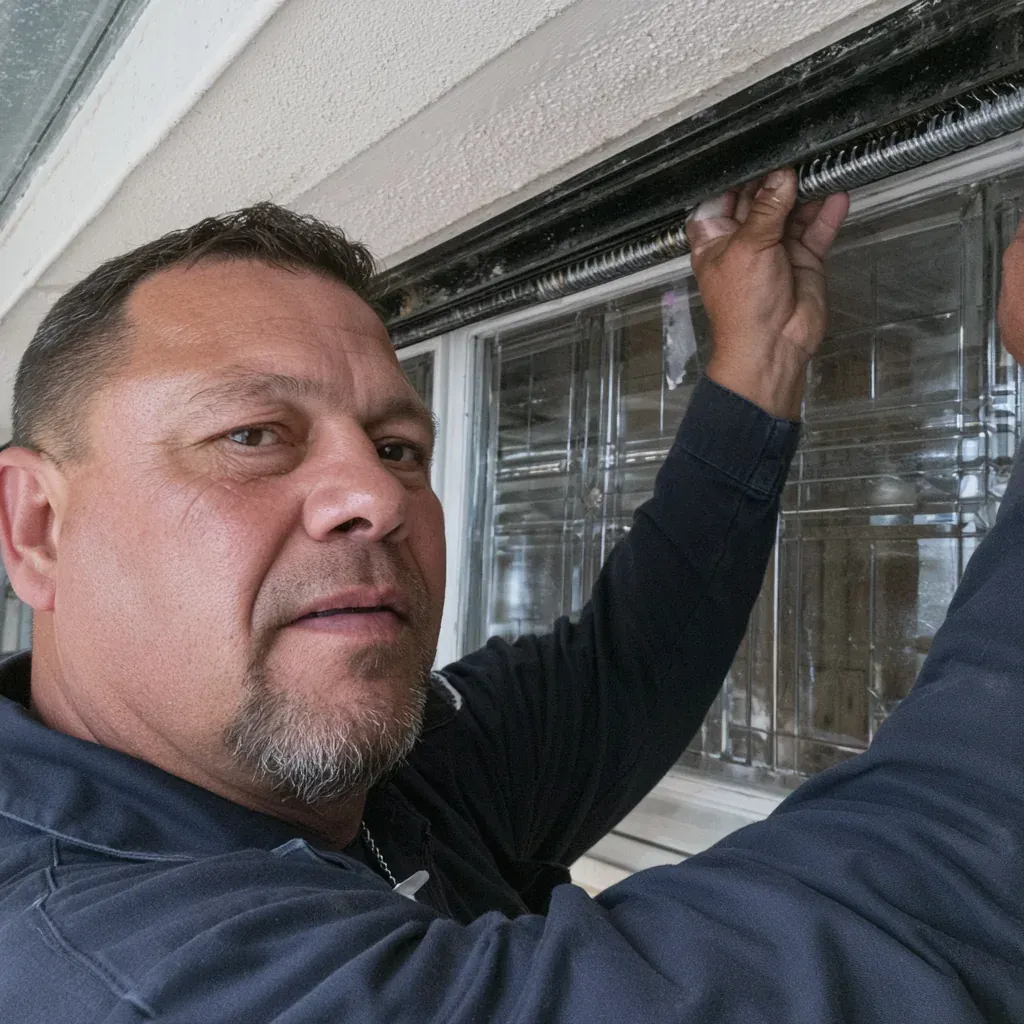
The first safe check is visual, not mechanical: look at both vertical tracks along the opening and the horizontal ones near the ceiling for a bend, a gap between track and roller, or a section pulled away from its mounting bracket. If one side of the door looks lower than the other, a cable has likely let go rather than the track itself failing. Homes in Irving neighborhoods like Valley Ranch and Cottonwood Valley see this after a hard bump from a vehicle or years of a bracket working loose from the framing.
When the Track Itself Bends
A vehicle bumper, a stored ladder, or a hard knock during a Las Colinas move-in can bend the vertical track enough that the rollers can no longer travel straight inside it. Once the rail has a kink, every roller that reaches that spot gets pushed sideways, and the door starts to walk out of the channel a little more with each cycle rather than snapping off in one motion.
A Roller That Jumped the Rail
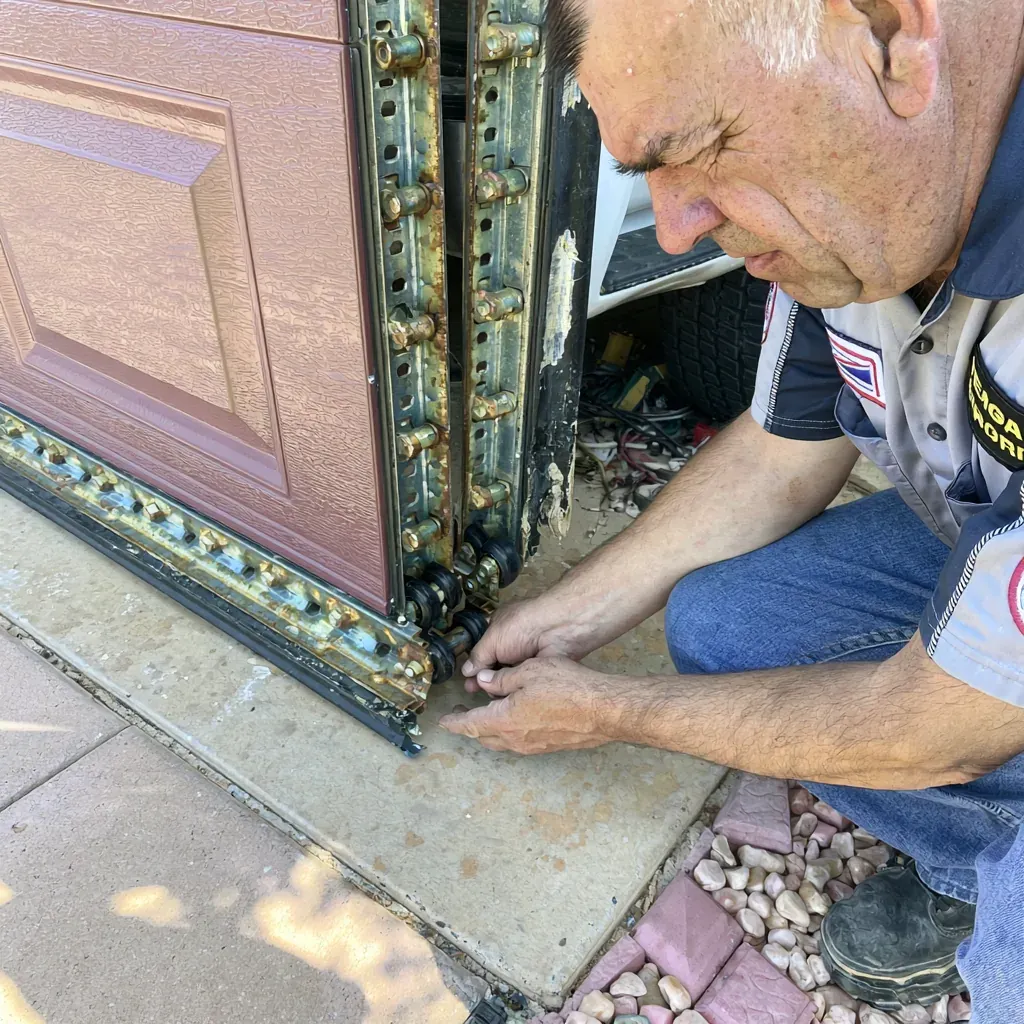
A garage door that has jumped its rail usually shows a roller sitting outside the metal channel instead of inside it, with the panel tilted or wedged at an angle in the opening. This happens when a roller cracks, a track bracket loosens from the jamb, or an off-center hit knocks the wheel out of its groove. In Irving homes with older tracks near Irving Heights or Plymouth Park, a bent section from years of small impacts is a common trigger alongside the roller failure itself.
What Hail and Heat Add
North Texas hail can dent a panel without touching the mechanism underneath it, but a hard enough impact near a hinge or roller bracket can knock a wheel loose from the track at the same time. Before assuming hail caused the misalignment, it is worth checking whether the dent is cosmetic or whether the door actually binds, drags, or refuses to travel smoothly past that panel.
The Torsion Spring Question
A door that comes off track under power, rather than being pushed or bumped, often has a spring problem hiding behind it. If the torsion spring above the door has weakened or broken, the opener is pulling unevenly against a door that no longer has balanced support, and that uneven pull is enough to walk a roller out of the track over a few cycles.
Checking Square Before Blaming Parts
Before assuming a part failed, it is worth checking whether the door and frame are still square. Irving sits on expansive clay that shifts with seasonal moisture, and a frame that has racked slightly out of square puts sideways pressure on the track that no roller or cable was built to handle. A misaligned track on a shifted frame is a different repair than a bent rail on a square one.
What Is Safe to Try
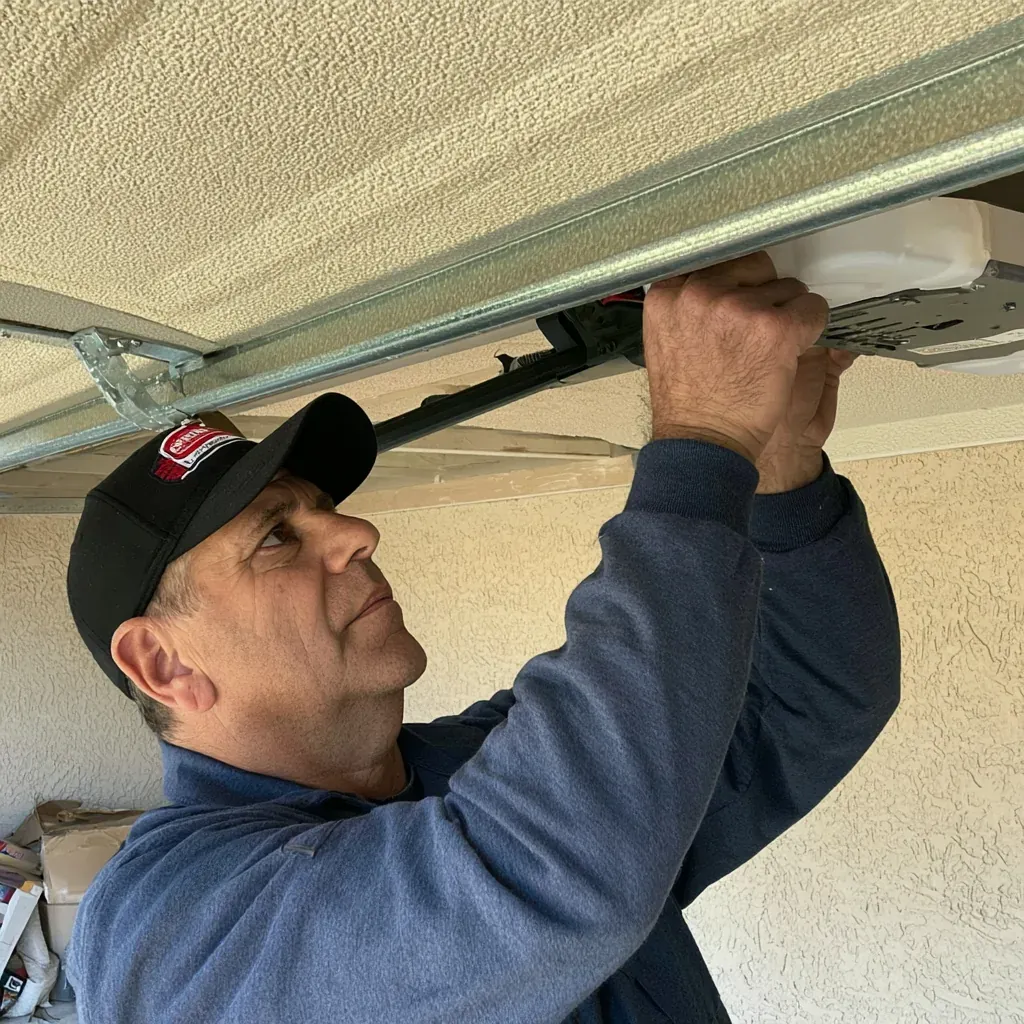
Safe checks stay outside the springs and cables. With the opener unplugged, look at the rollers sitting in the track and see if the gap between them and the rail is even along the run. Pull the release and move the door by hand only far enough to feel where it binds. If it stops within a foot or drags unevenly through Irving heat-softened rubber seals, stop there. Photographing the gap before calling the licensed pros we connect you with saves a second visit just to look.
Why Force Makes It Worse
A door under spring tension holds a lot of stored force, and a track knocked out of alignment changes how that force travels through the panel. Pushing the door back onto the rail by hand, or yanking a cable straight, can snap the cable, bend the track further, or let the door drop suddenly. Homeowners around Valley Ranch and Las Colinas dealing with heavier insulated doors face more force in that drop than a lighter older panel would produce.
Commercial Doors Near the Airport
Once a licensed pro is looking at the door, ask what actually failed first, since a track rarely bends on its own. A broken cable, a roller that shattered, or a bracket pulled loose from the jamb can each push a door sideways off true. Ask for a written scope before repair, confirm insurance, and get warranty terms in writing. This matters as much in an older Heritage District home as it does on a Las Colinas property managed from off-site, where nobody on hand can judge the damage.
When It Can Wait
A door that came off track slightly, still closes most of the way, and is not grinding or binding hard can usually wait a day or two before it is looked at, as long as it is left alone in the meantime. A door hanging visibly crooked, refusing to move, or showing a snapped cable should not be opened or forced again until it has been checked.
Roller Or Track Damage Signs
A track pulled away from the wall bracket, a roller sitting outside its rail instead of inside it, or a bent section of rail near a bottom corner are the visible signs worth noting before anyone touches the door again. Homes near Cottonwood Valley and Bear Creek with older single-car openings tend to show bracket wear first, since the hardware carries more flex on narrower tracks. Write down which side shows the gap; it tells the licensed pros we connect you with where to start.
Dealing with this in your home?
One failure keeps repeating on Irving service calls without folding neatly into a general list. Heat cycling through a Las Colinas garage warps track hardware over years, while an older Heritage District door often reveals a spring the original installer undersized. Age and installation choice, not neglect, usually explain it.