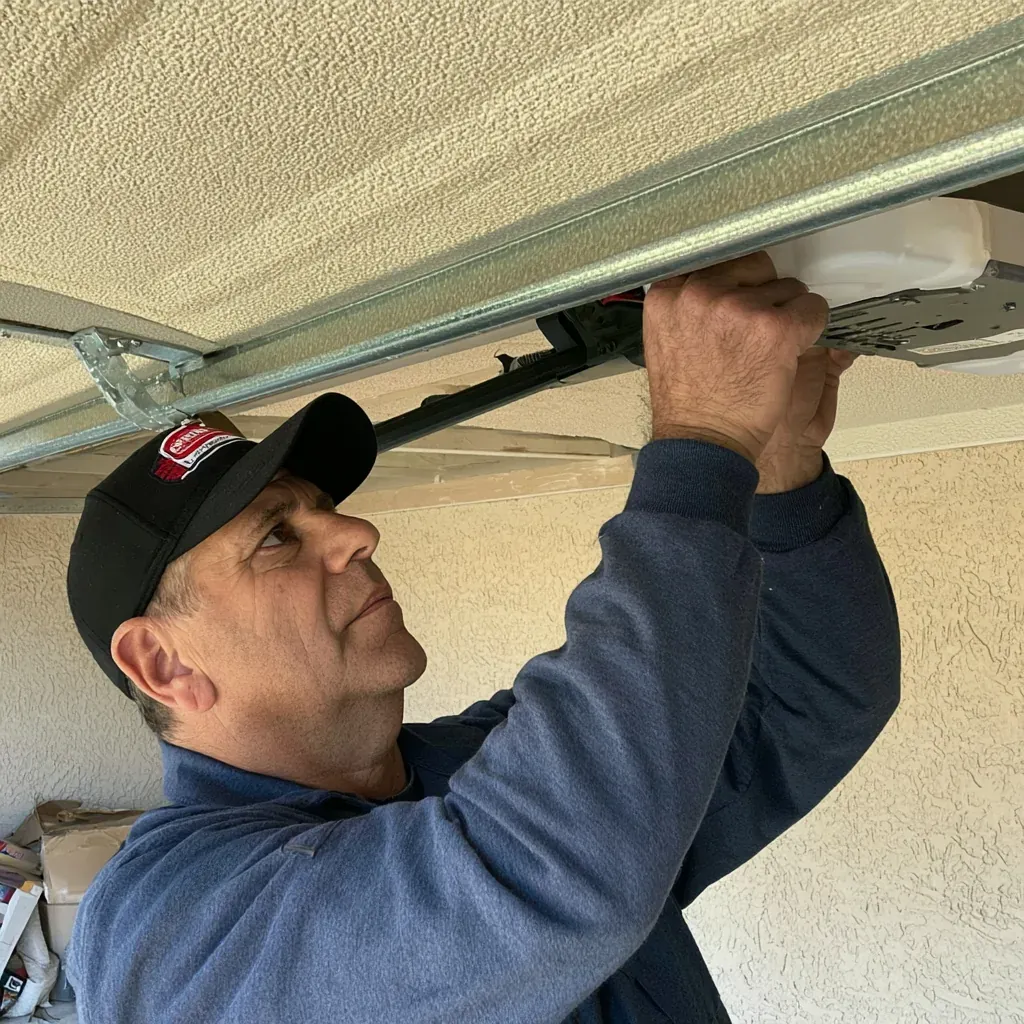
A belt-drive opener pulls the trolley along the rail using a reinforced belt, usually with a fiberglass or steel cord core, instead of a metal chain. The motor and gearing are the same basic layout either way. What changes is the part making contact with the trolley, and that one part decides most of the difference in sound, upkeep, and how the system behaves after years of daily cycles in an Irving garage.
Chain Drive Explained
Chain drive is the older, more common layout across Irving, especially on doors installed before belt systems became standard. A metal chain, similar in principle to a bicycle chain, links the motor to the trolley. It handles heavier doors without much concern, and it has been the default for detached garages and older sectional doors around Irving Heights and Plymouth Park for decades.
Why Noise Matters Here
Noise is the difference most people notice first. A chain drive clatters against the rail, and that sound carries through drywall into a bedroom or home office directly above an attached garage. Belt drive runs closer to a hum. In Las Colinas and Cottonwood Valley, where many garages sit against living space rather than a detached structure, that quieter operation is often the deciding factor over cost.
Weight the Door Carries
Weight capacity works the other way. Chain drive has long been the choice for heavier doors, including wood carriage-style doors or oversized units on some University Hills and Bear Creek properties, because a chain does not stretch under load the way a belt can over time. Belt drive still handles standard steel or aluminum sectional doors without strain, but it was built with lighter, attached-garage doors in mind first.
What Upkeep Looks Like
Maintenance differs in small but real ways. A chain needs occasional lubrication to keep it from binding or jumping a sprocket tooth, and slack has to be checked periodically since chains stretch slightly with use. A belt does not need lubrication and does not stretch the same way, but it can crack or fray at the edges after enough seasons of Irving heat, which is worth a visual check now and then.
Irving Heat and Materials
Heat plays a role that is easy to overlook. Irving summers push garage interiors well past outside temperature, especially in attached garages along MacArthur Boulevard and Belt Line Road corridors with little airflow. Rubber and composite belt materials handle sustained heat differently than steel chain does, and that is one more reason a belt drive rated for the climate matters more than the sticker price when comparing units.
Commercial Doors Differ
Commercial and airport-area doors near DFW International Airport and Las Colinas office parks tend to skip this choice altogether. Roll-up and heavier sectional doors sized for logistics or office parking structures are usually driven by chain or a direct-drive motor rated for cycle count and curtain weight, not the residential belt-versus-chain comparison that applies to a house.
Switching Drive Types
Swapping drive types means replacing the rail assembly, not just the motor head, since belt and chain systems use different carriages. An installer in Irving will also confirm the header bracket and travel distance still match, especially on older sectional doors where the opening height was never standardized. Budget for a new logic board too if the existing opener predates rolling-code security, rather than reusing a unit built for the other drive style.
Safety Standard Either Way
Either drive type still has to meet UL 325 entrapment protection, the safety standard covering how a residential opener reverses on contact and reads its photo eyes. That standard applies the same way regardless of belt or chain, so the choice between the two is about noise, weight, and upkeep, not about which one is safer to operate.
Wiring Sits Apart
New wiring for a dedicated opener circuit, or replacing an outlet that was never grounded properly, falls under general electrical work and should be handled following Texas electrical licensing rules rather than treated as part of the opener swap itself. That is worth separating out before assuming a new opener is a simple plug-in job.
What to Ask Before Hiring
Texas does not issue a statewide garage door contractor license, so the useful questions to ask before hiring anyone are about insurance, a written scope of work, the specific opener model and part details, and what warranty terms cover the drive component versus the motor. Those answers matter more than a license number that does not exist to check.
When Neither Type Solves It
When the photo eyes line up, the travel limit matches the door's actual swing, the track along the jamb is straight, and the spring still raises the door evenly on both sides, the mechanical checks are done. Anything past that point involves opening the opener housing or adjusting spring tension, work better suited to the licensed pros we connect you with, who carry test gear for measuring force output directly rather than guessing from the driveway.
Dealing with this in your home?
One failure keeps repeating on Irving service calls without folding neatly into a general list. Heat cycling through a Las Colinas garage warps track hardware over years, while an older Heritage District door often reveals a spring the original installer undersized. Age and installation choice, not neglect, usually explain it.