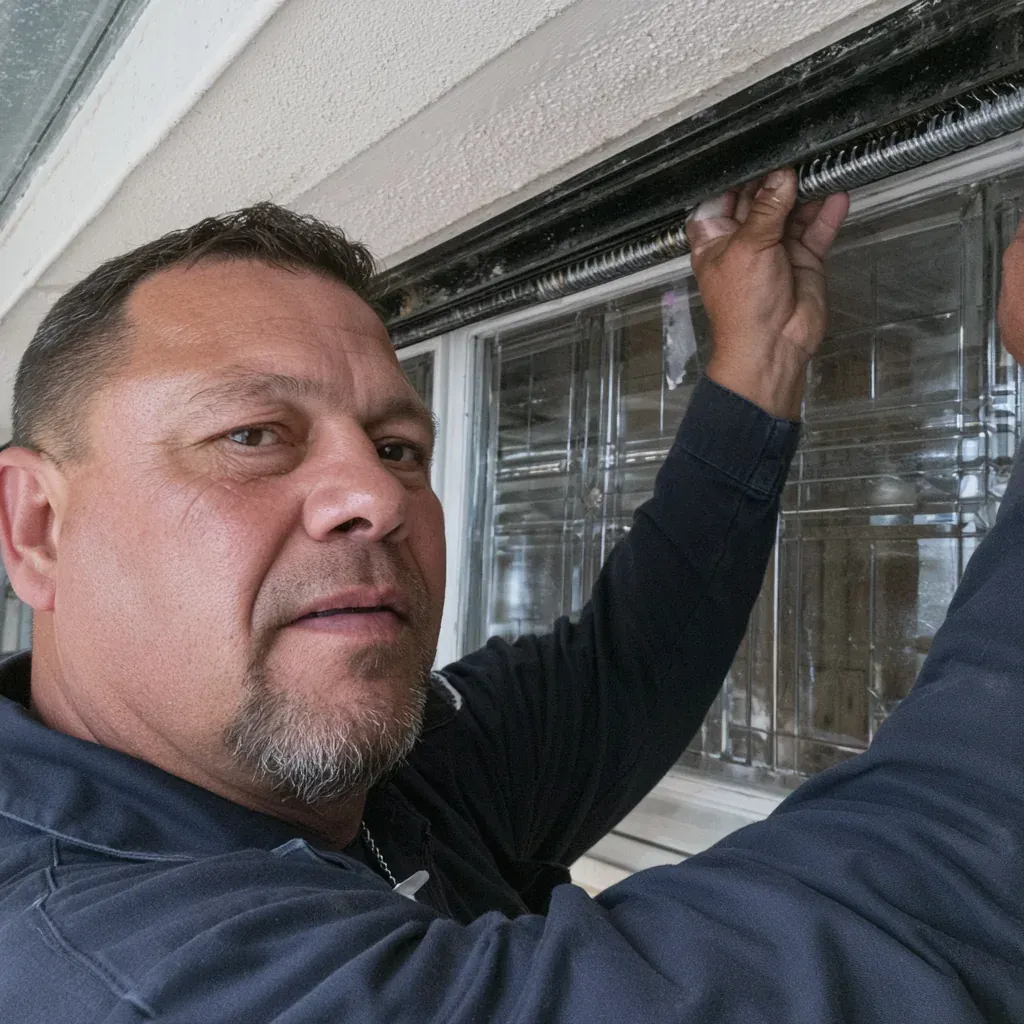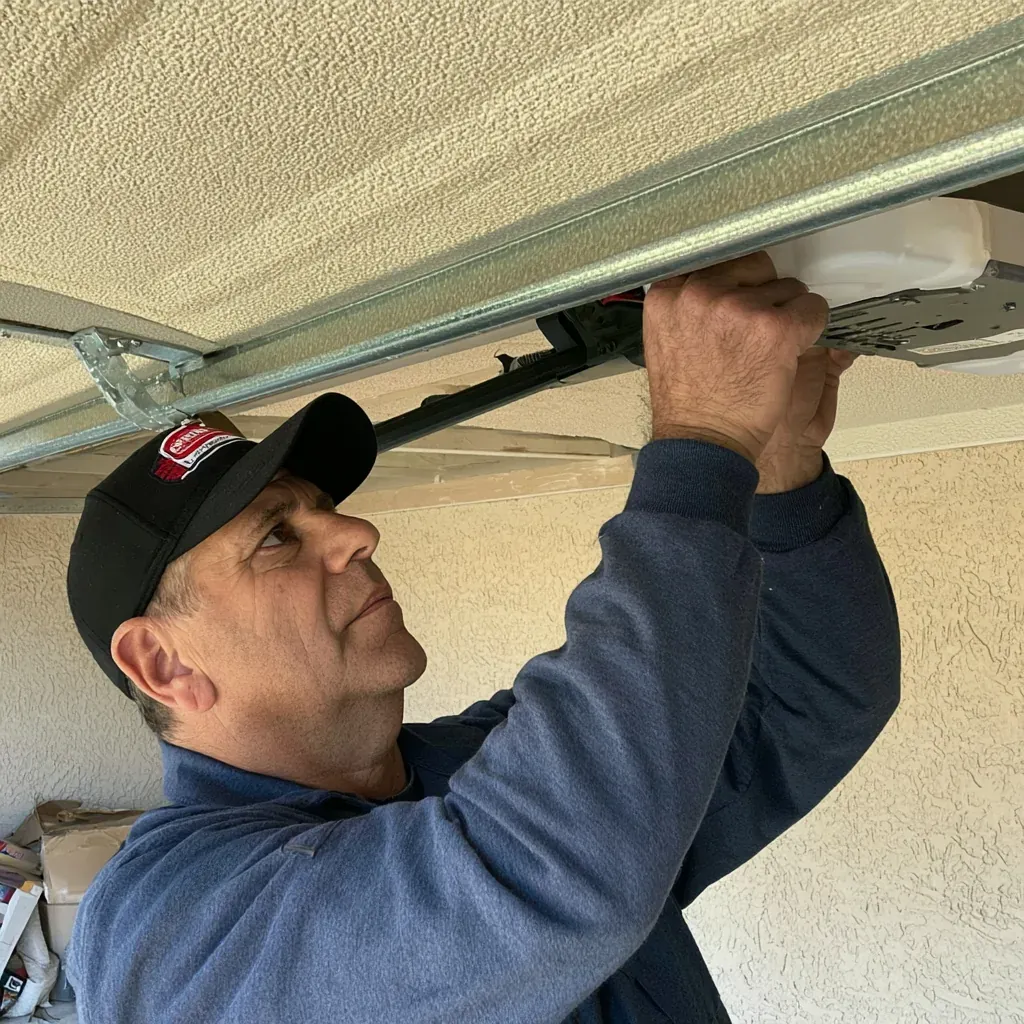
An Irving homeowner usually notices the safety sensors when the door refuses to close at all, or closes partway and jumps back up without touching anything. Sometimes one small light on the sensor housing is solid while the other blinks, or both sit dark. None of that means the opener itself is failing. It almost always points to the pair of sensors near the floor, the wiring running to them, or something briefly breaking the beam between the two tracks.
What Irving's Clay Ground Does
Irving runs on expansive clay under most slabs, and that ground shifts a little with the wet and dry swings between spring storms and summer heat. A garage door track bolted to a frame that has moved even slightly can pull one sensor bracket out of line with its partner. Add hail season traffic in and out of the garage, and the low-mounted sensors near Las Colinas driveways and older Irving Heights carports take more bumps than most people expect.
Reading The Two Small Lights
The opener has two small sensor eyes near the floor on each track, usually six inches up. When aligned, one shows steady light. Wipe both lenses, then check that nothing in the Cottonwood Valley garage or a Valley Ranch driveway, like a bike or storage bin, sits in the beam path. A blinking or dark light means misalignment, not a failed motor. Gently loosen the sensor bracket, aim the eyes level toward each other, and retest before assuming the opener itself needs work.
Fixing A Knocked Bracket
With the lenses clean, stand at one sensor and sight across to the other. They should point at the same height and the same angle, not one tilted up and one tilted down. A knocked bracket from a stored bike, a broom, or a car bumper is the most common cause in an Irving garage. Loosen the wing nut or screw holding the bracket, nudge it back level with its partner, and watch for the steady light before tightening anything down.
The Broom Handle Test
Test the beam itself by running the door down and passing a broom handle through the space between the two sensors partway through the cycle. A door with working sensors reverses immediately and travels back up. If it keeps closing as if nothing happened, the sensors are not communicating with the opener at all, whether from a bad connection, a failed unit, or wiring pinched somewhere along the track.
Tracing The Wiring Path
Follow the low-voltage wire from each sensor back toward the opener head, checking for a spot where it has been pinched under a shelf, chewed by a stored extension cord, or simply pulled loose at a wire nut. Irving garages used for storage along Belt Line Road and MacArthur Boulevard corridors often have wiring pressed against boxes or lawn equipment, and a nicked wire can behave exactly like a misaligned sensor without ever showing a bent bracket.
When The Mount Itself Fails
Check the bracket mounting itself, not just the sensor angle. Some Irving garages use brackets screwed into drywall rather than into the track or framing behind it, and drywall anchors loosen faster than lag bolts under repeated door cycles. A sensor that looks aimed correctly but wobbles when tapped lightly is a mounting problem, not an electronics problem, and tightening the anchor point often solves what looked like a wiring fault.
Ruling Out Afternoon Sun
Rule out sunlight next, especially on garages facing west toward Cottonwood Valley or Hackberry Creek in late afternoon. Direct sun hitting a sensor lens can wash out its ability to read the opposite beam, causing a door to reverse or refuse to close only at certain hours. Shading the lens briefly with a hand while testing tells you fast whether the sun, not the wiring, is the actual variable.
Testing The Wall Button Instead
Confirm the opener's own logic board is not the source by testing the wall button separately from the remote. Press and hold the wall-mounted button to close the door manually; if it closes fine that way but not through the automatic cycle, the sensors or their circuit are still the more likely fault than the main opener unit. This narrows the search before anyone opens the opener housing itself.
After Hail And High Wind
North Texas hail and straight-line wind can dent a track or knock a mounting bracket without leaving obvious damage from a distance. After any storm that produced hail near Irving, walk both tracks and both sensor brackets before assuming the opener failed on its own. A dent that shifted a bracket by even a small amount is enough to break sensor alignment while leaving the rest of the door looking untouched.
What A Failed Test Means
A reversal test or photo-eye check that keeps failing after cleaning, realigning, and checking the wiring means the door is not meeting the entrapment protection that UL 325 assumes every automatic residential opener provides. That gap matters more in homes with children or pets moving through the garage, and it is not a safe thing to leave unresolved because the door still opens and closes most of the time.
Reading The Blink Before You Call
Set a habit around this. After any hail pass through Irving or a stretch of hard summer heat that can warp weatherstripping, run both checks again: block reversal and photo-eye interruption. Jot the outcome somewhere simple, a phone note works, with the date and which door. A sensor that reads clear near Valley Ranch one month can drift out of alignment the next if a mower or a stored bin nudges the bracket. Patterns across seasons tell the licensed pros we connect you with more than a single visit ever could.
Dealing with this in your home?
One failure keeps repeating on Irving service calls without folding neatly into a general list. Heat cycling through a Las Colinas garage warps track hardware over years, while an older Heritage District door often reveals a spring the original installer undersized. Age and installation choice, not neglect, usually explain it.