The question usually surfaces after a torsion spring snaps, leaving a door stuck halfway on its track. In Irving, that moment often comes on an older postwar home in central Irving or a two-car garage in Valley Ranch, where the owner is trying to figure out what a replacement actually runs before anyone shows up. There is no single number, because springs are sized to the door, not the neighborhood.
What Changes The Price
A torsion spring holds a garage door's full weight on a wound shaft above the opening, and it is sized for a specific weight range, not a rough guess. In Irving, a door that has sagged, dropped fast, or grown hard to lift by hand is usually telling you the spring has weakened, not that the opener is failing. Checking which symptom you actually have comes before any cost question makes sense.
Torsion Versus Extension Springs
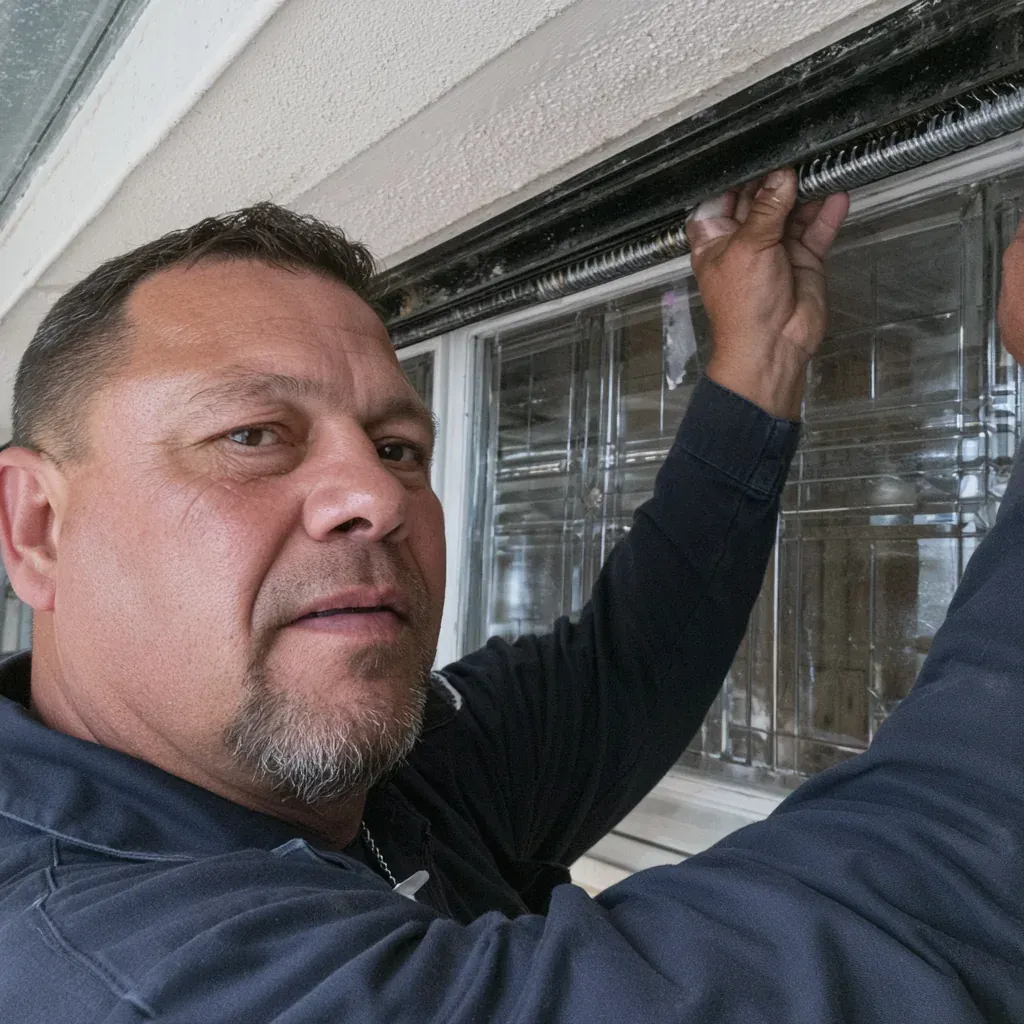
Torsion springs sit on a shaft above the door, winding and unwinding under tension as the door travels. Extension springs run along the horizontal tracks instead, stretching as the door closes. Most Irving garages built with a single wide door lean toward torsion springs for the lift, while older central Irving homes with narrower openings sometimes still carry extension setups. Neither type is repaired once it breaks; the spring is replaced, and the count depends on door weight and width, not the home's age alone.
Why The Safety Cable Matters
A torsion spring stores enough force to lift a door weighing well over a hundred pounds, and that force does not disappear when the spring snaps. The safety cable runs through the coil and is meant to hold the broken pieces in place instead of letting them fly across the garage. Extension springs use a similar cable through the length of the spring for the same reason. A missing or frayed cable turns a routine failure into a hazard, which is why it gets checked alongside the spring itself.
Matching Springs To The Door
Two springs wound to slightly different tension will still lift a door, but unevenly, and that uneven pull is what bends track and strains rollers over time in an Irving garage. A homeowner near Plymouth Park or University Hills who notices one side of the door dipping before the other is watching that mismatch happen, not a track problem on its own.
Signs A Spring Is Wearing Out
Age and cycle count matter as much as the spring's rated life. A spring that has opened and closed a door daily for years near University Hills or the Irving Arts District wears out even if it never shows visible damage. Rust from humidity swings, or a coil that looks slightly stretched compared to its neighbor on a two-spring system, both point toward replacement before a full failure strands the door.
Hail Damage Is Not Spring Failure
Cable condition matters as much as the spring itself, since a frayed or slipped cable can mimic a spring failure from the driveway. A door in central Irving that drops unevenly, or one side that lags near the bottom of its travel, points toward the cable and drum, not automatically the spring. Separating the two before quoting a repair keeps the estimate honest.
Reading What The Door Is Doing
A door that will not budge, drops suddenly, or sags unevenly on one side is showing spring failure, not a track or roller problem. A door that moves but scrapes, jerks, or rattles along the way is more likely misaligned tracks, worn rollers, or a stretched cable. Testing whether the door is square in its frame before touching the springs avoids paying for a repair that never addresses the actual cause.
The Line You Should Not Cross
A single door near Plymouth Park or Irving Heights carries less weight than a double door on a three-car home in Valley Ranch or Cottonwood Valley, and that difference is exactly what spring sizing has to account for. Guessing at strength based on the door's looks, rather than its measured weight and travel, is where the line sits. Past that point the job calls for someone who winds torsion springs for a living, since misjudging the wind can send the bar and cones off the shaft.
When An Association Gets Involved
Homes in Hackberry Creek or Cottonwood Valley under an owners' association may face a required color or style match if the whole door needs replacing alongside the spring, though no single rule covers every property, and it is worth checking before ordering parts. A straightforward spring swap on an existing door rarely triggers that question, since the panel and track stay the same.
Questions Worth Asking First
Ask whether the quote is for one spring or the pair, since replacing only the failed side leaves two springs of different age and wear tension carrying the same door. Ask what wire gauge and wind length the new spring matches, and whether that was measured from the door itself rather than assumed from its age. A written scope with those details, not just a number, is what protects an Irving homeowner from a mismatched repair.
Two Spring Styles, Two Price Paths
Torsion springs wind on a shaft above the opening, while extension springs stretch alongside the horizontal tracks. The parts, labor, and safety steps differ because the systems carry force differently. A useful written scope names the spring type, the door weight it must balance, and any cable, drum, pulley, or track work found during inspection without treating either setup as a flat-price job.
Dealing with this in your home?
One failure keeps repeating on Irving service calls without folding neatly into a general list. Heat cycling through a Las Colinas garage warps track hardware over years, while an older Heritage District door often reveals a spring the original installer undersized. Age and installation choice, not neglect, usually explain it.