A door that runs smoothly on one side but scrapes, hesitates or grinds on the other is usually telling you about alignment, not a broken part. In Irving, that lopsided drag often shows up after a stretch of dry weather followed by rain, when the slab and door frame have shifted just enough to throw one track out of line with the other. The door still moves. It just fights itself getting there.
What One-Sided Binding Looks Like
One-sided binding means the door drags, chatters or resists on only one track while the other side moves freely. In Irving, this often follows a stretch where clay soil under the slab dried and shrank, or swelled after rain, nudging one jamb slightly out of position relative to the other. The door itself may be sound; the opening around it has simply gone out of square. Watch for the drag point staying at the same height on every cycle, which points to that one track rather than a worn part.
Clay Soil and a Shifting Slab
North Texas clay-rich soil shrinks in dry stretches and swells after rain, and that movement can travel into a slab and the frame bolted to it. A garage built square can end up with one jamb sitting slightly higher or forward of the other. The door itself has not changed shape. The opening around it has, and that is enough to pull one track out of square while the opposite side barely moves.
Checking Square Before Anything Else
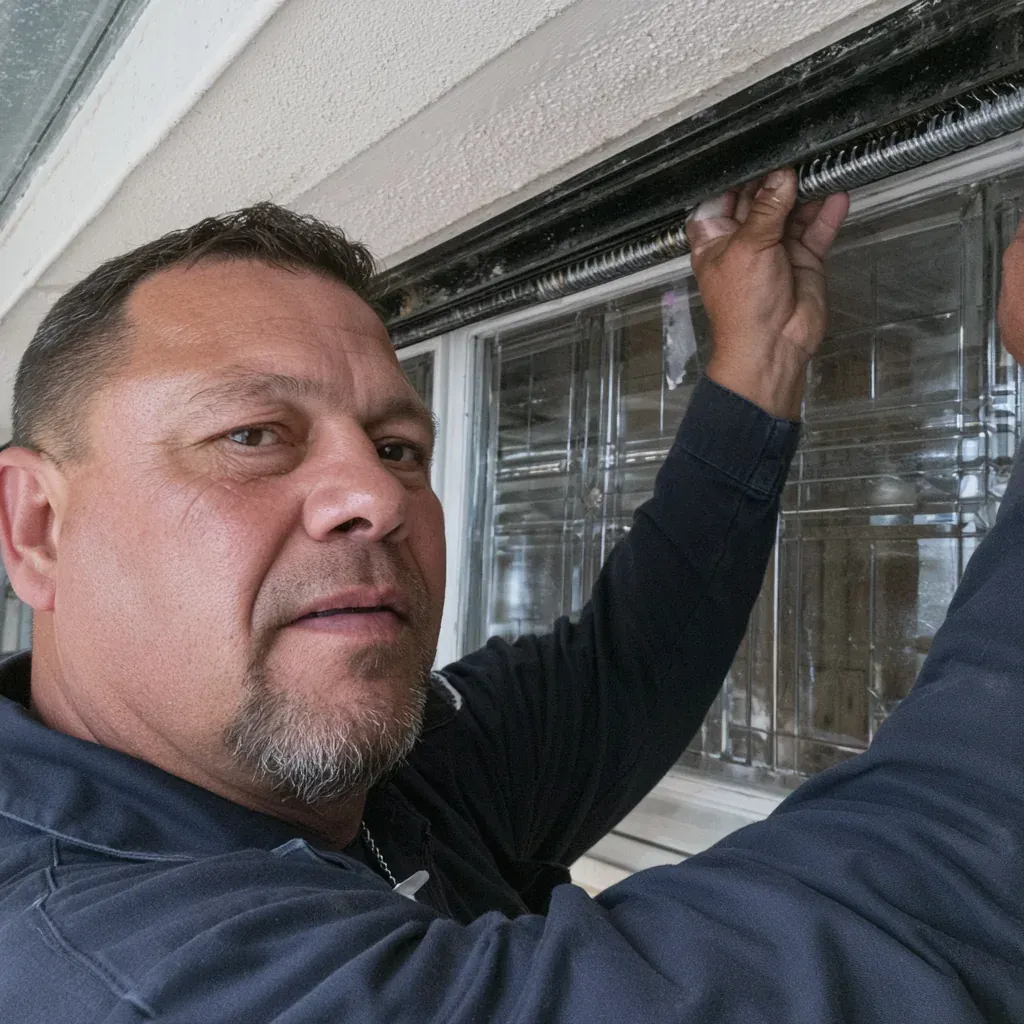
Binding that shows up on just one side often traces to the track, not the spring. If rollers ride tight against one guide while the other has room to spare, slab movement near the opening has likely nudged that jamb out of plumb. Bolts can loosen as the bracket flexes with it. A track forced into a new angle will drag a roller every cycle, and that drag can look like a spring problem until someone checks the rail with a level first.
Tracks That Look Fine but Aren't Level
A track can be straight and undamaged and still be mounted slightly out of level with its opposite number. Even a small gap between the intended line and the actual line adds friction that a roller has to fight on every cycle. This kind of misalignment can develop slowly as mounting brackets loosen or as the wall behind them shifts with the slab, so a track that was fine last year does not rule out a track problem this year.
Rollers, Hinges and Where They Wear
One-sided binding puts uneven load on the rollers and hinges nearest the tight side, and that wear compounds the original problem. A roller forced sideways against a track edge wears its bearing faster than one running true, and a worn roller adds its own drag on top of whatever alignment issue started the binding. By the time the noise gets loud enough to notice, the rollers on the affected side have often been absorbing extra stress for a while.
When the Opener Masks the Real Cause
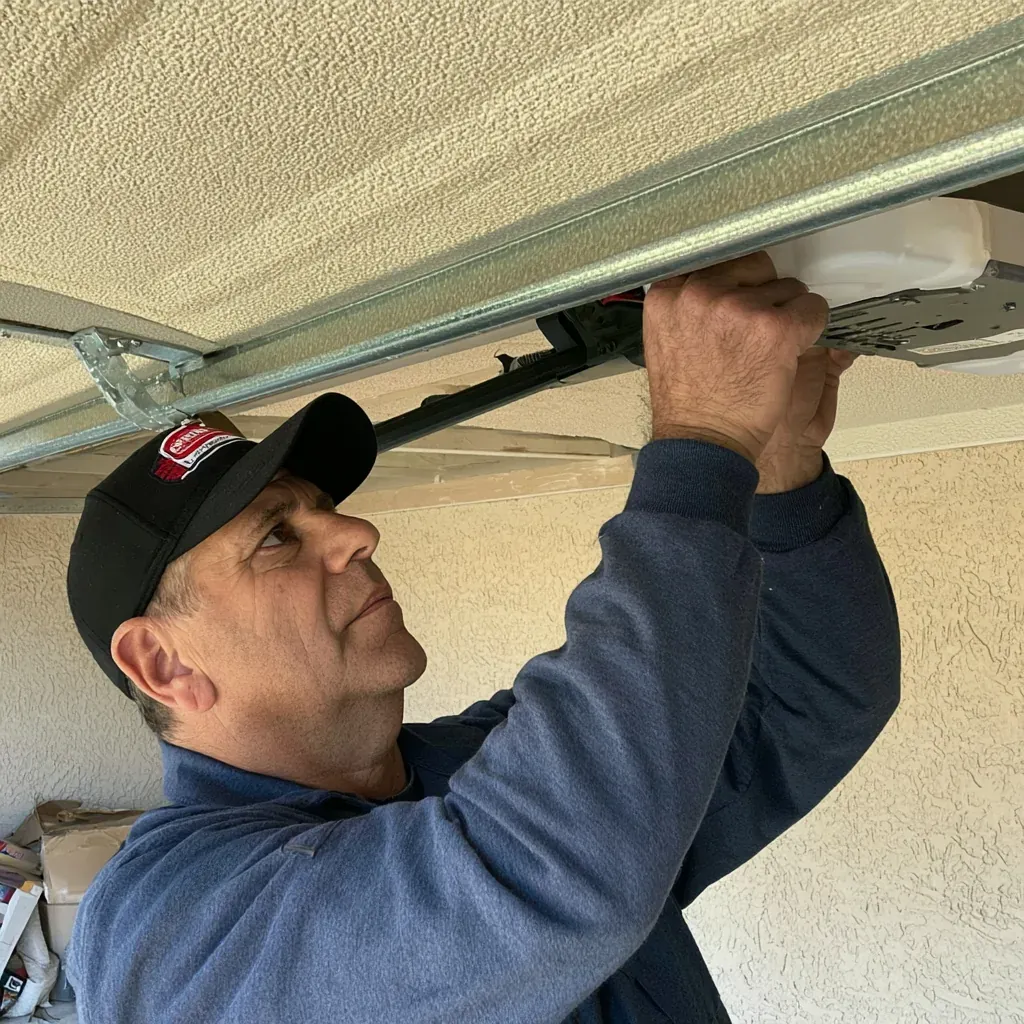
A chain or belt-drive opener has enough force to push a binding door through its cycle, which can hide the problem for months. The motor just works harder, drawing more current and running hotter, until it strains or trips its safety reversal under UL 325 entrapment protection. Treating that as an opener fault and swapping the unit will not fix a frame that is out of square, and the new opener will show the same strain on the same side.
Older Homes Versus Newer Construction
Older sections of Irving near Irving Heights or Plymouth Park sit on foundations poured decades ago, with years of clay movement already worked into the frame, while newer construction around Valley Ranch or Cottonwood Valley is still settling into its first cycles of shrink and swell. Either can develop one-sided binding, but the pattern differs: older homes tend toward a steady, slow drift, while newer slabs can show sharper seasonal shifts.
Las Colinas and Shared Structures
In Las Colinas, garages inside shared parking structures or HOA-governed properties near Lake Carolyn and the Mandalay Canal Walk face the same clay movement as detached homes, but the frame sits inside a larger structure with its own settling behavior. A door binding there can reflect movement in the building itself, not just the individual opening, which is worth mentioning if an HOA design review or maintenance request becomes part of fixing it.
What Not to Force
A binding door should never be forced past the point where it resists, either by hand or by letting the opener push through repeated strain. Forcing it can bend a track, pull a bracket loose, or put a bowed panel under load it was not built for. If the door stops smoothly with light resistance on one side, that is the point to stop pulling or pushing and look at the frame rather than keep testing how far it will go.
Hail, Panels and a Separate Question
Binding is a movement problem, not a cosmetic one, so a hail-dented panel from a North Texas storm is worth documenting separately rather than folding into the same repair. A dent can sit on a door that still tracks straight, and a door that binds can have panels with no visible damage at all. Keeping the two questions apart matters if a homeowner is also weighing whether the dent affects an insurance claim.
Ruling Out Alignment Before Repair
Before assuming a broken part, sight down each track from the floor and check whether the gap between door and jamb stays even top to bottom on both sides. A tape measure across both jambs, corner to corner, will show a square opening if the numbers match. If one side reads consistently longer, the framing has shifted and no amount of spring or roller work will correct that by itself. Only after square and level check out does it make sense to price cable, roller or spring repair.
Dealing with this in your home?
One failure keeps repeating on Irving service calls without folding neatly into a general list. Heat cycling through a Las Colinas garage warps track hardware over years, while an older Heritage District door often reveals a spring the original installer undersized. Age and installation choice, not neglect, usually explain it.