R-value measures how well a garage door resists heat transfer, and in Irving it matters most against summer heat loading a garage wall shared with living space or an HVAC line. A door rated higher slows that transfer; it does not seal gaps at the bottom seal or weatherstrip. Homes near Valley Ranch and Cottonwood Valley with attached garages benefit most. Check the panel's printed rating before assuming insulation alone fixes a hot garage, since air leaks around the track and seals often matter more than the number itself.
Where The Rating Comes From
Manufacturers test the door panel alone, usually foam sandwiched between two steel skins or a single skin with foam backing. Polystyrene boards give a lower number than sprayed or injected polyurethane foam of the same thickness, since polyurethane fills the panel more completely. The rating printed on a spec sheet reflects that core material and thickness, not how the door performs once it is hung, weatherstripped and closed against a specific opening.
Panel Number Versus Installed Result
A door rated well on paper can still perform poorly once it is installed if the perimeter seal is loose or the bottom astragal is worn flat. Heat and cooled air pass around a door more than through it in most Irving garages, especially where the slab has shifted slightly and left a gap along one side. The R-value describes the panel; the gaps around it are a separate problem the rating never accounts for.
What Insulation Changes Inside
An insulated door changes the garage itself more noticeably than the house next to it. A garage in Irving Heights or Plymouth Park with an insulated door and no other change usually runs several degrees cooler in August afternoons than an uninsulated one on the same street. That matters for anyone storing paint, a car battery, or using the garage as a workspace, though it rarely changes the temperature of an adjoining bedroom by much on its own.
Attached Rooms And Shared Walls
Where a garage sits directly under a bonus room, or shares a wall with a bedroom common in older Irving Heights and University Hills layouts, an insulated door can measurably reduce how much heat radiates through that shared surface. Newer construction in Las Colinas and Valley Ranch often already builds in conditioned space above or beside the garage, where the door's insulation carries more real weight because the adjoining room depends on that barrier holding.
Noise Is Often The Real Motive
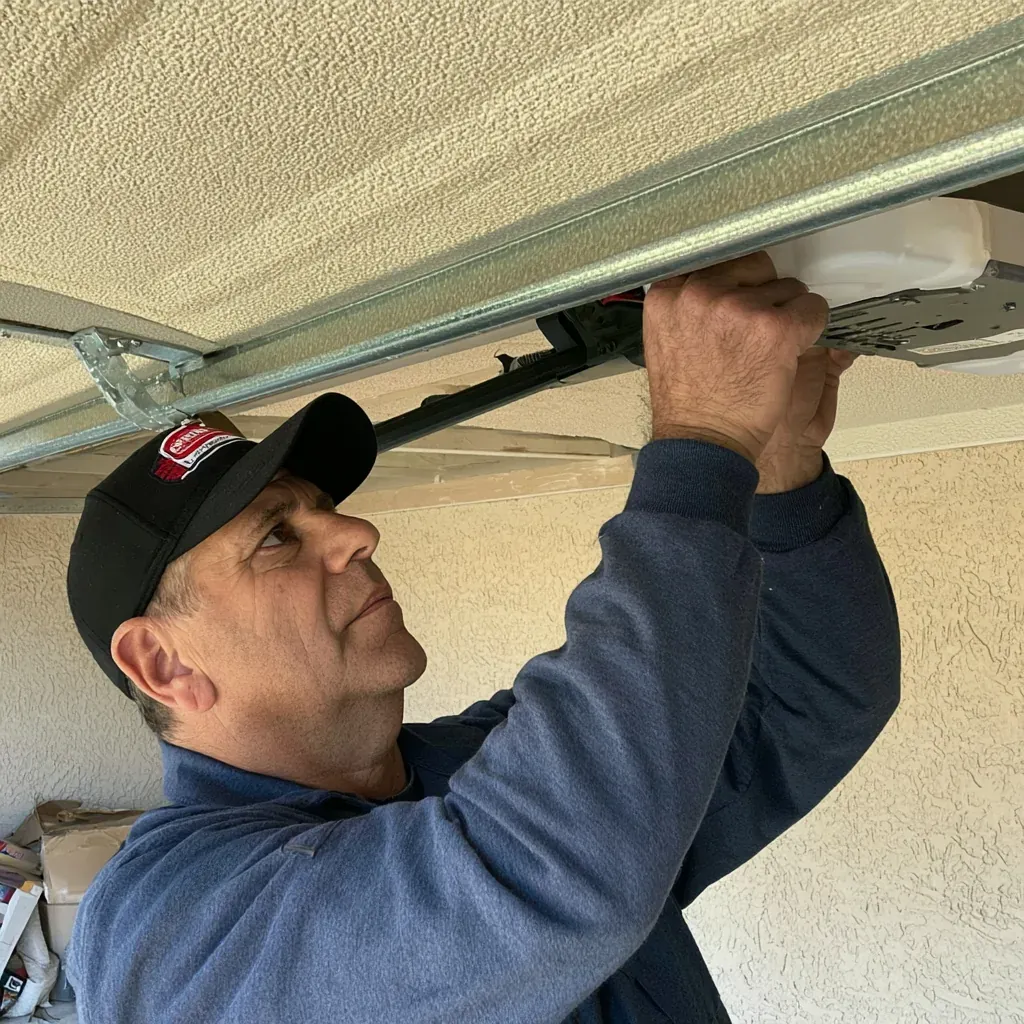
Sound deadening is frequently the reason someone asks about R-value in the first place, not temperature. A foam-core door reduces the drumming sound of hail on the panel and dampens the vibration of a chain-drive opener running near a bedroom wall. In parts of Downtown Irving and Northgate with older, narrower lots, that noise difference is often more noticeable day to day than any change in wintertime heating cost.
Hail And Panel Damage Are Separate
A hailstorm crossing Irving can dent a panel skin without touching the foam core or the insulation value underneath it. Cosmetic denting on the surface does not necessarily mean the R-value has dropped, and it does not mean the door has stopped moving correctly. Whether the dent is purely cosmetic or has bent a track, hinge, or panel edge enough to bind the door is worth checking before assuming insulation performance has changed at all.
Weatherstripping Does Its Own Job
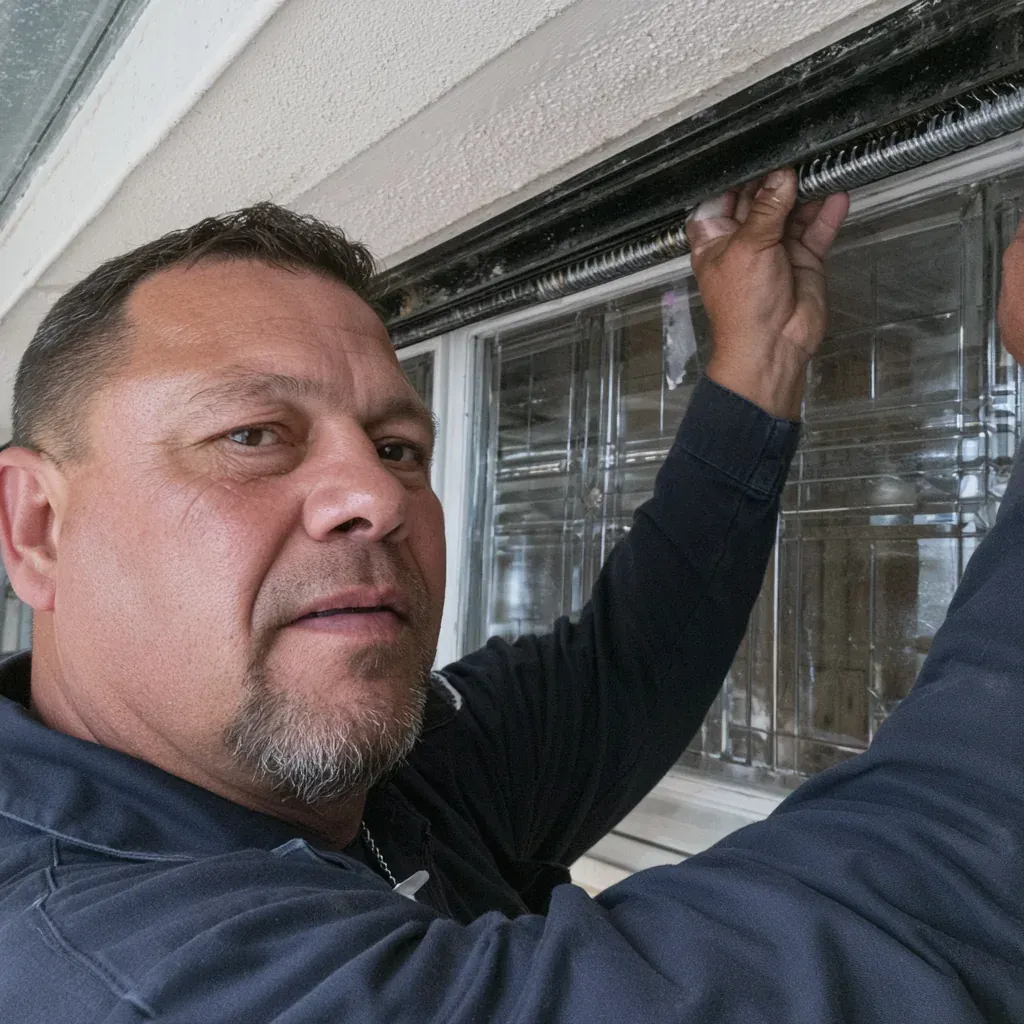
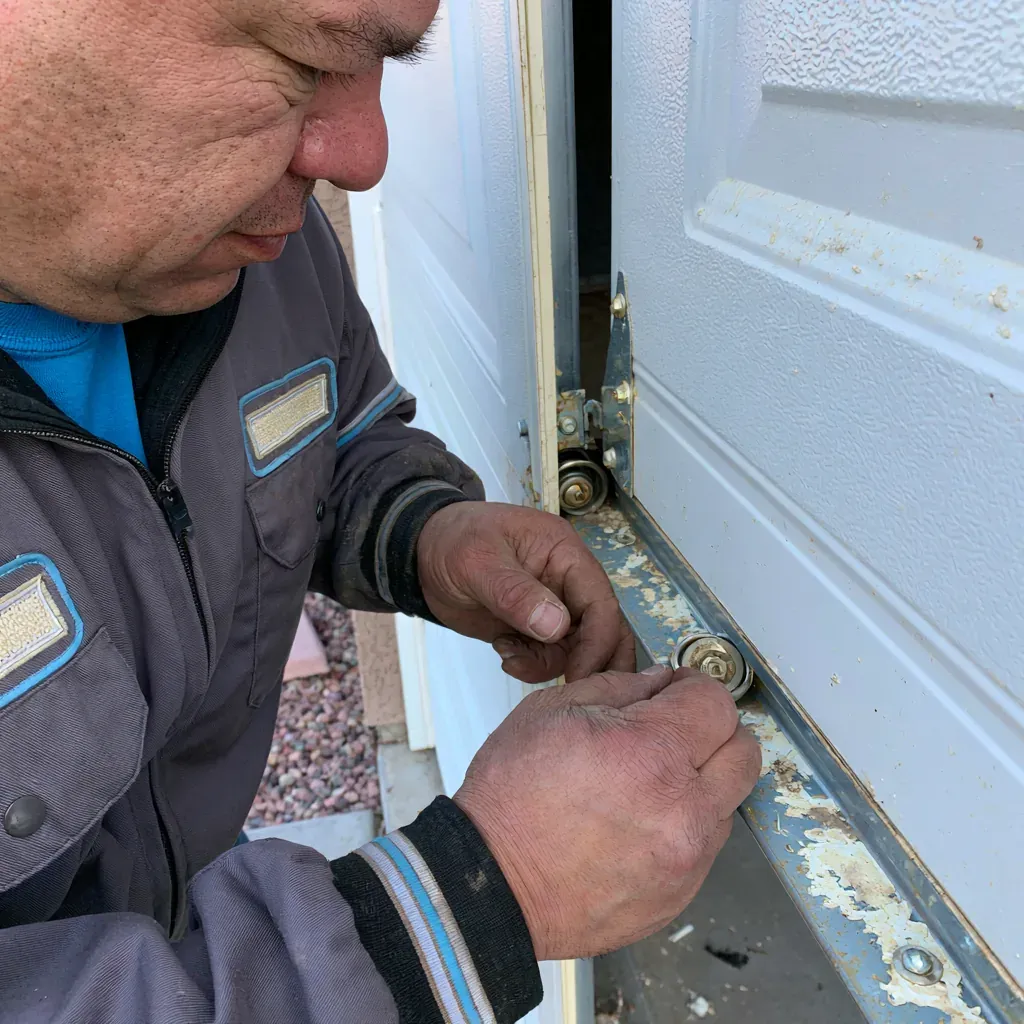
The bottom seal, side jambs, and top header seal handle air infiltration, which is a different job from the panel's R-value. A well-insulated door with a cracked or flattened bottom astragal still lets in outside air freely, and replacing that rubber strip is usually a smaller job than replacing the door. Anyone chasing a drafty garage in Irving should check these seals for cracking or gaps before assuming the panel material is the problem.
Commercial Doors Weigh It Differently
Near DFW International Airport and the office corridor through Las Colinas, commercial sectional and roll-up doors get insulated for a different reason: holding a conditioned loading area or workspace steady, not comfort. Those doors are sized and rated by opening dimension, curtain weight, and cycle count, so a residential R-value figure does not translate directly to what a commercial door needs or how its insulation is specified.
Retrofitting An Older Door
Some older uninsulated doors around central Irving and the Heritage District can accept an insulation kit, rigid foam panels cut to fit each section, rather than a full door replacement. This raises comfort and reduces noise somewhat but will not match a factory-built insulated panel, since the fit around hardware and reinforcement struts is rarely as tight as a manufactured core. It is a lower-cost middle step, not an equivalent substitute.
Questions Worth Asking First
Before paying for a higher R-value door, it helps to ask what the actual goal is: lower garage temperature, quieter operation, or protecting an adjoining room. Ask what core material and thickness a quoted door uses, since polyurethane and polystyrene at the same stated thickness perform differently. Texas issues no statewide license for this trade, so ask instead about insurance, a written scope of work, and warranty terms covering both the panel and the labor.
What The Insulation Rating Skips
An R-value on a spec sheet describes the panel foam, not the whole assembly. Perimeter seals, the bottom astragal, and gaps around older tracks in Irving Heights or Plymouth Park homes let conditioned air escape no matter what the door itself is rated. A tight-fitting single layer door can outperform a poorly sealed double layer one. Check weatherstripping and panel seams before assuming a higher printed number will change the garage temperature.
Dealing with this in your home?
One failure keeps repeating on Irving service calls without folding neatly into a general list. Heat cycling through a Las Colinas garage warps track hardware over years, while an older Heritage District door often reveals a spring the original installer undersized. Age and installation choice, not neglect, usually explain it.