A garage door that squeaks on the way up in Irving is usually asking for lubricant on a specific part, not a blanket spray. Hinges, rollers, the torsion spring and the top of the track each take a different product, or none at all. Grabbing whatever is on a shelf in Irving Heights or Plymouth Park and spraying the whole assembly is how dust from a dry spell turns into a gummy buildup that makes the noise worse within a season.
The Right Lubricant Type
Lithium grease or a silicone-based spray formulated for garage doors is what most manufacturers specify for hinges, rollers and the torsion spring. Both resist washing off and do not gum up the way heavier oils can once dust settles into them. A homeowner near Cottonwood Valley or Hackberry Creek shopping for a can should look for that labeling specifically rather than assuming any household lubricant does the same job on moving hardware exposed to outside air.
What Never Belongs on a Door
WD-40 is a solvent and light cleaner, not a lubricant, and it evaporates faster than it protects. Motor oil and general household oils run downhill under heat and pull grit in behind them, which is a common complaint from garages along Story Road and Rochelle Road that bake through a North Texas summer afternoon. Neither belongs on a torsion spring or a roller bearing, even though both sit within reach on a garage shelf.
Rollers Take Light Grease
Nylon rollers with sealed bearings, common on newer installations around Valley Ranch and University Hills, need only a light coat of lithium grease at the bearing, not the wheel surface. Steel rollers without sealed bearings need the same grease worked into the roller stem where it meets the track bracket. Over-application on either type just gives dust somewhere to stick, which shows up later as a grinding sound rather than a smooth roll along the track.
Springs Need Care, Not Cleaning
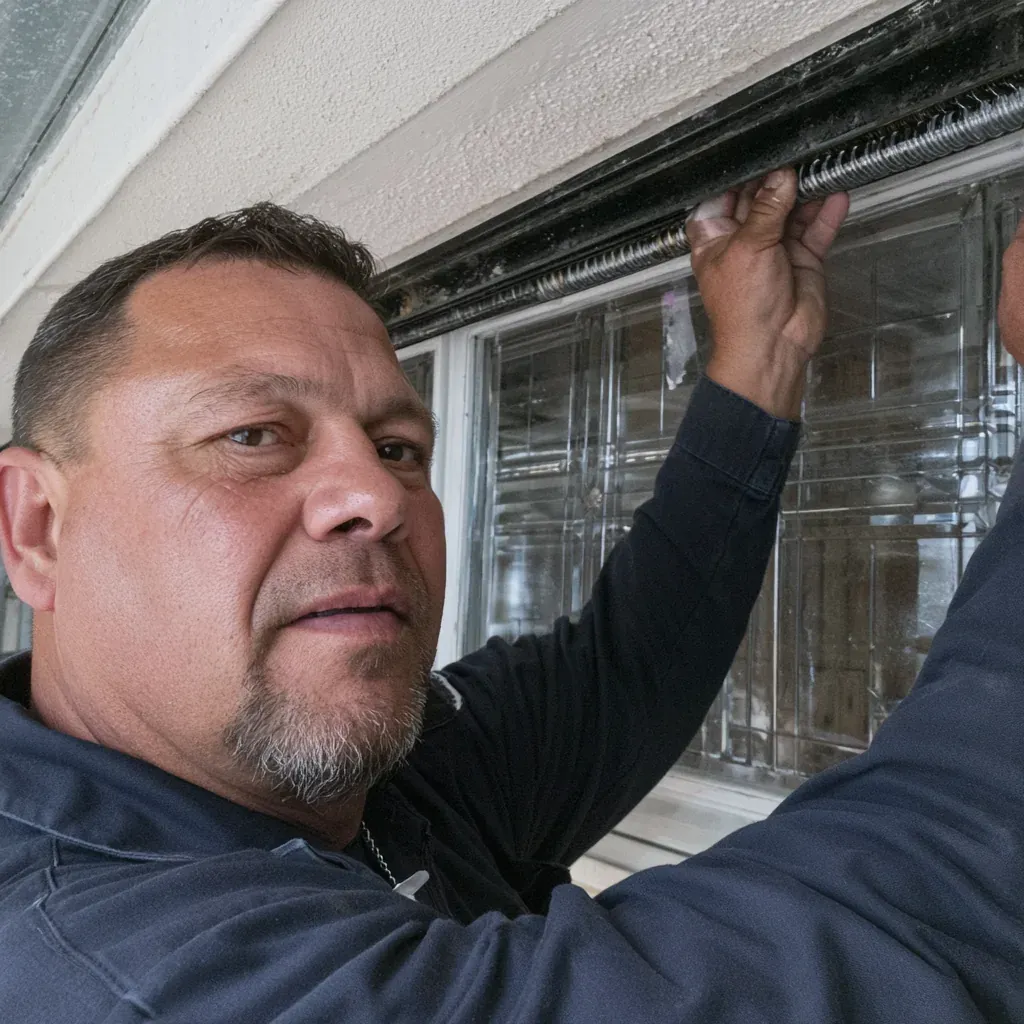
A torsion spring above the door in a Downtown Irving garage should get a thin coat of lithium grease along the coils, applied by hand or with a rag rather than sprayed heavily. Springs under tension are also where a homeowner should stop working and step back, since an improperly released torsion spring can cause serious injury. Lubricating the coils is a reasonable maintenance task; adjusting or removing the spring itself is not.
The Track Itself Stays Dry
The vertical and curved track sections should never be lubricated. Grease on the track surface attracts dust and grit rather than helping the rollers glide, and a dirty track in a Northgate or Bear Creek garage is more often cleaned with a dry cloth than treated with any product. If a roller is dragging inside a track, the fix is usually adjusting alignment, not adding lubricant to a surface that was never meant to carry it.
The Opener Chain or Belt
A chain-drive opener takes a small amount of white lithium grease along the chain length, while a belt-drive opener generally needs none at all beyond what the manufacturer applied at the factory. Checking the opener manual before applying anything here matters, since a belt coated in the wrong product can slip on the drive gear. This is a smaller task than the springs or rollers, but it still gets skipped or overdone in about equal measure.
How Often This Actually Matters
Twice a year is a reasonable rhythm for most Irving homes, though a door that cycles often in a rental property near the Irving Arts District or a managed unit close to Lake Carolyn may need attention sooner if squeaking returns within a few months. Heat is the bigger variable here than any calendar date, since a North Texas summer thins out lubricant faster than a mild stretch of spring weather does.
Dust and Hail Change the Picture
Panel dents from summer storm impacts near Cottonwood Valley or Bear Creek rarely touch the lubrication question at all, since a dented section still travels on tracks that were greased or weren't. The two problems live on separate parts of the door. A homeowner checking rollers and hinges after a rough afternoon should look past the cosmetic damage and test whether the door still rises smoothly, because that motion, not the dent, tells you if lubricant is doing its job.
Checking Before Reaching for Grease
A squeak is not always solved by lubricant. Before applying anything, check that the door is square in its opening, that the track is level along its run, and that no roller has worked loose from its bracket. A property near Regent Boulevard or MacArthur Boulevard with a misaligned track will keep squeaking no matter how much grease goes on the hinges, since the noise is coming from metal binding, not from dry metal.
When to Stop and Call Someone
Lubrication is a task most Irving homeowners can handle safely on hinges, rollers and a chain drive. Anything involving the torsion spring beyond wiping grease on visible coils, or a cable that looks frayed near the drum, is where the licensed pros we connect you with should take over. A spring under tension or a worn cable near a garage in Las Colinas or the Heritage District is not a place to test how far a household toolkit can go.
Signs You Skipped a Step
Knowing which lubricant belongs on a track does nothing to settle who should be handling a spring adjustment or a bent panel near Valley Ranch or the Heritage District. Those are separate judgment calls about wear and safe handling, not about oil choice. Ask any pro for proof of insurance, a written scope of what they'll touch, and warranty terms before work starts, since no statewide license class exists to check instead.
Dealing with this in your home?
One failure keeps repeating on Irving service calls without folding neatly into a general list. Heat cycling through a Las Colinas garage warps track hardware over years, while an older Heritage District door often reveals a spring the original installer undersized. Age and installation choice, not neglect, usually explain it.