A garage door in Irving that inches upward with a labored whine, then stalls before it clears the header, is not behaving like a door with a dead motor. It is behaving like a door fighting something along the way. Before assuming the opener has quit, separate what the track, springs, and cables are doing from what the motor itself is doing, since a slow, straining door and a silent one point to different problems entirely.
Where the Chain Meets the Head
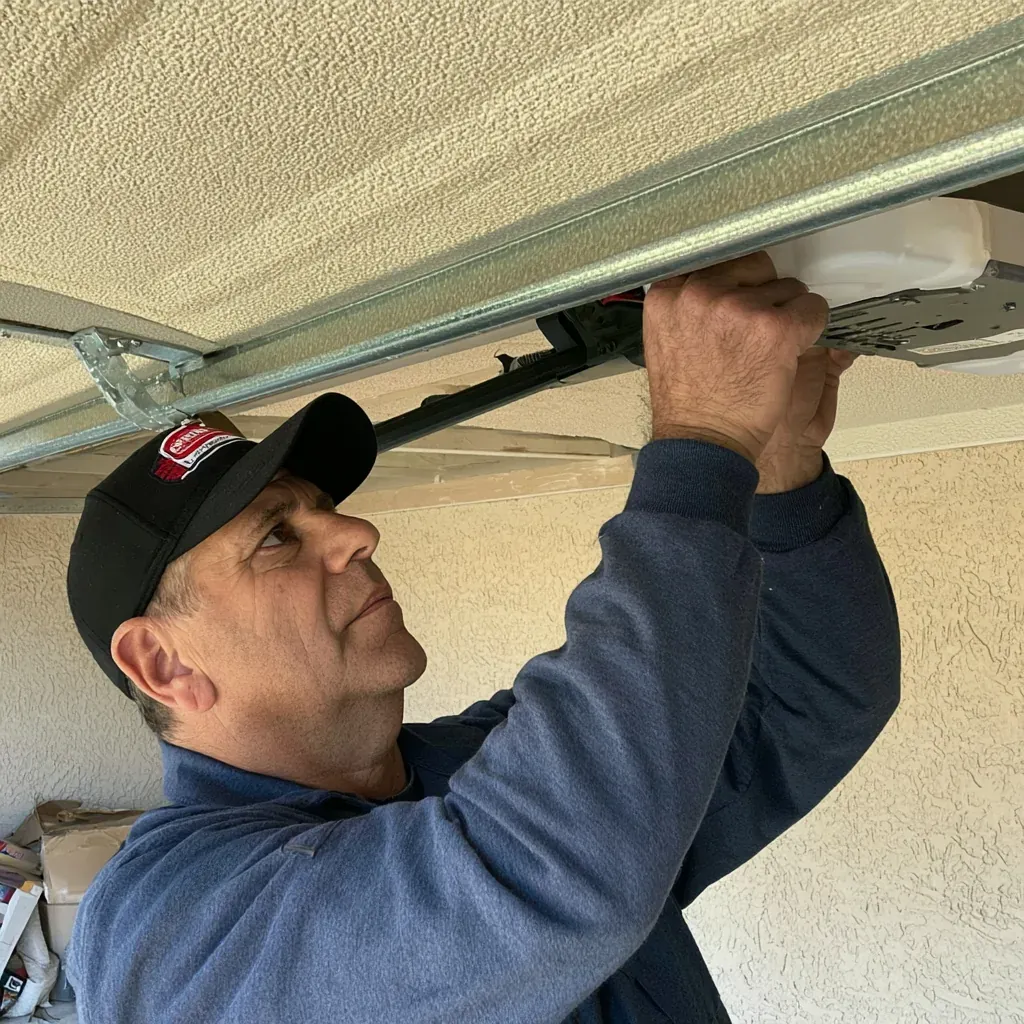
Walk the rail with the light on, from the head at the header down to the arm bolted on the door, and have someone press the button. Watch the trolley, the block that rides the rail. If it stays put while the head keeps making noise, the break sits inside the head itself, not further down the track.
A Worn Internal Gear
Inside most belt and chain openers, a motor shaft turns a small gear before power ever reaches the sprocket. Manufacturers cut that gear from nylon on purpose, so it wears down before anything on the drive shaft does. Once the teeth round off, the motor spins while the sprocket barely turns, so the door in a Cottonwood Valley or Plymouth Park garage creeps up in slow, uneven pulls instead of one steady motion. This gear cannot be tightened or repaired; it only gets replaced.
A Chain or Belt Failure
Many houses near Irving Heights and Plymouth Park still use chain-drive openers, and a worn link or loose sprocket lets the motor turn without moving the carriage smoothly. The result is a jerky, slow crawl rather than a clean glide. Belt units near Valley Ranch fail differently: a frayed or split belt slips on the drive gear, so the door lags behind the motor's actual speed. Either problem calls for a visual check under the rail before assuming the opener itself is failing.
A Sheared Trolley Connector
Inside the rail, a small plastic or metal block travels along the track and pulls the arm attached to the door. If that connector cracks or its pin shears, the drive mechanism keeps advancing while the arm barely moves, so the door creeps and shudders instead of traveling evenly. This wear shows up more in Cottonwood Valley and Northgate homes with older, heavier doors, where the added pull on the connector adds up over many seasons of daily use.
When the Spring Stops Carrying Its Share
Torsion springs mounted above the door carry most of the actual weight, and the opener motor only finishes what the spring already started. When a spring loses tension, or breaks outright, the motor is left trying to lift the full weight of a door built in a warehouse near the airport corridor, and it cannot.
Extension Springs on Older Sections
Some older sections of Irving, closer to Main Street and Downtown Irving, still carry extension springs stretched along the horizontal track instead of a torsion spring over the header. These wear differently, and a stretched or broken extension spring produces the same humming-motor, silent-door result as a torsion failure upstairs.
A Weak Start Capacitor
Sometimes the slowdown has nothing to do with gears, chains, or trolleys. A start capacitor that has weakened still sends the motor enough current to hum and try, but not enough torque to bring the door up at normal speed, so it crawls or stalls under any added resistance from a heavy panel or a stiff spring. This is common on older units, particularly on doors near Las Colinas and Valley Ranch that have run through more than a few North Texas summers.
Grit Working Into the Rail
Irving heat and the hail and wind that come with North Texas storms both work grit into moving hardware over time, and homes near Lake Carolyn or along Campion Trail see plenty of dust carried in on tires and shoes. That grit settles into the rail, the trolley wheel and the hinge pins, adding drag that makes the opener strain even when the gear, belt and spring are all still sound. A rail that has not been wiped down in years often needs cleaning before anything gets replaced.
Not the Same as No Sound at All
A slow, straining door is not the same problem as a silent one. It means the opener is receiving power and the motor is turning, so the fault sits in what resists that motor: a spring carrying less tension than it should, a bent track pinching a roller near Northgate or Plymouth Park homes, or a cable that has begun to fray. Struggling under load is a mechanical complaint, not an electrical one, and it points a technician toward the rollers, tracks and springs before the opener itself is ever opened up.
Checking the Door Without Taking Its Weight
Do not use a hand-lift test to diagnose a slow door. Record whether the opener strains, the panel sits level, and the stop happens at one height. The connected pro can separate opener trouble from spring or track resistance with the door controlled.
What The Trolley Position Reveals
Roll the door partway by hand and look closely at each roller as it travels through the track, since sluggish movement often traces back to something visible rather than the motor itself. Bent track, a roller worn down on one side, or hardware that has loosened near Rochelle Road or O'Connor Road after a hail season can bind the door and slow it well before the opener takes any blame.
Dealing with this in your home?
One failure keeps repeating on Irving service calls without folding neatly into a general list. Heat cycling through a Las Colinas garage warps track hardware over years, while an older Heritage District door often reveals a spring the original installer undersized. Age and installation choice, not neglect, usually explain it.