An Irving homeowner presses the remote in the driveway and the door does not move, though it worked fine the day before. Before assuming the opener has failed, it helps to separate the remote itself from the receiver inside the unit, since a dead battery and a damaged antenna produce the same symptom but need entirely different fixes. Working through them in order, cheapest first, usually finds the real cause within a few minutes.
Start With the Battery
Battery drain is the most common reason a clicker goes quiet, but before swapping cells, check whether the opener unit itself still answers a wall switch near University Hills or Plymouth Park. If pressing the wall button moves the door normally, the transmitter or its internal antenna is the likely fault, not the drive head. If neither the remote nor the wall control gets a response, the problem sits inside the powerhead or its circuit board.
Check the Antenna on the Unit
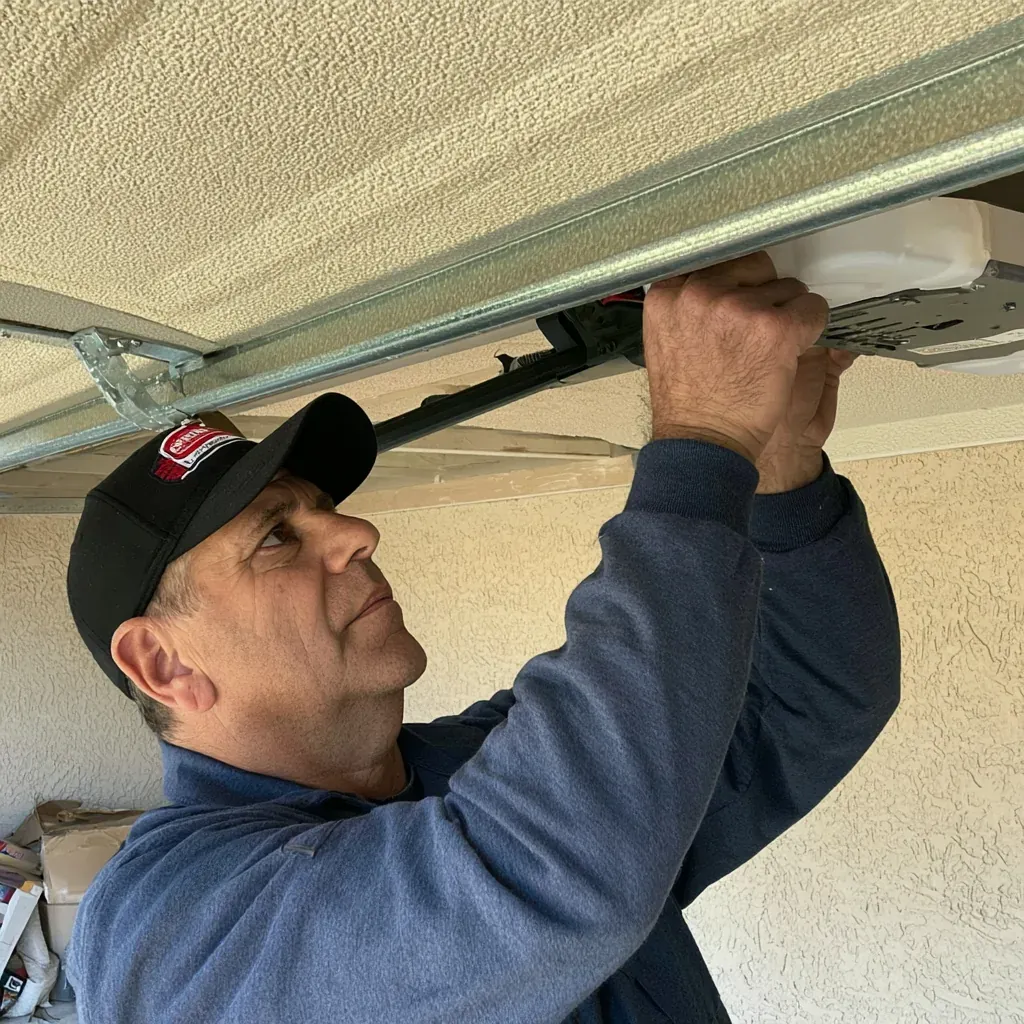
The receiving antenna hangs from the opener unit mounted on the garage ceiling, and it is easy to knock loose while storing a ladder or moving a bike rack. If that wire is tangled, bent flat against the housing, or missing altogether, the opener cannot hear a remote even with a fresh battery. Straightening the antenna so it hangs free, without touching metal framing or ductwork, restores range in many Irving garages built with steel trusses.
Rule Out Interference Nearby
Homes near Las Colinas and Valley Ranch sit close to office parks, parking structures and shared amenity buildings, and some of that equipment shares the same radio frequency band as older garage door remotes. If the remote worked seconds ago and now fails only near a certain spot in the driveway, interference from a nearby device is more likely than a broken remote. Testing the same remote at a different time of day helps confirm this.
Reprogram Before Replacing
Openers occasionally lose a stored remote code after a power outage, a breaker trip, or simply with age, even though nothing was physically damaged. Most units have a learn button near the antenna wire that resets the code when held and then paired with the remote following the sequence printed on the opener's label. This step alone fixes a remote that seemed completely dead, without spending on a replacement.
When One Remote Fails, Not All
If a household has two or three remotes and only one has stopped working, the fault almost certainly sits inside that single remote, not the opener. A dropped remote can crack internally or lose contact between the button and the circuit board without any visible damage on the case. In that case, a replacement remote programmed to the existing opener is usually simpler than opening the old one to inspect it.
Wall Button Still Working Matters
Interference is easy to overlook in denser clusters near Las Colinas offices or the Toyota Music Factory, where nearby electronics and parking structure gate systems share similar frequencies. A remote that fires the door from the driveway but fails from the street, or works only on a second or third press, points toward signal competition rather than a dead unit. Moving closer, clearing the sensor lens, or reprogramming the code can settle this before assuming a part has failed.
Photo Eyes Can Look Like Remote Trouble
A remote that seems dead sometimes points to the sensors mounted a few inches above the slab on either side of the track, not the handheld unit at all. If either lens has gathered dust from a Las Colinas driveway or lawn clippings from a Valley Ranch yard, the opener can refuse to run even with a fresh remote battery. Wipe both lenses, confirm their small indicator lights hold steady, and re-test before assuming the remote itself has failed.
Multiple Openers on One Property
Some Irving properties, particularly in Las Colinas and Valley Ranch where garages sit close together or share a parking structure, have more than one opener within range of each other. A remote programmed years ago can occasionally respond to a neighboring unit's frequency, or stop responding if a nearby opener was reset. This is uncommon but worth ruling out if reprogramming does not hold.
Commercial Doors Work Differently
Office and logistics buildings near DFW International Airport and along SH 114 often use commercial sectional or roll-up doors with control systems sized to the opening, curtain weight and cycle count rather than a household remote. A property manager troubleshooting a nonresponsive control there is dealing with a different kind of system than a residential remote, and the fixes above do not carry over directly.
When to Call a Licensed Pro
A dead remote is rarely the whole story. Check the wall button first: if that also fails to move the door, suspect power or a safety sensor, not the handheld. If the wall button works fine, replace the remote battery before anything else. Clay soil shifts around Irving foundations over the years, and a frame that has racked slightly can throw off the receiver's antenna position enough to shorten range. Note whether the failure is total or just short-range before deciding this is an opener problem.
Answers That Lead To More
A remote that stops working is rarely one single thing, which is why testing in order matters more than guessing. Battery, antenna, programming and the wall button each rule something out, and together they narrow the problem before anyone opens the unit itself. Homeowners from Irving Heights to Cottonwood Valley face the same sequence, whatever style of opener sits on the ceiling.
Dealing with this in your home?
One failure keeps repeating on Irving service calls without folding neatly into a general list. Heat cycling through a Las Colinas garage warps track hardware over years, while an older Heritage District door often reveals a spring the original installer undersized. Age and installation choice, not neglect, usually explain it.