A garage door in Irving sits through a stretch of summer where the slab it rests on, the steel it is built from and the springs that lift it are all working against heat at once. Panels expand, lubricant thins, and a door that closed fine in March can start to bind or drag by August. Most of what shows up is not damage so much as material behaving the way heat makes it behave, and a short seasonal check catches it before it becomes a stuck door.
Checking Track Alignment First
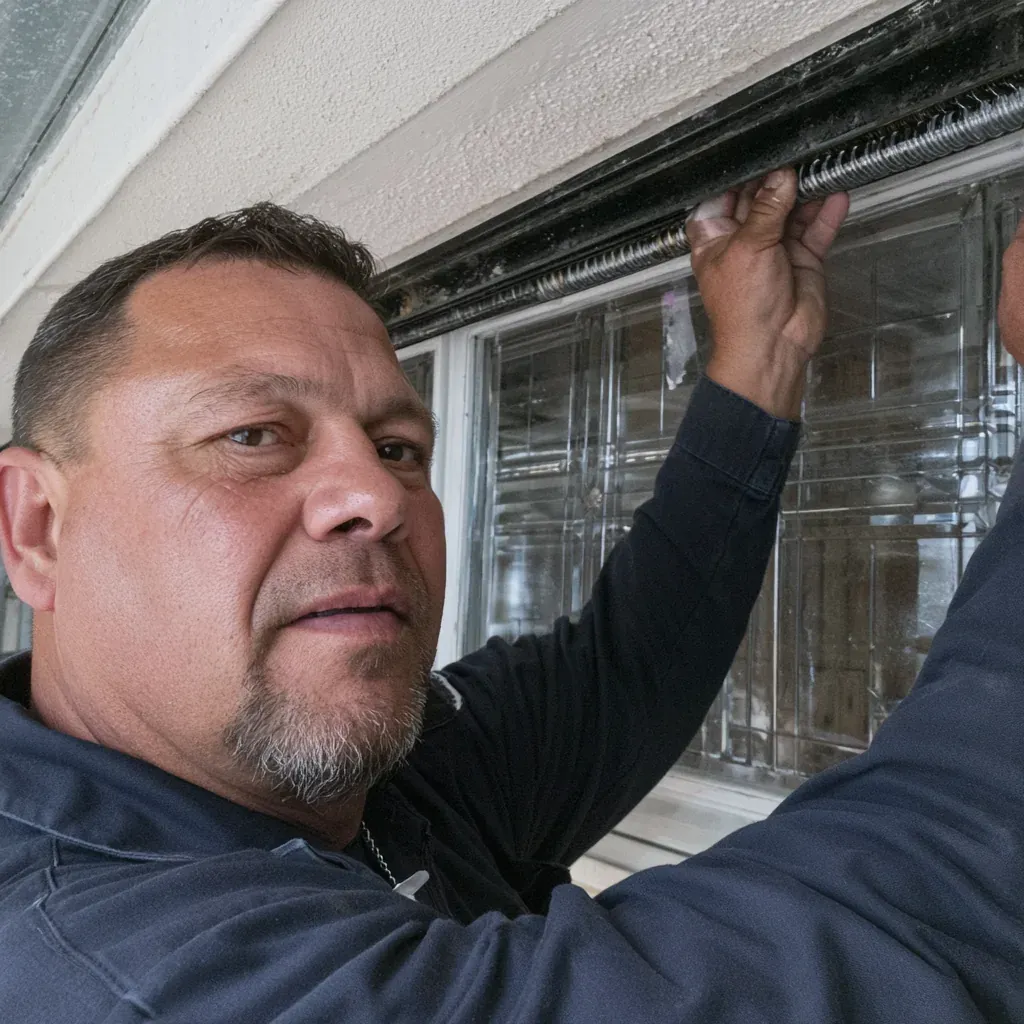
Track alignment is the first thing to check when Irving summer heat makes a garage door bind or run rough. Slab-on-grade foundations across Irving shift slightly as expansive clay under the slab dries and contracts through July and August, and that movement can nudge a track fractionally out of plumb. Look down each rail from the header to the floor. Gaps between rollers and rail, or a track that leans away from the frame near Belt Line Road-style older construction, point to alignment rather than the opener.
How Springs Lose Tension
Extension and torsion springs lose a small amount of tension as heat cycles the metal through expansion and contraction all season. Older extension springs, still common on homes in Irving Heights and Plymouth Park, show this faster than newer torsion setups. A door that used to hold halfway open on its own and now drifts down is telling you the spring has drifted out of the balance it was set to, not that the opener has gotten weaker.
Rollers And Hinges In Direct Sun
Rollers and hinges take heat differently depending on material. Nylon rollers can soften slightly in direct summer sun on a west-facing door, which is common on garages along Story Road and O'Connor Road that catch afternoon light with no shade structure nearby. Steel rollers do not soften but can dry out faster without lubricant. Either way, a door that grinds or squeals more in July than it did in April is reacting to heat, not necessarily wearing out.
Reading Cable Wear Early
Cables carry the load the spring releases, and heat makes fraying easier to spot. A cable that looks fine cold can show small burrs or flat spots once it has warmed and flexed all day. Running a gloved hand carefully along visible cable length, or simply looking for kinks near the drum, catches most problems before a cable lets go under tension, which is a sudden failure and not something to test by running the door.
Weatherstripping And Attic Heat
Weatherstripping along the bottom and sides does more in summer than block rain. It keeps attic-hot air from pushing straight into an attached garage, which matters on homes near Valley Ranch and Cottonwood Valley where the garage often shares a wall with living space. Cracked or brittle seals let radiant heat in and let cooled air out, and replacing a stiff seal is one of the cheaper checks on this list with one of the bigger effects on comfort inside.
Sensors, Glare And False Reversals
Opener sensors and photo-eyes are part of UL 325 entrapment protection, the safety standard for automatic residential openers, and heat can affect them indirectly. Sun glare through an open door or dust baked onto a lens can throw off alignment enough that the door refuses to close or reverses without cause. This is a safety system doing its job, not a fault to bypass, and a misaligned eye should be corrected rather than disconnected.
Hail Damage Versus Mechanical Damage
Irving's older sections near Irving Heights and Plymouth Park predate strict HOA review, but Las Colinas and Valley Ranch often carry design rules that touch panel style and color before a replacement order goes in. Check any HOA paperwork before ordering, since a swap that ignores it can mean a second order later. This is separate from the door working correctly; check square, level and track alignment first, since a panel style dispute never explains a door that drags or binds.
HOA Rules On Replacement Panels
Homes under HOA architectural review in parts of Las Colinas and the Heritage District sometimes have rules about door color and finish that matter if heat damage means a panel needs replacing mid-season. Checking what a homeowners association requires before ordering a replacement panel avoids a mismatch that has to be redone. This is a design approval question, not a repair one, but it can slow down an otherwise simple fix.
Commercial Doors Near The Airport
Irving's high UV and long stretches of summer heat are what age a glazed panel here. Sun can cloud a clear insert or dry out its seal before the metal frame itself fails. A west-facing door near Northgate or Bear Creek takes the harder afternoon exposure. Cosmetic clouding does not by itself affect the track, springs, or opener.
When To Stop And Call
Stop opening the door manually and skip the DIY spring swap if the panel binds halfway, a cable hangs loose, or the opener strains and reverses without touching anything. Heat-softened lift cables and fatigued springs can release force suddenly, and Irving's slab-on-grade tracks make misalignment easy to mistake for a motor fault. Photo-eye and reversal checks belong to UL 325 testing, not guesswork. Past that point, get the licensed pros we connect you with to inspect track, spring tension and hardware before the door moves again.
When The Checklist Ends, Call
None of this replaces a foundation inspection, and nothing here diagnoses a slab problem from a checklist alone. What a summer heat check does is separate the things heat causes on its own, like a softened roller or a stretched spring, from something more serious underneath. Working through tracks, springs, cables, seals and sensors in that order, a homeowner in Irving usually finds out fast which category the problem is actually in.
Dealing with this in your home?
One failure keeps repeating on Irving service calls without folding neatly into a general list. Heat cycling through a Las Colinas garage warps track hardware over years, while an older Heritage District door often reveals a spring the original installer undersized. Age and installation choice, not neglect, usually explain it.