Torsion springs on an Irving garage door are rated in cycles, with one cycle counting as the door opening and closing once. A typical rating lands somewhere between 10,000 and 15,000 cycles, which for an average household works out to roughly seven to twelve years, though a door used constantly by a tenant or a home office worker in Las Colinas can wear through that count sooner.
Cycles Versus Years on the Door
Counting years is the wrong habit. A spring installed five years ago on a door used four times daily has seen roughly 7,300 cycles, getting close to worn. The same spring on a door used twice as often is already past a typical rating well before the five-year mark, which is why two houses on the same Irving street can have springs at very different points in their working life despite looking the same age.
Torsion Versus Older Extension Springs
Older attached garages closer to Irving Heights or Plymouth Park sometimes still run extension springs stretched along the horizontal track, while newer builds around Cottonwood Valley and Hackberry Creek lean on torsion hardware mounted above the opening. Torsion setups generally tolerate more cycles before fatigue sets in, but both types weaken gradually, and neither gives a homeowner a clean warning before the metal finally gives out.
What Irving Heat Does to Spring Steel
Extreme summer heat and high UV exposure do not melt a spring, but repeated expansion and contraction across hot Irving afternoons and cooler nights adds a slow metal fatigue on top of ordinary cycle wear. A garage facing west with direct sun for hours, common in parts of Valley Ranch and older Irving Heights blocks, tends to run through its spring's rated life a bit faster than a shaded, attached one.
How Slab Movement Adds Load
Expansive clay under a slab-on-grade foundation shifts with moisture swings, and that shift can pull a garage door frame slightly out of square over time. A spring doing its job on a frame that has moved is carrying more resistance than one on a level, properly aligned track, which quietly shortens its working life even though the spring itself looks fine and the door still opens.
Signs a Spring Is Near the End
A spring nearing the end usually announces itself before it snaps outright. Watch for the door drifting unevenly as it travels, a visible gap opening between coils, rust forming at the bends where the metal flexes most, or the opener straining and reversing partway through a lift. Any of these on a slab-on-grade home in Irving or a unit near Valley Ranch is worth checking against the track and hardware before the spring is blamed alone.
Checking Alignment Before Blaming the Spring
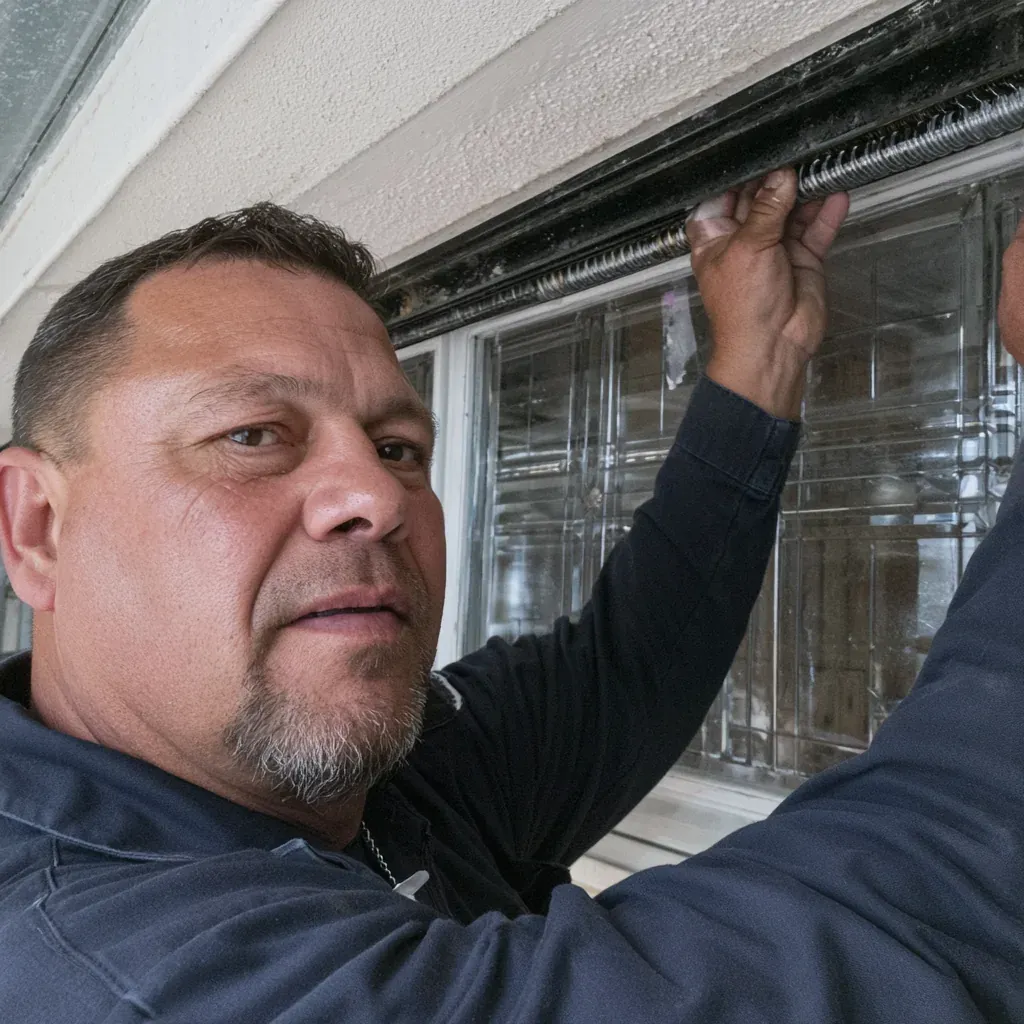
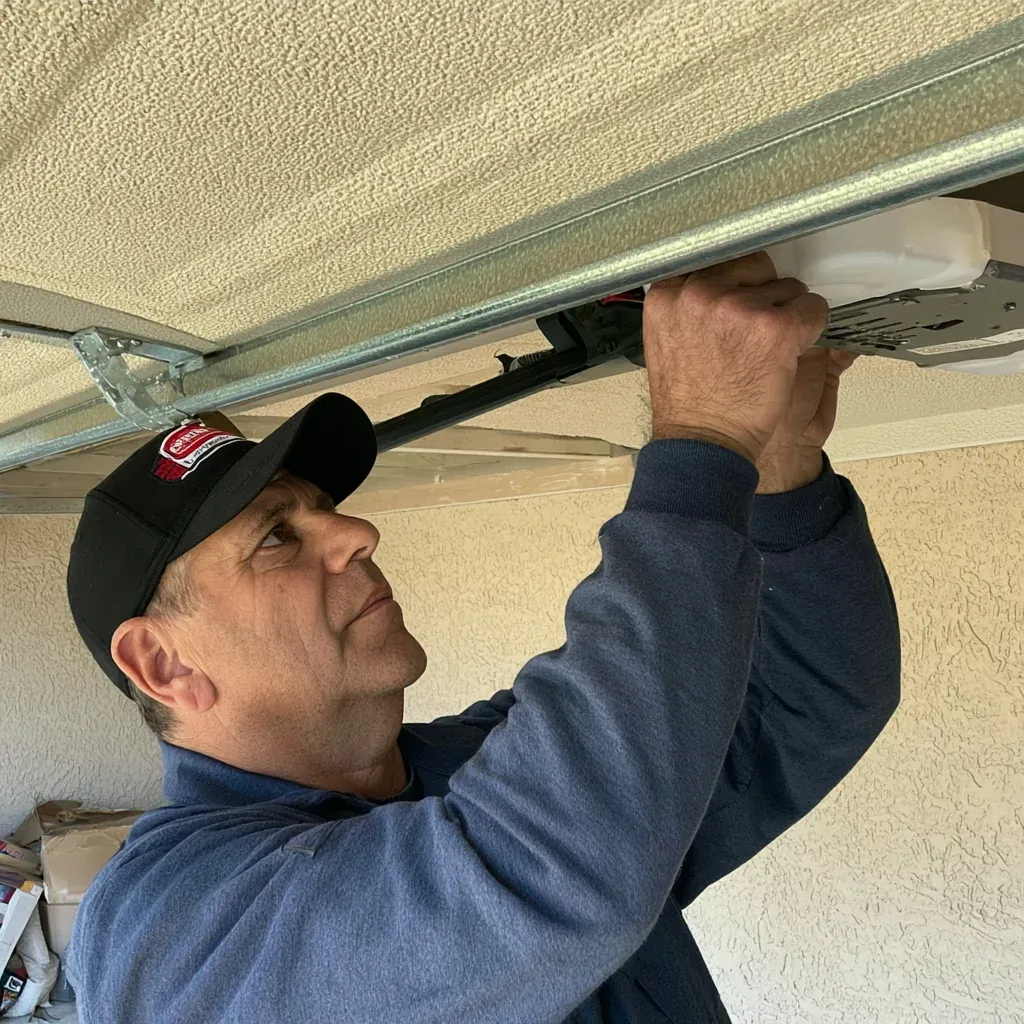
Torsion springs mount on a bar above the opening and wind tighter as the door closes, storing force that a technician measures rather than guesses at. Heavier sectional doors, common across newer Valley Ranch and Las Colinas construction, ask more of that bar over time than a lighter single garage would. Watching how many turns a spring has left, and whether the bar itself still sits straight, tells more about remaining life than the door's age alone.
Hail and Wind Effects on Spring Load
Summer heat in Irving pushes metal to expand during the day and pull back once temperatures drop after dark, and that daily flex adds fatigue a coastal climate never would. Storms that move through with hail or straight-line wind can rattle brackets loose without denting a single panel, which hides wear until a spring finally gives. A door near Cottonwood Valley or Hackberry Creek sees this cycle dozens of times each summer alone.
Rental Doors and Heavier Cycle Counts
Rental houses and managed properties across Irving often see a garage door cycle more times per week than an owner-occupied home, simply from more people coming and going. A property manager watching for a slow-closing door or one that needs a harder push on the wall switch is often catching early spring fatigue before a tenant ever reports it as a problem.
Why Two-Car Doors Wear Springs Faster
A wide sectional door covering a two-car opening puts more steady weight on its spring system than a narrower single door, cycle for cycle, since there is simply more steel being lifted each time. Homes throughout Las Colinas and Cottonwood Valley with these wider doors tend to reach the upper end of a spring's rated cycle count sooner than a home with a single-car opening of similar age.
The Safety Limit on Spring Work
Spring tension is not a homeowner adjustment. A torsion coil stores force around the shaft, and an extension spring remains loaded along the track. Looking for a visible gap, uneven lift, or a door that will not hold partly open is useful; loosening cones, brackets, cables, or spring hardware is not. That work is reserved for the licensed pros we connect you with.
What Determines the Cycle Count
Cycle count depends on how often the door runs and what it is lifting. Attached garages in older central Irving neighborhoods near Rochelle Road tend to see fewer daily cycles than homes in master-planned sections of Las Colinas with multiple drivers, and insulated doors weigh more than uninsulated ones, drawing down spring life faster. Extreme summer heat and occasional severe freeze both add stress to the metal, and hail impacts near the panel can throw a door out of square without anyone noticing the spring is now compensating for it.
Dealing with this in your home?
One failure keeps repeating on Irving service calls without folding neatly into a general list. Heat cycling through a Las Colinas garage warps track hardware over years, while an older Heritage District door often reveals a spring the original installer undersized. Age and installation choice, not neglect, usually explain it.