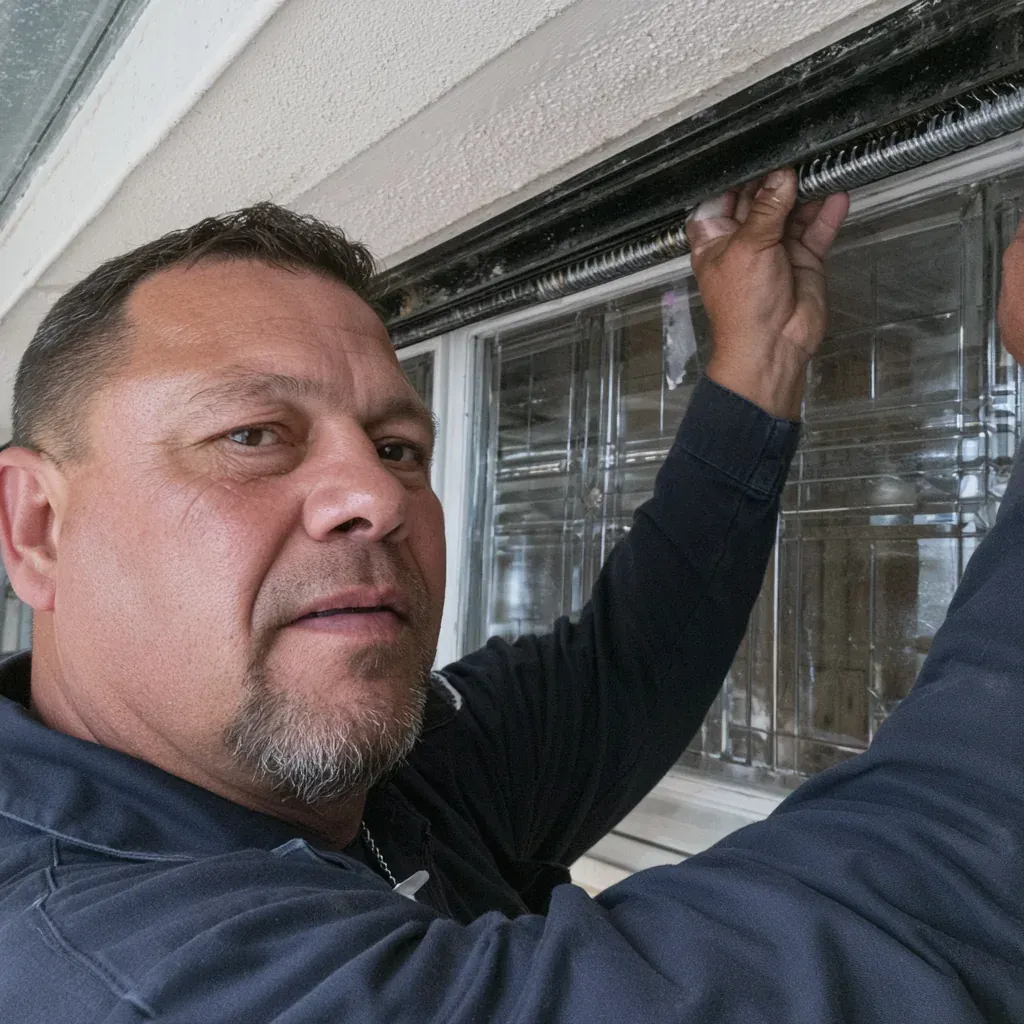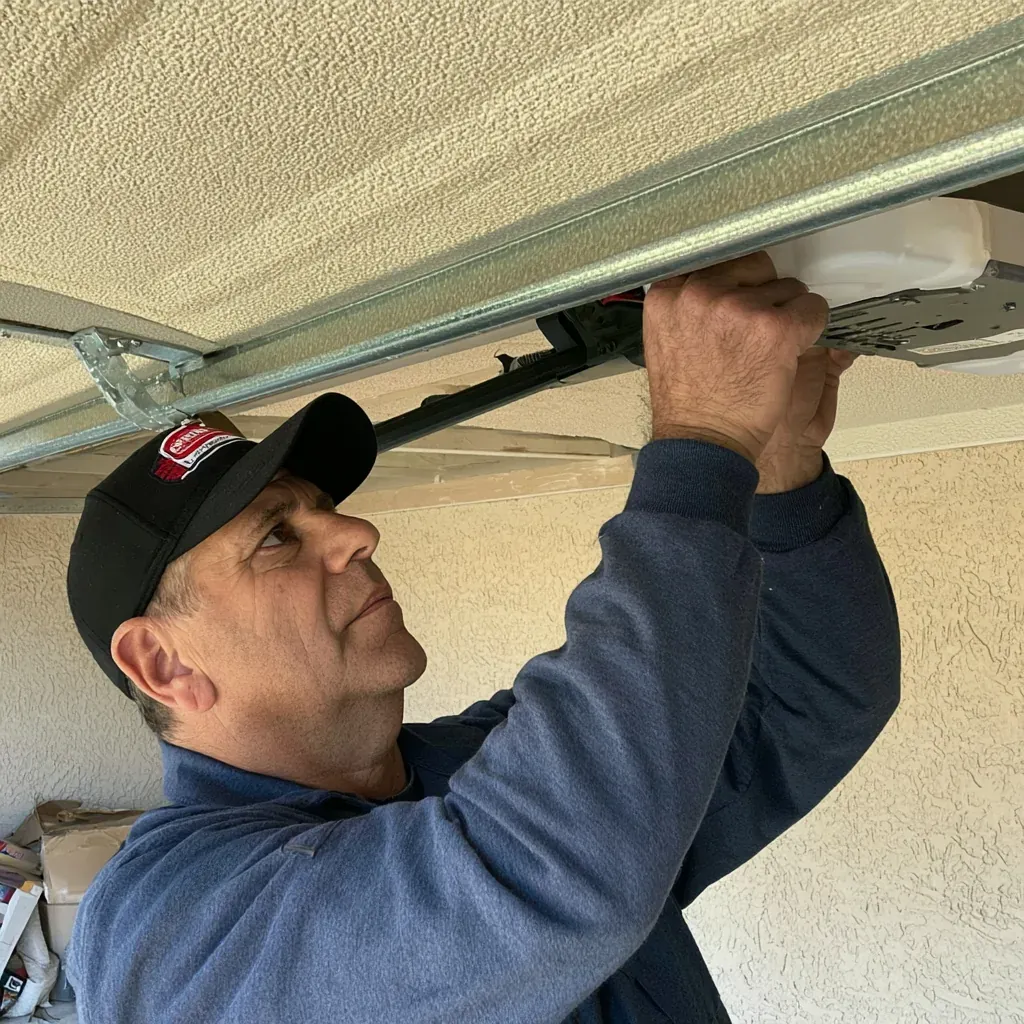
The opener motor turns on, the belt or chain inside the unit moves, and the door in the garage does not budge. That gap between sound and motion is the whole problem. In Irving homes from Irving Heights to Valley Ranch, the opener is rarely the actual point of failure here. It is a small machine built to assist a properly balanced door, not to lift one on its own, so a hum with no motion means something below the opener stopped carrying its share.
What The Opener Actually Does
The opener is a motor unit that pulls a chain, belt or screw drive to move the trolley connected to the door arm. It does not lift the door by itself; the springs carry that weight, and the opener only supplies the pull. When you hear the motor running but see no motion, something between the motor and the door is not transferring force, whether that is a drive component, a disconnected carriage, or a limit setting confusing the unit about where the door should be.
Checking the Door Without Taking Its Weight
The trolley mechanism can disconnect from the belt or chain without the homeowner ever touching the release cord. If the carriage arm swings freely under the rail while the motor runs, that is where the disconnect sits, not in the wiring. Reconnecting it usually restores motion instantly. If it will not stay connected, or slips loose again within a few cycles, the carriage or belt has likely worn past a point either of us can judge by looking, and that belongs to the licensed pros we connect you with.
Checking Track Alignment
Check the tracks on both sides for a bent section, a loose bracket, or a roller sitting outside the rail. A door that is even slightly out of square binds against the track, and the opener senses that resistance as if the door were still lowered, sometimes triggering the same humming stall. Running a level against the door face and comparing both tracks side by side can show a lean before any part gets replaced.
Why Springs Are Not DIY
Ask what the estimate actually covers before agreeing to it. A rebuilt opener assembly, a new logic board or a full unit swap are different jobs at different costs, and the paper should say which one you are paying for. Coverage length on parts and on the labor to install them often runs on separate clocks. If the pro you hire through the licensed pros we connect you with will not write that distinction down, ask again before signing.
Cables And An Uneven Door
Cables run from the bottom door bracket up to the drum near the spring, and a cable that has frayed, jumped its groove, or snapped changes how the door sits even before the opener engages. A door that hangs crooked, with one corner lower than the other, often has a cable problem rather than a spring problem. Both conditions can produce the same humming opener, so the door's actual position at rest is worth noting before assuming which part failed.
Worn Rollers And Summer Heat
Rollers wear over years of cycles, and a nylon roller that has cracked or a steel roller running dry can bind hard enough in the track to stop the door despite a working opener. This shows up gradually, often as a door that started moving slower or louder before it stopped moving at all. Long Irving summers that heat an attached garage can dry out lubricant faster than expected, adding friction the opener was never sized to overcome.
When The Opener Is The Cause
The opener itself deserves a look only after the door passes the manual balance test. Limit switches, the travel settings that tell the unit where open and closed are, can drift out of adjustment and cause the unit to run without engaging the drive properly. The photo-eye sensors near the floor, part of the entrapment protection required under the UL 325 safety standard, can also block a full cycle if misaligned, though that usually stops the door partway rather than producing a steady hum with zero motion.
Hail Damage Versus Binding
Irving's housing stock ranges from older central neighborhoods like Irving Heights and Plymouth Park to newer construction around Valley Ranch and Cottonwood Valley, and the two respond differently. Older single-car openings tend to carry original hardware that has simply aged past its working life, while newer Las Colinas garages often pair heavier insulated doors with openers sized for a lighter panel, which strains the motor sooner than expected.
Commercial Doors Near The Airport
Heat is the quieter cause. An Irving garage facing west traps sun for hours each summer afternoon, and that heat works into the opener housing itself, not just the door. Circuit boards and plastic gears inside the unit soften and fail earlier than the rated shaft or spring ever would. If the humming happens more on the hottest days and eases once the garage cools overnight, the opener's internal parts are likely the weak point, not the track or the cable.
Wiring Work Is Separate
There is no single credential that proves someone can be trusted with this job. Ask instead for proof of insurance, a scope written down before work starts, and the make and model of any opener part being swapped in. A pro willing to put that on paper, and to explain warranty length separately for the part and for their labor, is giving you something to hold onto after the truck pulls away.
Judging Whether Alignment Is the Cause
A humming door needs a controlled check, not a homeowner lift test. The licensed pro rules out lost spring support, cable trouble, and rail binding before opening the motor or drive.
Dealing with this in your home?
One failure keeps repeating on Irving service calls without folding neatly into a general list. Heat cycling through a Las Colinas garage warps track hardware over years, while an older Heritage District door often reveals a spring the original installer undersized. Age and installation choice, not neglect, usually explain it.