A homeowner in Irving with a low ceiling over the garage door, or a shop near Rochelle Road with pipes running along the top of the opening, eventually asks whether a jackshaft opener will fit where a standard unit cannot. The answer starts with a tape measure, not a catalog. Headroom, the sidewall next to the track, and what already occupies that wall all decide whether a jackshaft conversion is a real option or a mismatch that fights the door every time it opens.
How A Jackshaft Opener Works
A jackshaft opener sits beside the door, not overhead. A motor mounted on the wall turns the torsion shaft directly through a sprocket and belt, so the shaft itself becomes the drive rather than a rail pushing a trolley across the ceiling. In Irving garages where the ceiling holds ductwork, storage racks, or a low header above the opening, this side-mounted layout avoids the overhead rail entirely, which is the whole reason it shows up in retrofit conversations around Las Colinas and Valley Ranch homes.
Checking The Torsion Shaft
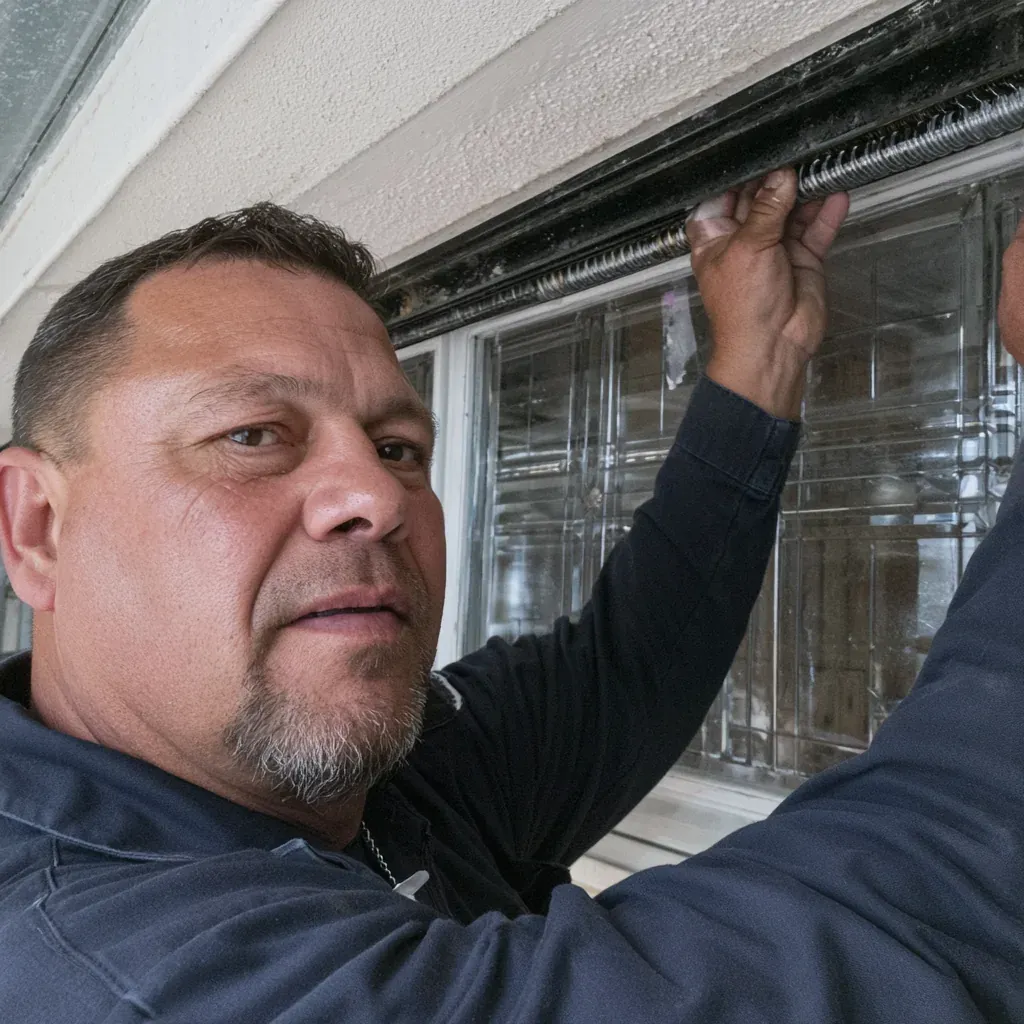
The torsion shaft has to already be there and spin freely for a jackshaft unit to work. Most sectional doors in Irving, from older Irving Heights garages to newer builds near Valley Ranch, use a torsion spring system with a shaft running above the opening, so the shaft itself is rarely the obstacle. The real question is whether that shaft is centered, straight, and turning without binding, because a jackshaft opener drives whatever condition the shaft is already in and will not fix a bent one.
Why Headroom Rules It Out
Headroom is the reason a jackshaft never becomes the answer for every Irving garage. This mount needs a torsion shaft running above the opening with enough clear wall beside the track to hold the unit, chain and reduction gear. A low header, a beam, or a high-lift track already claimed for storage racks in Valley Ranch or Cottonwood Valley leaves nowhere to bolt it. Measure that side wall before assuming a conversion from a ceiling-mounted opener will fit.
Pairing With A High-Lift Track
A high-lift track changes the geometry further by sending the door up and back along a steeper curve before it levels out under the ceiling, which is common on detached buildings and some commercial bays near Las Colinas Urban Center. A jackshaft opener pairs well with this setup because it never touches the track at all. It only turns the shaft, so whatever curve the track follows, overhead clearance is not something the opener has to clear on its own.
Clearing The Wall Space
Wall space matters just as much as headroom. The bracket for a jackshaft opener sits on the wall a short distance from the shaft end, which means a workbench, shelving, or a side door near that spot can rule out the conversion before it starts. In a garage off Story Road with a utility sink against that same wall, or a Plymouth Park home with a side entry door close to the opening, that stretch of wall has to be checked in person before anyone assumes the swap is simple.
What A Conversion Involves
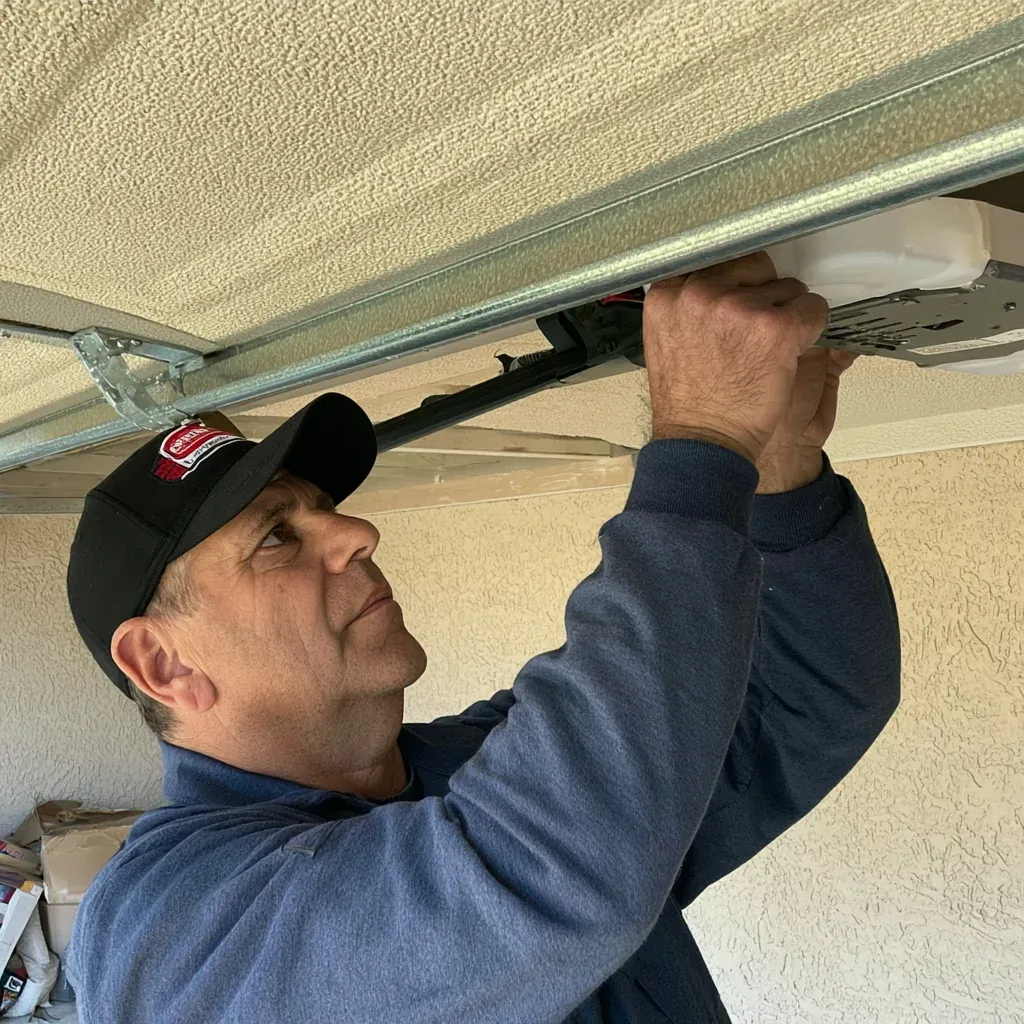
Converting an existing garage from an overhead rail opener to a jackshaft unit means removing the old rail, arm, and header bracket entirely, then setting the new unit on the wall bracket and coupling it to the shaft. The springs, cables, and drums generally stay as they are, since the jackshaft only replaces how the shaft gets turned. What changes is wiring, since the wall unit needs power run to that side of the garage rather than to the center of the ceiling.
Two Springs, One Shaft
A garage with two torsion springs on one continuous shaft, common on wider two-car doors around University Hills, behaves differently under a jackshaft opener than a single-spring setup. The opener has to turn both springs through that one shaft evenly, so a spring that is already weak or mismatched shows up faster as uneven lift or a door that leans as it opens. That unevenness is a spring problem the opener exposes, not one it creates or is meant to correct.
How Drums Handle New Torque
Switching to a jackshaft changes how the torsion shaft gets loaded, since the motor now feeds force straight into the shaft instead of pulling a trolley along a rail. That shaft still turns the same drums and winds the same cable, so worn cable drums or a spring already sized wrong for the door will carry that mismatch straight into the new motor. Anyone converting a door in Cottonwood Valley or near the Irving Arts District should have drums and springs checked before the conversion, not after the motor is already mounted.
Photo Eyes Still Apply
UL 325 entrapment protection still applies to a jackshaft opener the same way it applies to any residential automatic opener, and that means a working photo eye pair and a contact reversal that stops and reverses the door on an obstruction. After North Texas hail or straight-line wind near Belt Line Road knocks a photo eye bracket out of alignment, the fix is the same regardless of drive type: realign the sensors and confirm reversal before trusting the door around a car or a person again.
Insurance, Scope, And Wiring
A written scope should separate the wall-mount opener, shaft coupling, controls, safety devices, and any needed door hardware. If the conversion requires a new circuit or fixed wiring, that portion falls under Texas electrical licensing rules. Structural changes to the opening or anchoring should be confirmed with the City of Irving before work begins.
When A Conversion Is Worth It
Not every garage benefits from the swap. A door with plenty of headroom and no ceiling obstruction has little reason to move the opener to the wall, since a standard rail unit costs less to install and service. The conversion earns its keep specifically where headroom is tight, where a high-lift track is already in use, or where the ceiling is needed for storage racks in a Bear Creek or Northgate garage that has run out of overhead space.
Dealing with this in your home?
One failure keeps repeating on Irving service calls without folding neatly into a general list. Heat cycling through a Las Colinas garage warps track hardware over years, while an older Heritage District door often reveals a spring the original installer undersized. Age and installation choice, not neglect, usually explain it.